AG-DVX200 4K Large-Sensor Handheld Camcorder

Why does a DVX200 fanboy have fear? This video shows clearly that the color science was lacking for faces at this stage of "near final" development.
Have I been saying that it's not "near final"? Yes. Have I said that the color science is not complete? Yes. Have I said that nobody should be publishing footage from these cameras yet? Yes.

And yet, people do it anyway...

I cannot say how much different a final camera will look from what we have today. I can say that I have identified certain problems to the factory and have demonstrated exactly how they affect the image.

Furthermore, do remember that Mr. Allard said in his footage that this was not an attempt to make the camera look good, it was a demonstration of the default factory settings. There's a 16-pole color matrix in there that can adjust the image to just about anything you want it to be.

Look -- if the final camera doesn't do what you want, then don't buy it, that's reasonable. But nobody should be making decisions based on the camera at this stage. The assertion that it is "near final" may have been made in good faith, but that doesn't mean that it was accurate. There is still over a month to go where changes can and perhaps will be made.
 
Barry, the one thing that we can agree on is that this prelease process has been bungled. It reminds too many people of the AF100 prelease and how we expected the images to be significantly different in the production camera, but they were not. If it can alienate someone totally committed to three cameras then it has completely failed. Barry, I don't care if camera color is completely adjustable, I do not want to start from such bad place, and with such poor highlight control. I really want them to work this out, but at this point I would be foolish to purchase a camera based on the assumption that they will correct the faults. The YAGH shows that Panasonic can make some very foolish moves with prosumer level equipment. In my mind it lowers Panasonic's ability to have the benefit of the doubt.

And I really like Panasonic color so I want them to succeed, but it is not my job to create a complete color profile from a poor start, only to dial it in to my needs and preferences. Therefore, when you emphasize the great color customizability it means nothing. I simply do not have the time, and most probably the skill, to create entirely new color profiles from nothing.

Look I am not saying the camera is horrible, just that I have not seen anything suggesting it is ready for prosumer use, and Panasonic has shown that it can be wildly off when it judges prosumer requirements.

How can I pay the novice sitting on my desk for a camera this unknown? You keep saying wait but I am already being billed so this is not a theoretical discussion, dollars are involved.

Question, is this camera being developed by a different division than the GH series? Is that why the GH2 had such better color science than the AF100 out of the box?
 
Last edited:
On the built-in waveform monitor, or when using false colour, the V-Log L image may well show no evidence of highlight clipping, but if you look at the image closely the brightest parts of the image have almost no highlight roll-off and appear clipped, even though they aren’t.
I woke up this morning realizing what I had missed -- sorry for not catching this earlier. What this means is: USER ERROR. Mr. Allard didn't understand how VLOG works, and so (I am 99% certain) he grossly overexposed the images he was testing -- and yes grossly overexposed images will clip, of course they will.

VLOG is like other LOGs, but VLOG-L is not displayed like other cameras' LOG curves, and you can't judge exposure exactly like you would with other LOG curves. VLOG-L is designed to match the VariCam's VLOG, but it can only represent up to 12 stops. Full VLOG is designed to handle 16 stops.

Now, where this comes into play is keenly represented by Allard's statements about the built-in waveform monitor and false color. Those tools WILL NOT show clipping, because in VLOG-L all the brightness levels are remapped, and the absolute clip point happens at about 79 IRE.

While you let that sink in, I'll try to explain a bit further. Users are well-trained that middle gray (18% reflectance) is normally exposed at around 50-55 IRE, and that "broadcast safe" or "studio" white (90% reflectance) is at 90 IRE. And that chroma clipping is usually happening at any brightness level over 100, and that absolute clipping is taking place at 109.

THIS IS NOT HOW VLOG-L WORKS.

In VLOG-L, middle gray should be exposed at 42 IRE (well, actually, 41.7, but that's a little hard to narrow down on the camera's built-in waveform monitor). This is similar to how other LOG curves work, although a little higher.

In VLOG-L, 90% reflectance white should be exposed at 61 IRE. This is similar to, but a little lower than, other LOGs. CLOG should record 90% white at 62.7 IRE, SLOG records it at 65.3 IRE.

And this is where things change. In SLOG and CLOG, they use the range on the wavefrom from ~64 IRE on up to 109 IRE to represent the "superwhites". And that's how it would work on full VLOG too. But VLOG-L is an abbreviated curve that doesn't have the additional stops in highlights over white (the "superwhites").

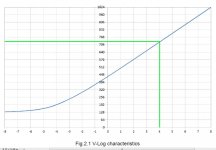
In VLOG, on a VariCam, the absolute clip point happens at about 14 stops in. On the DVX200, it happens at 12 stops in, at 4 stops over middle gray. This chart shows how VLOG is mapped, and I added some green lines to show where VLOG-L cuts off.
VLOG vs VLOG-L.jpg

The important thing to get here is -- VLOG-L is designed to use the same LUTs as VLOG, so they didn't modify the shape or IRE representations from VLOG. And because of that, the maximum brightness that a DVX200 can deliver, in VLOG-L, ends up at 79 IRE.

You cannot make the waveform monitor clip. You cannot make an external monitor show "false color" clipping. If you pointed the DVX200 (in VLOG-L) at the sun, with the iris wide open, the maximum exposure you'll see is 79 IRE. It is impossible to get the DVX200's zebras (at 80%, in VLOG-L mode) to show up. It cannot generate those higher stops, because those are reserved for >12 stops of dynamic range in full VLOG.

So -- yes, if you're used to looking at the waveform from other cameras, you'd think that the DVX200 wasn't clipped when the peaks were at 80 IRE. But they would be, they'd be horribly clipped.

I knew this would bite people in the butt, and I've asked the factory for a couple of ways to address this, including remapping the waveform monitor so that in VLOG mode it shows nothing above 80. I have also asked them to consider a different, VLOG-based gamma that is designed specifically for this sensor, that remaps the superwhites into the full range at 80 and above. Either approach would help cinematographers use it, because frankly, it's different and so far nobody can be expected to intuitively know how to use it because ... this is the first camera that has it.

In short, if you're using the waveform monitor with VLOG-L:
Blacks go at 7.3 IRE
Middle gray sits at 42 IRE
90% white sits at 61 IRE
Absolute clip is at 79 IRE

You cannot use "false color" with VLOG-L as it won't show the proper values. Unless you press the "REC 709 LOG" user button, which overlays a REC 709 gamma on the monitor output -- if you do that, then yes you'd see traditional waveform values on your external monitor, and you'd easily see that the image was grossly clipping.
 
Last edited:
I woke up this morning realizing what I had missed -- sorry for not catching this earlier. What this means is: USER ERROR. Mr. Allard didn't understand how VLOG works, and so (I am 99% certain) he grossly overexposed the images he was testing -- and yes
grossly overexposed images will clip, of course they will.

VLOG is like other LOGs, but VLOG-L is not displayed like other cameras' LOG curves, and you can't judge exposure exactly like you would with other LOG curves. VLOG-L is designed to match the VariCam's VLOG, but it can only represent up to 12 stops. Full VLOG is designed to handle 16 stops.

Now, where this comes into play is keenly represented by Allard's statements about the built-in waveform monitor and false color. Those tools WILL NOT show clipping, because in VLOG-L all the brightness levels are remapped, and the absolute clip point happens at about 79 IRE.

While you let that sink in, I'll try to explain a bit further. Users are well-trained that middle gray (18% reflectance) is normally exposed at around 50-55 IRE, and that "broadcast safe" or "studio" white (90% reflectance) is at 90 IRE. And that chroma clipping is usually happening at any brightness level over 100, and that absolute clipping is taking place at 109.

THIS IS NOT HOW VLOG-L WORKS.

In VLOG-L, middle gray should be exposed at 42 IRE (well, actually, 41.7, but that's a little hard to narrow down on the camera's built-in waveform monitor). This is similar to how other LOG curves work, although a little higher.

In VLOG-L, 90% reflectance white should be exposed at 61 IRE. This is similar to, but a little lower than, other LOGs. CLOG should record 90% white at 62.7 IRE, SLOG records it at 65.3 IRE.

And this is where things change. In SLOG and CLOG, they use the range on the wavefrom from ~64 IRE on up to 109 IRE to represent the "superwhites". And that's how it would work on full VLOG too. But VLOG-L is an abbreviated curve that doesn't have the additional stops in highlights over white (the "superwhites").

In VLOG, on a VariCam, the absolute clip point happens at about 14 stops in. On the DVX200, it happens at 12 stops in, at 4 stops over middle gray. This chart shows how VLOG is mapped, and I added some green lines to show where VLOG-L cuts off.
View attachment 104532

The important thing to get here is -- VLOG-L is designed to use the same LUTs as VLOG, so they didn't modify the shape or IRE representations from VLOG. And because of that, the maximum brightness that a DVX200 can deliver, in VLOG-L, ends up at 79 IRE.

You cannot make the waveform monitor clip. You cannot make an external monitor show "false color" clipping. If you pointed the DVX200 (in VLOG-L) at the sun, with the iris wide open, the maximum exposure you'll see is 79 IRE. It is impossible to get the DVX200's zebras (at 80%, in VLOG-L mode) to show up. It cannot generate those higher stops, because those are reserved for >12 stops of dynamic range in VLOG-L.

So -- yes, if you're used to looking at the waveform from other cameras, you'd think that the DVX200 wasn't clipped when the peaks were at 80 IRE. But they would be, they'd be horribly clipped.

I knew this would bite people in the butt, and I've asked the factory for a couple of ways to address this, including remapping the waveform monitor so that in VLOG mode it shows nothing above 80. I have also asked them to consider a different, VLOG-based gamma that is designed specifically for this sensor, that remaps the superwhites into the full range at 80 and above. Either approach would help cinematographers use it, because frankly, it's different and so far nobody can be expected to intuitively know how to use it because ... this is the first camera that has it.

In short, if you're using the waveform monitor with VLOG-L:
Blacks go at 7.3 IRE
Middle gray sits at 42 IRE
90% white sits at 61 IRE
Absolute clip is at 79 IRE

You cannot use "false color" with VLOG-L as it won't show the proper values. Unless you press the "REC 709 LOG" user button, which overlays a REC 709 gamma on the monitor output -- if you do that, then yes you'd see traditional waveform values on your external monitor, and you'd easily see that the image was grossly clipping.

This is what I was asking about when I made the original post you quote. Hearing this makes me feel better since your original response seemed to exclude problems with exposure in the samples. BTW having shot C100s since their first week of introduction lowering middle grey to IRE 42 is exactly what I did with these cameras.
 
Last edited:
Barry, the one thing that we can agree on is that this prelease process has been bungled.
It is not the way I would have carried it out if I were the the factory making the decisions, that's for sure. I think the only reasonable way to do it is to develop the product in secret, get it fully beta-tested and developed, and make some brilliant footage with it, and then launch it all at once. There should be no advance notice, no loaning of unfinished cameras to people who then post footage. That type of launch just doesn't work in today's inter-connected, immediate-response, short-attention-span society.

I would be foolish to purchase a camera based on the assumption that they will correct the faults.
I would agree -- I would never advise anyone to buy a product that doesn't do what they want, based on the hopes that someday it might. That is not a reasonable course of action.

Which is why I say, basing decisions off prerelease footage from cameras whose color science is not finalized, which is made by people who don't necessarily know how to use the camera, is no way to make a decision at all.

Will the final camera be night-and-day different? Of course not. But hopefully the issues that have been identified will be fixed, and footage that properly represents what the camera can do will be created. And at that point, that's when a decision should be being made.

And I really like Panasonic color so I want them to succeed, but it is not my job to create a complete color profile from a poor start, only to dial it in to my needs and preferences. Therefore, when you emphasize the great color customizability it means nothing. I simply do not have the time, and most probably the skill, to create entirely new color profiles from nothing.
Indeed it would be ideal if the built-in scene files were brilliant. At this point it is not the case. I do hope they recognize the need and adjust the scene files so that it delivers excellent looks right off the bat. Had they done so before letting anyone near the camera, I'm sure this would all be a very different conversation.

You keep saying wait but I am already being billed so this is not a theoretical discussion, dollars are involved.
How are dollars involved when you haven't bought the product yet?

Question, is this camera being developed by a different division than the GH series? Is that why the GH2 had such better color science than the AF100 out of the box?
I believe it is being developed by a different team than those who made the PX270. I don't know if there is a relationship between the GH2 team and the DVX200 team.
 
Last edited:
How are dollars involved when you haven't bought the product yet?

I have an invoice asking me to pay for the cameras before I know what they are. I will put off the store as long as possible but if push comes to shove I will be forced to cancel. It is not even buying a pig in a poke, it is being told the pig is healthy when you have already seen it is sick and thin. Now the pig can recover, but I cannot buy it before I see that it is healthy.

It is increasingly common to bill on order, ask for prepayment (BH) or to ask for a nonrefundable deposit (HotRod Cameras).
 
Last edited:
Is that why the GH2 had such better color science than the AF100 out of the box?
As an afterthought -- Since I still have a GH2, tell me (if you can) exactly what settings on a GH2 delivered footage that you liked, and I'll play around with the DVX200 to see if I can get it to deliver a similar look.
 
I have an invoice asking me to pay for the cameras before I know what they are.
Ah, "invoice". In your prior message you said "novice", and -- I didn't understand what paying a novice sitting at your desk had to do with it...

I will put off the store as long as possible but if push comes to shove I will be forced to cancel.
Of course, and you should. I wouldn't pre-buy a camera without seeing that it was capable of doing the job that I needed done.

I cannot buy it before I see that it is healthy.
I agree.

I'm not a fan of pre-ordering anything, unless you have a job already booked for it and that job will pay for the product. In that case, it's just about risk-free. If you have a job that only this type of camera could properly do, then yes, pre-ordering makes sense.

There's over a month to go. Better footage will be produced. I assume they'll have a better launch set up for IBC, for example. The cameras will hopefully continue to be refined over this next month. I'm sure that it will launch in limited quantities and that only those with prepaid pre-orders will be guaranteed to get one, and everyone else will end up waiting six weeks or more, but -- again, unless you have a paying job in those intervening six weeks that would pay for the camera, what's the harm in waiting to at least see something that alleviates your concerns?
 
As an afterthought -- Since I still have a GH2, tell me (if you can) exactly what settings on a GH2 delivered footage that you liked, and I'll play around with the DVX200 to see if I can get it to deliver a similar look.

Great idea, unfortunately I sold my GH cameras earlier this year.
 
I think it is sloppy to just add V-log and not considering how it interacts with 12 stops instead of the intended +14 stops. My FS7 doesn't show anything higher than 91% in S-log3 so just judging by the WFM might fool you into thinking it doesn't clip. But if clipped it still looks good most of the time. One could have wished for Panasonic to considered this.

Still it's obvious for a shooter when it starts to clip by looking at the WFM because when going into clipping, even when there's a cap on the level, you clearly see that highlights starts to compress.

But if the way LOG is implemented on the DVX200 makes shooters grossly overexpose yes there's no real fault with the camera albeit it's not that user friendly in that respect.
 
That 120fps clip definitely shows overexposed skintones behaving similarly to old panasonics, like my HMC150, HVX, AF100 etc... looks really bad. Hopefully they can sort it out because it's still one of the most frustrating things about the HMC, which I still use to this day.

Can't always control lighting at events and it's helpful to have a camera that's more forgiving when situations aren't ideal. Especially in 2015.
What about aliasing and moire in the background? They are even worse...
 
New footage (Panasonic 120fps Slow Motion Test), link: https://www.youtube.com/watch?v=VZDCUJ_EW5E
Yay. More overexposed, youtube compressed footage to ridicule!

But more seriously, how could you as a videographer post footage that poorly overexposed? I would never let the footage leave the edit bay 'cause it's obvious the fault is with my work.

EDIT:
https://www.youtube.com/watch?v=SEqKZu86Syc
Nevermind. Apparently overexposing footage is this videographer's calling card.
 
Yay. More overexposed, youtube compressed footage to ridicule!

But more seriously, how could you as a videographer post footage that poorly overexposed? I would never let the footage leave the edit bay 'cause it's obvious the fault is with my work.

Ideally, of course you shouldn't. But in certain situations, you have no choice. Especially with the environments that this camera is aimed at, which I assume is going to be run and gun events, weddings, etc..

Someone goes from shade to sun rapidly. Someone is mostly in shade, but part of their shoulder, face has a harsh highlight from the sun. People with white clothes who otherwise have to be properly exposed. There are situations where conditions aren't ideal, and you have to choose the lesser of evils in terms of exposure, and it'd be nice if the camera could handle those situations a little more gracefully. I know this because I deal with it all the time with the HMC150.

The only place you can fully control this is in the studio, and if you're shooting there, you're probably using a different camera.

I understand your reasoning here completely. But, looking at this footage and the way this particular videographer shoots/edits footage, you really cant take anything away about the camera! And besides that point, it's not a finished camera, and color science will have a drastic effect on skin tone especially in the highlights.

I've dealt with the "yellow" highlights in white from the AF100 as well. I haven't seen anything that makes me feel like the DVX200 will behave the same way. This footage is 100% meaningless IMO.
 
It seems like the affinity to user induced over exposure is really going to be the issue with new users using Vlog-L and using one of the other gammas should enable the user to properly expose better. Just saying this in reference to the waveform monitor showing well above the 79 IRE clipping point. A point mentioned was the capability of the camera to adapt in run and gun situations, Are people doing typical run n gun going to be using Vlog-L? wouldn't one of the more baked in looks be able to better adjust in run and gun situations?

The more I'm reading the more I'm really considering dedicated a few non money shooting weeks into studying and playing with this camera.
 
Are people doing typical run n gun going to be using Vlog-L? wouldn't one of the more baked in looks be able to better adjust in run and gun situations?
I can't see why someone would want to do that (VLOG-L in run/gun situations). VLOG-L is for film-style grading, it's a log curve that matches the densities of a scanned film negative. I'm sure there are some people who would try to use it for uncontrolled scenarios, but -- man, it just seems like it'd add a ton of work at the end of the job, and it's harder to see in the monitor (because it's a very flat and somewhat dark image) and you'd be more challenged with the zebras and skin tones, etc.

VLOG-L is for cine-style shooting, especially suitable for integrating a DVX200 as a B-camera into a VariCam shoot. It would be my last choice for filming an uncontrolled scenario such as news or whatnot.
 
It's interesting to me that there is not a single 4k Camcorder style camera with solid low light performance and strong zoom functionality for seemingly any price. For the sake of non-dramatics lets just say for under $10,000. There seems to be a decent selection of 4K replaceable lens options but none with an integrated lens. Fascinating to me. We might still be a couple of years away from seeing something that meets the above criteria. The crown is still up for grabs.
 
What about aliasing and moire in the background? They are even worse...

This YouTube sample looks like it was totally messed up in post.

When viewing it in 1080 HD mode on a 1080 HD monitor the footage looks like it's missing the true resolution of 1080 HD footage. It's like somebody upscaled some odd 900 x 506 format up to 1920 x 1080. It does NOT look like native 1080 HD footage.
 
It's interesting to me that there is not a single 4k Camcorder style camera with solid low light performance and strong zoom functionality for seemingly any price. For the sake of non-dramatics lets just say for under $10,000. There seems to be a decent selection of 4K replaceable lens options but none with an integrated lens. Fascinating to me. We might still be a couple of years away from seeing something that meets the above criteria. The crown is still up for grabs.

If you want 50/60P UHD there aren't many replaceable lens options either. When kitted out to actually work I am not sure there are any. The FS7 or Ursa Mini with lens batteries and media I think are all over $10K or more. I have the FDR-AX1 and I would like something with better low light performance without spending over $10K. I see little difference in low light performance between my FDR-AX100 1" sensor and my NX30U 1/3" sensor so will wait and see what the real performance is for the DVX200. My suspicions are it will be much like the 1/3" pro products when one factors in the slower lens and increased pixel density. I have almost come to the conclusion that to satisfy my needs I will look for an APS-C sensor. I am sure Sony could make a 4K/UHD version of the FS100 or NEX-EA50 and maybe Panasonic with the DVX200 will push them into this approach where it sits in the price point of the market. Both FS100 and my FDR-AX1 have been discontinued so there would be no conflict in the NXCam range. The NEX-EA50M is about $2600 and the premium for UHD looks to be about $500 ( difference for the 1" cam models ).
 
Back
Top