Achieving subtle, soft lighting.

iamWZA

Active member
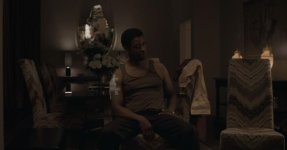
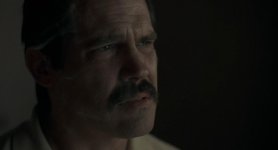
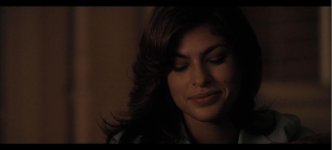
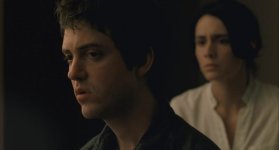
I'm going to attach a few shots from American Gangster to illustrate my question.
Most, if not all, of the scenes in this film are very subtly lit, often very dark and soft on the actors' faces. It's exactly the look I want to achieve. My limited knowledge makes me think softboxes, diffused light sources and reflectors/bounce cards are being used in these shots. Plenty of films light their actors with Rembrandt lighting but you can still clearly see the light on their faces and it's quite a harsh look. I really want my scenes to not even look lit. What do you think?

Any advice appreciated,

Will

apture.jpgCptur.jpgCapture (4).jpgCapture (3).jpgCaptur.jpgCaptre.jpgCapt.jpgCa.jpgC.jpgture.jpg
 
These shot look awfully flat as if they were shot for a day-time soap... and they were in a way because 2-3 cameras were used for each scene. The cameras often were covering both speakers. This flat look was not really a look, i believe, but rather a technical necessity where to provide uniform exposure for all cameras one needs to go with super soft and not too contrasty look.

I would be actually curious to know what attracts you to these shots.
 
I don't know if I would even call it "soft". I prefer "faint".

To me in some shots it looks as if a very small light source (possibly 32"x24" softbox) was tucked very far back away from subject. I also see some use of overhead lighting judging from shadows and brighter elements in the scene ie. the chair in photo#4.

In the last shot it honestly looks like they just used the table lamp for lighting and that's it.
 
Apparently the two DOP's on the film were Harris Savides and Alexander Witt (2nd unit).


In "American Gangster," you're shooting New York from 35 years ago. What did Ridley say he wanted the film to look like?

He wanted it to be gritty, to be a color film that was almost black and white. So I went back and watched "The French Connection" and "Prince of the City," to try to absorb some of the style. We made the colors less vivid. I actually pulled the film, by underdeveloping the negative, to give it a slight veil, an almost subliminal fogginess. I really wanted it to look like it was shot 35 years ago.
 
Apparently the two DOP's on the film were Harris Savides and Alexander Witt (2nd unit).


In "American Gangster," you're shooting New York from 35 years ago. What did Ridley say he wanted the film to look like?

He wanted it to be gritty, to be a color film that was almost black and white. So I went back and watched "The French Connection" and "Prince of the City," to try to absorb some of the style. We made the colors less vivid. I actually pulled the film, by underdeveloping the negative, to give it a slight veil, an almost subliminal fogginess. I really wanted it to look like it was shot 35 years ago.

Hummm.... 'pull processed'... A description of the process used in "The French Connection"(1971), gives using a no longer manufactured Eastman Color stock of 5254, with a rating of 100 (Tungsten), and that the exposure was 'under exposed' in some set of 'gritty' scenes.

Under exposure could be interpreted in a couple of ways. One is they had enough light in the scene to give a 'normal' exposure, and chose to 'go under'... another interpretation would be they didn't have enough light, took the shots anyway, then 'pushed' the process to get the levels back up, leading to 'more grit' due to increased grain on the higher exposed areas.

I couldn't find if they 'pushed' the process or not, but there was mention of 'under exposure'.

As I recall... cutting or 'pulling' development does not yield the same effect as 'under exposure', since in 'pulled' processing the shadow detail is almost 'fully processed', where as the highlights are 'rolled off'... In 'under exposure' the shadow details aren't there in the first place, and no amount of processing will recover them... well... other than adding grain to the area, and the human observer 'inventing' detail...
 
I doubt they would have pushed the film at all. It sounds like Harris Savides didn't want very much contrast in this movie and the the two ways you can control this with exposure is by under exposing the negative or by pulling the film. When you process underexposed film and print it up it will increase the grain and lessen your contrast. Pulling the film on the other hand will lessen the contrast, but also lessen the grain in the image. I'm guessing depending on the amount of grain he wanted in the scene he chose his technique appropriately.
 
So to get that no-even-lit look you simply...don't use additional lights. Interesting.
I can't really explain why I'm attracted to that aesthetic. There's something about saturated, flat colours in film that I love. I hate bright, contrasty, colourful stuff because to me it's distracting and it also makes it look cheap. I guess the grabs in my original post are quite extreme, but here's a few more of the kind of style I like and want to emulate:
 

Attachments

  • image27.jpg
    image27.jpg
    40.4 KB · Views: 0
  • incendies-12-01-2011-3-g.jpg
    incendies-12-01-2011-3-g.jpg
    31.4 KB · Views: 0
  • lighting q.jpg
    lighting q.jpg
    21.8 KB · Views: 0
  • lighting t.jpg
    lighting t.jpg
    40.1 KB · Views: 0
  • lighting u.jpg
    lighting u.jpg
    27 KB · Views: 0
  • xytxp1low0nyhlrva4b9gouvy.jpg
    xytxp1low0nyhlrva4b9gouvy.jpg
    22.4 KB · Views: 0
...I can't really explain why I'm attracted to that aesthetic. There's something about saturated, flat colours in film that I love. I hate bright, contrasty, colourful stuff because to me it's distracting and it also makes it look cheap....


As my internet / DVXuser friend Douglas Villalba would say, its because of where you live. ie your geographic location.

:)
 
you are in UK where is overcast much of the time, so you like dull flat lit looking images. :)

If you are in Miami, you like punchy colors and contrast.

Me, I'm in Canada... still trying to figure out how to find exit in igloo.
 
Intruiging...how does that work?

A culturally deep place ?

==

Life is not rimlit in general, no one I ever had a chat with was sitting in a three point pool. I love a naturalistic look - OK some of those frames are a little dark, probably seen in the context of their movies they work

How to do it?

I dunno, but IMO all but the widest DR cameras ramp up contrast in a scene compared to your eye, so its a question of controlling contrast in a scene while sustaining the natural sources motivation

Say a window lit room you might be putting up white sheeting on the dark end of the room, or filling with a couple of kinos bounced off something, just to lower the contrast range, by lifting the shadows, back to the eyes perception of the image

creating a soft keylight is hard/costly, remember the closer the source the 'larger' it is, but the more the source will drop off across the frame according to the inverse square law

so what you want is a huge source, far back, which is costly for every reason, unless that source is the sky

S
 
Last edited:
These shot look awfully flat as if they were shot for a day-time soap... and they were in a way because 2-3 cameras were used for each scene. The cameras often were covering both speakers. This flat look was not really a look, i believe, but rather a technical necessity where to provide uniform exposure for all cameras one needs to go with super soft and not too contrasty look.

I would be actually curious to know what attracts you to these shots.

The flatness seems to be the result of processing, rather than lighting. The light mids and highlights appear to be pulled, resulting in a darker mood. In this sense, I wouldn't say it is similar to soap.


@OP: You might want to have a look at Malick's films with Lubezki (Tree of Life, The New World) for natural light only and some late Roger Deakins movies (A Serious Man, for example) for minimalistic lighting.

Seeing the light on the face of the actor is normal. It can be seen in your shots also. You can generally see even a light as soft as a northern window on the face of a model in a classic Rembrandt setup, especially in short lighting. This is natural, that's how light work. If you don't want specular reflections, abuse make-up. :)
 
Just to get things straight...

"Pulling" film does NOT mean under-exposing the film, in fact it means the opposite. When you "pull" a film in processing, you are under-processing the film, which lowers the ISO of the film, so that to get a proper exposure with "pulled" film you have to OVER expose the film because the sensitivity of the film has dropped from the under-processing.

For example, a film that might have a normal ISO rating of 320, might have an ISO rating of only 160 when it is "pulled" one F-Stop in processing. The reason you "pull" a film is either trying to correct accidental over-exposure, or when you are intentionally trying to "flatten" the contrast of the film by over-exposing and under-processing it, which opens up the shadow areas and lowers the density ( brightness ) of the highlights.
 
^

Yes, push means to expose more in processing - which means you under exposed in-camera.
Pull means under expose more in processing - which means you over exposed in-camera.

When either one of these is done it is (...hopefully) under instruction from the DOP because he didn't shoot according to the film stocks speed rating for practical, artistic, or even accidental reasons.

This is typical for example when DOP's light by only using practical lighting interiors, or even dark exterior scenes. DOP's will push a stock 2-3 stops sometimes so they can take the ASA from say 320 to 1280, or take 400 to 1600.

Other times it can even be done purposely on a well lit scene using ND filters to under-expose by a a few stops and again, PUSHED in processing to bring it back up to nominal levels.

Some film stocks fall apart with grain when this is done, and this is sometimes used to a achieve a desired effect.
 
creating a soft keylight is hard/costly, remember the closer the source the 'larger' it is, but the more the source will drop off across the frame according to the inverse square law

so what you want is a huge source, far back, which is costly for every reason, unless that source is the sky

I can walk around my house right now and see examples of the lighting style that started this post. It's 104 degrees out and full sun, but there are plenty of places inside that have that pretty and soft rolloff of highlights.

The idea that it's "costly" to do this - can't wrap my head around it. Roger Deakins achieves the same look by taping fabric to walls and shooting a 2k redhead at it. For a basic start, there's not much more to it than that. Unless you're lighting an aircraft hangar. Set up a large scrimmed or bounced source that's motivated or realistic. Add any detail lighting. Add some smaller cards for mediums and closeups if you want to extend the fill (Deakins writes about that often, extending the "wrap" a bit but keeping it realistic).

Got a huge room? More fabric and more lights.

It's not really "costly" and is one of the things a lowly tungsten work light can actually do just fine.
 
I can walk around my house right now and see examples of the lighting style that started this post. It's 104 degrees out and full sun, but there are plenty of places inside that have that pretty and soft rolloff of highlights.

The idea that it's "costly" to do this - can't wrap my head around it. Roger Deakins achieves the same look by taping fabric to walls and shooting a 2k redhead at it. For a basic start, there's not much more to it than that. Unless you're lighting an aircraft hangar. Set up a large scrimmed or bounced source that's motivated or realistic. Add any detail lighting. Add some smaller cards for mediums and closeups if you want to extend the fill (Deakins writes about that often, extending the "wrap" a bit but keeping it realistic).

Got a huge room? More fabric and more lights.

It's not really "costly" and is one of the things a lowly tungsten work light can actually do just fine.

I like this BTS shoot from "Revolutionary Road". Looks like 3 650 watt Tweenies bounced off some muslin. From the BTS featurette on the DVD, looks like they did a lot of that kind of set up (Of course Mr. Deakins uses some very big lights and very big bounce sources out side the windows).

rev_road.jpg

I have to agree with Michael. Creating soft light is not hard, and does not need to be that expensive. Now controlling and shaping it is not always easy, but I guess that's why cinematography is kind of an exclusive craft.
 
A "large soft source" doesn't have to be costly and it doesn't mean the actual source emitting the light is large. Any small light emitting source can simply be bounced off a large white-board, or surface, or instead of bounced shot through a large diffusion panel.

By aiming some lights onto a nearby wall you can create soft light. What do you do when you have no wall or it is too far? As Michael suggested, hang some muslin from the ceiling then shine your light onto it.

Having said all that, if you do want to see a seriously expensive massive large soft source check this out this massive HMI 8k balloon light!

DSCF2173.JPG

http://www.airstar-light.us/gfc_kia.html
 
Just to get things straight...

"Pulling" film does NOT mean under-exposing the film, in fact it means the opposite. When you "pull" a film in processing, you are under-processing the film, which lowers the ISO of the film, so that to get a proper exposure with "pulled" film you have to OVER expose the film because the sensitivity of the film has dropped from the under-processing.

For example, a film that might have a normal ISO rating of 320, might have an ISO rating of only 160 when it is "pulled" one F-Stop in processing. The reason you "pull" a film is either trying to correct accidental over-exposure, or when you are intentionally trying to "flatten" the contrast of the film by over-exposing and under-processing it, which opens up the shadow areas and lowers the density ( brightness ) of the highlights.

In looking into this, since some mention was made that the cinematographer was attempting to get an 'old look', and in particular the 'look' of "The French Connection"(1971). In reference to that film, I found some one line about how that film was shot, or at least some scenes were shot, and the reference used the term 'under exposed' the shot. The film stock that was referenced was an old Eastman Color stock, with a Tungsten rating of 100 ASA...

Since the reference didn't go in to processing details, there are two thoughts, 1) they shot the film at say ASA 200, 400, then 'push processed' to bring the highlights back into reasonable density, 2) the scene was already 'contrasty' enough and so the shadow areas would just be 'dropped out'... and 3) expected a contrast boost from interneg/interpositive transfers...

In any case... that does not sound anything like the 'pulled process' mentioned in regard to "American Gangster"... where yes, 'pulling the process' lowers the contrast... where as 'under exposure', and 'push process' (or using contrast increase in the duplication process) would increase contrast.

Personally, given the 'grain/grit' look of "The French Connection" I've always assumed it was shot with light levels too low for the given stock, and push processed to boost highlight values.

While I was researching this apparently there was a Blueray put out with Friedkin's 'seal of approval' that met with raving/raging criticism due to color shifts and 'style' shifts... Friedkin apparently 'backpeddled' the transfer, and there was a later re-rerelease... which had a different 'look'... But some of the critics were unconvinced that the first offering was just a 'simple mistake in duplicaiton', but an intentional re-stylization by Friedkin, some 35 or so years after the first release... (if George can do it... then why not everyone...).
 
Back
Top