A7s: S-log2 too noisy? Then underexpose cine4

macgregor

Veteran
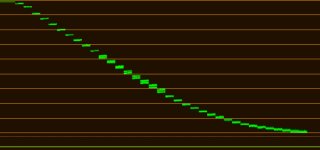
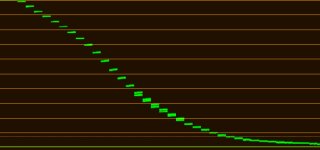
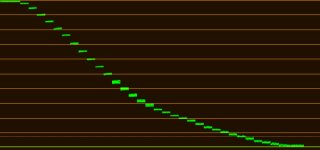
Given that with my tests I get the following results, showing that cine4 has the same ammount of DR than S-Log2...

dra7s.jpg


... I said today, what if I underexpose the cine4 by 1 2/3 stops (which is quite a lot actually) so that I get the dynamic range allocated in the same way the Slog2 profile does (more highligths, less shadows)? Maybe I will be able to get less noise since I can use a much lower base ISO setting (200ISO in cine4) and also, I won't need to use ultra heavy ND filters anytime I want to shoot with this camera.

I did tweak the black levels and gamma on cine4 all the way up and the footage so that it fills about the same histogram bucket that the Slog2 profile does.

Some grading in Davinci and here you go:

s1.jpg

s2.jpg

s3.jpg


Don't ask me which is which because it's hard to tell. They have the same DR so the differences are very subtle. Saturation in the highlights changes a bit here and there but wow, not a bad match!


So which one is which then?
Lets zoom in 400x:

noise3.jpg


noise2.jpg


noise1.jpg


Noisy pics --> Slog 3200ISO.
So what's the catch then? Donno. None so far. But I've only been playing with this for a couple hours.
Will the footage be more prone to posterization? Mayyybe. BUt at the same time, it fills the histogram the same way Slog does. So it could just be the noise in the Slog helps avoiding posterization in the compression. I need to test this with an external recorder to see if it´s the codec or the internal processing.
But the best thing is that the camera could now be rated to a much more decent 640ISO and while keeping the same amount of DR in the highlights, it shows less noise. Win win situation?
 
Last edited:
Looks pretty good. The slight posterization on the last image could probably be helped with a little monochromatic noise in post, which should look better than the colored noise from slog2. For low light I've been shooting with stock PP5. Also had good results with stock PP6 (16-235 vs. full 0-255 for PP5).
 
I dunno, it's hard to tell on these pictures - to me, on the bottom pic, the black square looks noisy on the right but the grey card and the seat cushion on the left look very noisy. Yet everything else the right side is noisy. Right side on the chair looking out the window the highlights outside are a lot clearer and the color of the grey card on the counter seems more pleasing...

I guess my point is that there's clearly more noise in the right side blow up pics except for the last one, yet in the non-blown up pics, the right side overall looks better to me. So I'm confused a bit.
 
Black level +15
black gamma wide and all the way up too.
I haven't played with the knee yet.
Pro color.
Give it a try if you can, so that we can all get an idea of what the best settings are.
 
I think you're on to something. I did a quick comparison with my non-log, go-to setting so far: gamma - cine1, black level - 0, black gamma - wide at -7, exposed properly, and there's about an extra stop of highlight detail with your setting, slightly better shadow detail, with almost no added noise.
 
We ended up doing something similar with the C100. Found 320iso is so much less noisy than log at 850, it was often worth using WDR and tweaking settings for more latitude (as needed - folks, you don't always need 12 stops!!!!) and the noise in blacks is much better. With the C100, always black balance when you can with ISO changes.
 
It makes sense to have more apparent noise at higher ISO's in general, so if you want a cleaner slog you can rate the camera at 1000ISO over exposing everything by one stop and then lowering it one stop in post for an approximate 6db improvement. It eats into you highlights but 1-2 stops is not necessarily going to be a big deal. Especially if in fact the A7s is capable of 14 stops as some other tests have shown.
 
It makes sense to have more apparent noise at higher ISO's in general, so if you want a cleaner slog you can rate the camera at 1000ISO over exposing everything by one stop and then lowering it one stop in post for an approximate 6db improvement. It eats into you highlights but 1-2 stops is not necessarily going to be a big deal. Especially if in fact the A7s is capable of 14 stops as some other tests have shown.

Yes, but just to clarify this is not what I was doing here.
 
So far I'm shooting both slog2 and cine4, but I think I like slog2 better. It sucks that it requires a bit more ND (not that much more: I'm overexposing slog2 by up to 2 stops, so if you are going to underexpose cine4 ISO 200 by 2 stops you basically need the same ND). And it sucks that it throws away such a big chunk of the codec's color space (it records 24-235 or something like that, which means 9.5M colors, instead of the 16.7M that cine4 can use). But the curve is just beautiful:

slog2 (standard PP7, but with cinema color) (ISO 3200)
a7s_slog2.jpg

cine4 (standard PP6, but with cine4 gamma) (ISO 200)
a7s_cine4.jpg

flaat_11 on NEX-5N (Portrait with minimum contrast, sharpness -1, and DRO -1) (ISO 100)
5n_flaat11.jpg
 
Last edited:
Yes, of course. And I also have to test K-log. I was saving those for whenever I do the thorough a7s vs BlackMagic test, though... Probably next week.
 
I think the issue is that Alistair Chapman is talking about the theory, we are testing it in practice. So, that should read: "the DR differences SHOULD BE greater between the slog2 and cine profiles than what the latest tests here have indicated". And I aggree: slog2 should have the 14 stops of DR that Sony promised, and the difference with cine4 should be readily apparent. But it isn't. Dear Sony, I'm eagerly awaiting the firmware update that brings those 2.5 extra stops of DR to the a7s+slog2.
(edit: I doubt that firmware update will ever come, but here's a more realistic request: right now, recording externally, you get one stop extra in the shadows, but lose one stop in the highlights because something goes wrong and it clips sooner; fix that highlight thing with a firmware update and the a7s will be clearly above any other camera in its price bracket in terms of DR)

Of course, there's also the possibility that we may both me screwing up in post. But I doubt that's the case: I trust macgregor to be doing his post work right, and I seriuosly doubt that, if he made a mistake, I would make exactly the same one.
 
Last edited:
I think the issue is that Alistair Chapman is talking about the theory, we are testing it in practice. So, that should read: "the DR differences SHOULD BE greater between the slog2 and cine profiles than what the latest tests here have indicated". And I aggree: slog2 should have the 14 stops of DR that Sony promised, and the difference with cine4 should be readily apparent. But it isn't. Dear Sony, I'm eagerly awaiting the firmware update that brings those 2.5 extra stops of DR to the a7s+slog2.
(edit: I doubt that firmware update will ever come, but here's a more realistic request: right now, recording externally, you get one stop extra in the shadows, but lose one stop in the highlights because something goes wrong and it clips sooner; fix that highlight thing with a firmware update and the a7s will be clearly above any other camera in its price bracket in terms of DR)

Of course, there's also the possibility that we may both me screwing up in post. But I doubt that's the case: I trust macgregor to be doing his post work right, and I seriuosly doubt that, if he made a mistake, I would make exactly the same one.


Thanks for all the detailed info. Following this thread closely.
 
slog2 should have the 14 stops of DR that Sony promised, and the difference with cine4 should be readily apparent. But it isn't. Dear Sony, I'm eagerly awaiting the firmware update that brings those 2.5 extra stops of DR to the a7s+slog2.

I am of the belief that the "benefits" of slog (higher dynamic range) over the cine's or even hypergammas are actually not all that readily apparent and here's why:

The cinegammas on the Sony's are mostly 460% dynamic range curves whereas with slog1 it is 800%, and slog2/3 it is 1300%. What these numbers represent are the brightness levels above 90% white reflectance which can be recorded using the specific gamma curve. Impressively the HyperGammas (on the Sony F5/F55) now can achieve 800% dynamic range which is equivalent to the original slog without all the meticulous exposure and de-slogging in post that goes along with it. (I've used HG7 on the F55 for quick turn around work where images won't be graded much and the results are fantastic!)

All this sounds super duper exciting and the marketing guys at Sony love this kind of stuff, but to put these dynamic range percentage numbers in perspective it means for example that a cinegamma with 460% dynamic range captures brightness levels 5.1 times higher than 90%. 800% captures levels 8.9 times above 90%, and 1300% 14.4 times above 90%.

Although we know the more levels and detail we have in the highlights region the better, it stands to reason that only specific scenes with specific types of highlights elements are going to benefit from it, and that's if slog is exposed properly in the first place, and then in post it is handled correctly.

On a bench, in theory or in marketing literature its definitely easy to talk about 14 stops dynamic range, in "real life" it can be difficult to translate into much.
 
(edit: I doubt that firmware update will ever come, but here's a more realistic request: right now, recording externally, you get one stop extra in the shadows, but lose one stop in the highlights because something goes wrong and it clips sooner; fix that highlight thing with a firmware update and the a7s will be clearly above any other camera in its price bracket in terms of DR)

Wait what?
 
Back
Top