5D Mark III - 890 lines of resolution

jcs

Veteran
Watching Jason Greene's test at time 6:14 ( http://vimeo.com/groups/5dhd/videos/39517721 ), it looks like the 5D3 is resolving about 890 lines of resolution (horizontal pixels).
file.php

My tests estimated 800-900 (using a reference method with a downsampled still); Jason's test is more accurate (full chart).

Thanks Jason for doing this test.
 
Help us understand this number

Help us understand this number

John,
Questions: How is a line defined? Is it a full wave, meaning two pixels, or one pixel? So does this measurement mean that the camera is resolving only half of what's theoretically possible? Does the sharpening that you've explained in another thread affect this measurement? Does the C300 resolve 100% of theoretical? Does anti-aliasing account for the decrease from theoretical maximum? Or are they overdoing it?

Thanks!! (in advance)
 
To where the sharpness mania goes! I guess all these people obsessed with sharp images have no clue about what they're seeing. The same for GH series' maniacs (I have though, three units with more other two to come ;-)

Here is a post by macgregor/Miguel de Olaso who says enough about this idiotic lack of understanding what a picture is.

Rules out Philip (Bloom), who has shown how grading and sharpness on post processing can be well used with an efficient anti-aliasing filter (in-camera in this case) in order to conciliate the best sharp outcome and avoid the moiré pattern, as well, any disturbing artifacts at the same time.

:thumbsup:

EDIT -- As everything in motion pictures from idea to script, from budget to shooting, from footage to exploitation, the secret is in a sole word: match. There, you can distinguish both sides of the same coin, the winner and loser.
 
Last edited:
To where the sharpness mania goes! I guess all these people obsessed with sharp images have no clue about what they're seeing.

Yeah, that's why nobody ever shot with film. I mean, 4-6k of resolution is just too much and isn't "filmic".
 
To where the sharpness mania goes! I guess all these people obsessed with sharp images have no clue about what they're seeing. The same for GH series' maniacs (I have though, three units with more other two to come ;-)

Here is a post by macgregor/Miguel de Olaso who says enough about this idiotic lack of understanding what a picture is.

Rules out Philip (Bloom), who has shown how grading and sharpness on post processing can be well used with an efficient anti-aliasing filter (in-camera in this case) in order to conciliate the best sharp outcome and avoid the moiré pattern, as well, any disturbing artifacts at the same time.

:thumbsup:

EDIT -- As everything in motion pictures from idea to script, from budget to shooting, from footage to exploitation, the secret is in a sole word: match. There, you can distinguish both sides of the same coin, the winner and loser.

http://www.youtube.com/watch?v=HhzwoPoO6FI
Some don't have a clue what they are seeing. Others just appreciate images, wether they are sharpened, lit, composed, whatever. Let images speak for themselves. I applaud the guys I linked. Instead of comparing this and that camera, they went out and shot, and shot well.

This is all well and good. We all know that artistic capability is more important than techie mumbo jumbo. That said, it's still a factor, and if it isn't, why do we even bother with this forum? Why don't we all save a few $$$ and convince Canon to release an SD version of the Mk III if resolution and technical qualities don't matter?
 
Last edited:
It matters. But what Christopher is trying to show is: the ultimate outcome, the combo, matters even better. And in a resolute manner.
 
This is all well and good. We all know that artistic capability is more important than techie mumbo jumbo. That said, it's still a factor, and if it isn't, why do we even bother with this forum? Why don't we all save a few $$$ and convince Canon to release an SD version of the Mk III if resolution and technical qualities don't matter?
Because I often see here and elsewhere statements like "this is the only camera out there that should be used". Tests between cameras shot at brick walls and different ISO's. It gets to a point where it's kinda overdone. One must think that some have lots invested in a system. For me, It's eos glass. Glass that you cannot get from nikon like my 17mm tilt shift. So I'm not only as one would think stuck, I just refuse to jump ship because of that single optic. The good thing is that are LOTS of options today in going about picking a camera. But where one has a strength, one can also find a weakness. There are just too many variables to say "this camera is better than that one" without doing tests in a closed lab environment. But to start shooting down a camera over maybe 50 lines res, come on. If that holds people back in decision, one would never get a project going. We get all caught up in the "this is it, this is the camera we been waiting for". Then 3 months later, another comes along. Then another after that, and after that.
Notice that I don't tend to slam other cameras. In front of me is the gh2 right now. Next to it is a XF105. There is not a single camera that can do it all. And there never will be. Measuring +-5% res, or +-10% is not the only deciding factor. Not when you have investments in a system already. Now if you are starting from scratch, different story. I'm already seeing people getting overly excited about the FS700, without seeing a single image. Cool, 4K might be sooner than we thought under say $9000. Then panny will come in, then canon, then maybe, Casio? There is never a king of the hill for more than 6 months it seems these days. But there are a ton of Kings in the countryside, which is why we should curb the complaining about this camera that camera., just a little bit. I think the image out of my MK3 is better than the image out of my Af100. For lots of reasons and factors. But I also weigh in the situations. Therefore, because I like the "image" out of the canon better, I'm not going to sell my AF100. In fact, the AF100 has paid itself off over and over, so I might not ever sell it. I sold my HVX200, and I miss it already due to it's CCD. Something that the Canon and the AF can not do better than the HVX200. I now have no CCD ability to curb rolling shutter. (But they are so cheap that I might even pick up a HVX170 for that very reason).
Some guys will make the D4 look better than the MK3. Other guys will do the opposite. Right? Camera can make a picture, but none of them take a picture.
 
Last edited:
John,
Questions: How is a line defined? Is it a full wave, meaning two pixels, or one pixel? So does this measurement mean that the camera is resolving only half of what's theoretically possible? Does the sharpening that you've explained in another thread affect this measurement? Does the C300 resolve 100% of theoretical? Does anti-aliasing account for the decrease from theoretical maximum? Or are they overdoing it?

Thanks!! (in advance)

To read a line chart, look at alternating black and white lines. When they smear together too much to be able to see alternating black/white, you've hit the limit. A downsampled still is an excellent reference- it will show resolution up to 1000+ lines.

According to sampling theory, the max number of black lines in 1920 pixels is 1/2, or 960, before aliasing starts. I believe we can see 1000+ lines as the aliasing is just starting. Note the C300 aliases (it's minor, but it can happen; found examples online).

The sharpening (and Jason's contrast adjustment) helps remove low frequency information to show the actual high-frequency information that has been stored. This is actually pretty cool, to be able to get a highly anti-aliased image which compresses well and to be able to sharpen as needed in post up to about 890 lines. It will never be quite as sharp as the higher end dedicated video cameras (FS100, F3, C300), however, it's full frame and also a fantastic still camera (used mine this morning shooting a model).

I had considered selling the 2nd 5D3 and getting an FS100 or similar, however 890 lines (horizontal resolution) is sufficient for my needs and the 5D3s are very portable, lightweight, easy to use, and of course they work without adapters with my L lenses.
 
Its is interesting to note that Mk3 excibits moire on test chart, when D800 doesnt... Very strange.

Cool- can you provide a link to a D800 test chart?
I believe the moire you are referring to for these images is the result of sharpening and downsizing in post.
 
this test uses an "old" Canon 70-200 2.8 IS.
Why not using a prime for a resolution test?!

It's the ultra sharp 70-200 F2.8L II (he clarified in his comments). He also tested with a Zeiss prime, 85mm, same result. This test can be repeated by others with a good printer. I estimated 800-900 lines with a less robust test. ~890 lines is a similar result.
 
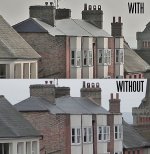
Here's a thread on EOSHD where someone has managed to modify the hardware in order to remove the optical low pass filter.

The detail increase is quite noticeable. They have before and after frames. Check it out.

http://www.eoshd.com/content/7727/j...lter-from-5d-mark-iii-for-resolution-increase

Very cool- looking closer to a C300 out of camera! As long as little or no moire, might become a popular mod (some aliasing can be remove in post using opposite of sharpening: blurring). It would be interesting to see how no OLPF compares to post sharpening in actual final resolution.
 
Why test camera resolution when a new model comes out? To better understand the limits of the tool. Lots of information stating the camera is too soft, etc. ~890 lines is decent, and plenty good enough for my needs. We have excellent control over sharpness in post.

I agree with the art statements: image quality is actually less important than script/story, even sound quality is more important. Personally, in the theater and on HDTV, I prefer a crisp image vs. a soft/blurry one. That's kind of the point to upgrade from an SD to HDTV, and why 4k projectors/theaters will ultimate replace 2k. Film directors and DPs can still deliver a softer image in 4k if they choose to do so for artistic reasons.
 
Looks like he is using ALL-I with in camera sharpening (halos). However, it still sharpen up nicely (darker areas were more compressed/ALL-I looking artifacts. If using ALL-I, would look better if using IPB):
5D3_OLPF_PS.jpg

I'm happy with 890 lines available if necessary via post sharpening. With one of the OLPFs removed, moire will become an issue (minor aliasing can be fixed with post blurring).
 
Back
Top