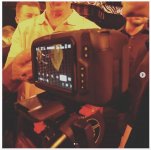
4k bmpcc

In my estimate 2020 will be the year when Blackmagic will have Quality Control under control and features properly working without compromise. Nevertheless, I am hopeful that the 4K pocket camera will be good enough. Lets see.

Not a popular opinion I'm sure. But it's a pity Blackmagic will probably never be able to wash the peasant stink of itself. Even if their quality control gets good, they start getting the ergonomics right and the cameras are great. They will always be the poor man camera and will never be taken serious in the high end or even mid tier market. It doesn't help that we have a bazillion videos shot with Blackmagic cameras online, most low budget and low key cheap looking type of productions. I quite like their color science. But they will always be the little guy or student or indie movie maker camera.

It's a pity really. They had so much potential. A company which can offer the whole production pipeline from the camera till post and hardware. Maybe if they had gone for quality over quantity their image would be better in the market. But as is somebody would be better off with a Kinefinity on a set than a Blackmagic. Better unknown than ghetto reputation when shooting for the clients who actually pay.

Since they took over Davinci, its reputation has gone down quite a bit. Many high end service providers prefer to pay more for the high end software than to use the same free software every guy with no money uses for his low budget videos. Many people thought it would be over for all the other commercial color software. But actually Blackmagic just made them look more high end. So is the way it works at the high end.

Let's hope they get their cameras right from now on and stop trying to shock and start trying to hit the target.
 
They will always be the poor man camera and will never be taken serious in the high end or even mid tier market. It doesn't help that we have a bazillion videos shot with Blackmagic cameras online, most low budget and low key cheap looking type of productions. I quite like their color science. But they will always be the little guy or student or indie movie maker camera.

That's only partially true. Several of BMD's cameras are on the Netflix approved list, for example. It's true that people who can afford Epic, Amira, Varicam, and Venice aren't likely to consider BMD cameras, but that Netflix approval is pretty significant.

It's a pity really. They had so much potential. A company which can offer the whole production pipeline from the camera till post and hardware. Maybe if they had gone for quality over quantity their image would be better in the market. But as is somebody would be better off with a Kinefinity on a set than a Blackmagic. Better unknown than ghetto reputation when shooting for the clients who actually pay.

Though I don't use one any longer, I don't believe that's still the case. You won't get the, "You're shooting on WHAT!?" response to "Black Magic," but you also won't get passed over for it any more. Generally, if a producer wants a certain camera, they're going to ask for it up front. I've been hired for quite a few shoots where I wasn't asked what I was bringing to shoot with, based entirely on the content in my portfolio.

Since they took over Davinci, its reputation has gone down quite a bit. Many high end service providers prefer to pay more for the high end software than to use the same free software every guy with no money uses for his low budget videos. Many people thought it would be over for all the other commercial color software. But actually Blackmagic just made them look more high end. So is the way it works at the high end.

That doesn't jive with what I've been hearing/seeing. There are a number of post houses that continue to use Resolve as their primary color grading suite, and several that use it for their entire post workflow. And the rest of the industry isn't all that pleased; quite a few people at companies like SGO, Digital Vision, and Assimilate have expressed frustration and concern about how to compete with Resolve. Resolve got Avid off its booty to launch Media Composer First (finally), SGO revived Mistika Insight, and even FilmLight launched an educational version of BaseLight. And now Digital Vision is launching a free version of Nucoda next week.

And it's definitely not just indies using Resolve... it's a mainstay in blockbuster films also.

Let's hope they get their cameras right from now on and stop trying to shock and start trying to hit the target.


It seems like that's where BMD is headed nowadays, since instead of pushing 6K, bigger sensors, and other fanciness, it's been working on the ergonomics, image quality (i.e. quality of pixels), and things that will entice more professionals to try them out. BMD does still do a fair bit of grandstanding though... I guess that part will never really go away. :)
 
It seems like that's where BMD is headed nowadays, since instead of pushing 6K, bigger sensors, and other fanciness, it's been working on the ergonomics, image quality (i.e. quality of pixels), and things that will entice more professionals to try them out. BMD does still do a fair bit of grandstanding though... I guess that part will never really go away. :)

The two main things that have kept me from considering BMD cameras:

1. Reliability. Without this, nothing else matters. Cameras from Sony, Panasonic, Canon, RED, Arri just work. They all work. Almost all of the time. BMD, I have a few colleagues, one in particular, who shot their first low budget feature on a BMD camera. He lost probably five years of his life expectancy from stress when his first BMD camera crashed and burned the second day of production, BMD overnighted them another, it crashed and burned the same day, then the third BMD camera worked but had a major audio issue with noise and static, etc. He vowed, "Never again" will he use a BMD camera and he hasn't, he has gone up in the world and rents Arri now. Same with IR pollution, weird colors and a bunch of other growing pain issues that frequently crop up on BMD cameras, these are things that will make pros NOT buy your camera. But the camera has to work, every time.

2. Low light ability - Doesn't need to be a low light monster, but the bar has moved. When a $2,500.00 GH5S shoots very usable and good looking ISO 6400, with a M43 sized imager no less, there is literally no excuse for a S35 sized imager camera to fall apart at ISO 800.

Other than these two issues, I was tempted by the Ursa Mini Pro, great camera.

Same here. Will not buy one of their products for the same reasons. Well, not yet.
 
The two main things that have kept me from considering BMD cameras:

1. Reliability. Without this, nothing else matters. Cameras from Sony, Panasonic, Canon, RED, Arri just work. They all work. Almost all of the time. BMD, I have a few colleagues, one in particular, who shot their first low budget feature on a BMD camera. He lost probably five years of his life expectancy from stress when his first BMD camera crashed and burned the second day of production, BMD overnighted them another, it crashed and burned the same day, then the third BMD camera worked but had a major audio issue with noise and static, etc. He vowed, "Never again" will he use a BMD camera and he hasn't, he has gone up in the world and rents Arri now. Same with IR pollution, weird colors and a bunch of other growing pain issues that frequently crop up on BMD cameras, these are things that will make pros NOT buy your camera. But the camera has to work, every time.

2. Low light ability - Doesn't need to be a low light monster, but the bar has moved. When a $2,500.00 GH5S shoots very usable and good looking ISO 6400, with a M43 sized imager no less, there is literally no excuse for a S35 sized imager camera to fall apart at ISO 800.

Other than these two issues, I was tempted by the Ursa Mini Pro, great camera.

Agreed. But I'd also add that they just haven't built a camera that suites me at my price point yet. Their designs tend to be unconventional and not in a good way in my opinion. Plus, I really do need a more compressed codec option. Some kind of H.264/5 variant. I can't shoot everything ProRes or Raw. In fact I don't want to shoot the vast majority of what I do in those formats, I'd be drowning in hard drives. Even if it would be nice to have them as options for some occasional shoots where they would be handy.
 
...I'd be drowning in hard drives.

You're describing my life right now, shooting one year and two year production timeline documentaries in Cinema RAW Light. I abe to buy a pair of 4-5 TB drives for every 2-3 shoots.

But we are hoping to sell at least one to an OTT, so shooting CRL in 4K assures us that we will have a very easy to grade, flexible image for post. I've been cutting with just the 2k proxy and even it isn't terrible for a low data rate image. But a lot of REC-709 blown out windows and other highlights that should be recoverable once we go back to the RAW. Just depends on what you are shooting, our clients are happy, for the most part, with the .MP4. Personally I think too many people become OBSESSED with always shooting the absolute best image they can record onto the highest data and bit rate. Meanwhile, most clients look at the the 8-bit 4:2:0 dailies or edit bay monitor and say, "Wow, that looks good." I see a considerable amount of footage that is shot RAW or super high data rate that just plain isn't lit or shot well and I see plenty of lower end work, shot at much lower data rates and bit rates that looks better because the team shooting it knows how to light.
 
  • Like
Reactions: DBP
You're describing my life right now, shooting one year and two year production timeline documentaries in Cinema RAW Light. I abe to buy a pair of 4-5 TB drives for every 2-3 shoots.

But we are hoping to sell at least one to an OTT, so shooting CRL in 4K assures us that we will have a very easy to grade, flexible image for post. I've been cutting with just the 2k proxy and even it isn't terrible for a low data rate image. But a lot of REC-709 blown out windows and other highlights that should be recoverable once we go back to the RAW. Just depends on what you are shooting, our clients are happy, for the most part, with the .MP4. Personally I think too many people become OBSESSED with always shooting the absolute best image they can record onto the highest data and bit rate. Meanwhile, most clients look at the the 8-bit 4:2:0 dailies or edit bay monitor and say, "Wow, that looks good." I see a considerable amount of footage that is shot RAW or super high data rate that just plain isn't lit or shot well and I see plenty of lower end work, shot at much lower data rates and bit rates that looks better because the team shooting it knows how to light.

That's true, though every once in a while you have that one 8-bit shot that you know you could've saved if it was in RAW...
 
Sounds like a need for a FreeNAS server to attempt to hold everything. How many Terabytes do you think you need?
 
Sounds like a need for a FreeNAS server to attempt to hold everything. How many Terabytes do you think you need?

Probably nowhere near as many as you'd expect, since I have a feeling that there's a high likelihood that BMD will implement ProResRaw.

In any case, BMD's compressed raw formats are also quite good.
 
What are the chances they took the gh5s/terra4k sensor and put it in their own body? :P

That would be my guess and that they'll beat both of their prices. Solid little camera with nice image and good sensitivity but kinda lower though totally mangeabe DR?

Prores raw will seal the deal for many people I think, especially if it comes in with some higher frame rates. This ought to knock down some of those uhs-ii prices...
 
Last edited:
Sounds like a need for a FreeNAS server to attempt to hold everything. How many Terabytes do you think you need?

Hard to say at this point, we are just buying storage drives as we go along, backing it up in three places. Our hope is that we will do a rough assembly on our own and then hire a hotshot editor to refine the cut and conform it to the CRL when we on-line.
 
Not a popular opinion I'm sure. But it's a pity Blackmagic will probably never be able to wash the peasant stink of itself. Even if their quality control gets good, they start getting the ergonomics right and the cameras are great. They will always be the poor man camera and will never be taken serious in the high end or even mid tier market. It doesn't help that we have a bazillion videos shot with Blackmagic cameras online, most low budget and low key cheap looking type of productions. I quite like their color science. But they will always be the little guy or student or indie movie maker camera.

It's a pity really. They had so much potential. A company which can offer the whole production pipeline from the camera till post and hardware. Maybe if they had gone for quality over quantity their image would be better in the market. But as is somebody would be better off with a Kinefinity on a set than a Blackmagic. Better unknown than ghetto reputation when shooting for the clients who actually pay.

Since they took over Davinci, its reputation has gone down quite a bit. Many high end service providers prefer to pay more for the high end software than to use the same free software every guy with no money uses for his low budget videos. Many people thought it would be over for all the other commercial color software. But actually Blackmagic just made them look more high end. So is the way it works at the high end.

Let's hope they get their cameras right from now on and stop trying to shock and start trying to hit the target.

I agree. However, Blackmagic seems to be trying to improve. Initially they used to announce cameras in one NAB and start shipping after the next NAB. These days their cameras are ready to ship immediately after announcement. However, banding/FPN etc and bad low light needs to be improved.

We need stuff that works all the time. Can't act like a fool infront of clients. So I prefer to give extra money to Canon as their cameras start working immediately after taking out of the box. However, there are people who prefer cheap over reliability. People don't realise that cheap (and unreliable) in the long run is way more costly.

I hope Blackmagic does well and resolves all problems and gives us great cameras. Competition is good to ensure companies remain honest.
 
Back
Top