Nikon to buy 100% of RED

I guess it depends how you define "cinema camera". If 35mm sensor, then yes. Prior to RED people shooting on a budget were working in DV and HDV (the original focus of this site) with 1/3 and maybe 2/3 cameras if they could swing that. DoF adaptors were popular. Most early indie users of RED weren't shooting theatrical features, they were shooting the same kinds of projects they would have doing on HVX200's with Redrock Micros a year or two earlier--music videos, short films, web videos. The first project I tried out on the REDOne was set of promo videos that posted at 240p online (still only viewable as such).

I am of the mind that "democratizing" the purchase price of a 35mm sensor digital camera ultimately served to put new DP's in the position of having to own cameras just to get hired, and rarely compensated properly for said camera or their support gear, which was not a positive development.

I mentioned shoulder camera in the post, right? :engel017: ...maybe vague but of course implying 2/3, 1/3.

As far as being paid for owning stuff, I have to say I never supported that. Even in the old days, it just never seemed right to me.

Either way, it was always going to end sooner rather than later.
 
What do you mean. The RED phone was destine for greatness. :angry:

I was actually talking about the Japanese making mistakes, but that was one for the books for RED.

I was incredibly excited for that thing but goes to show how maybe it was more difficult than it seemed.

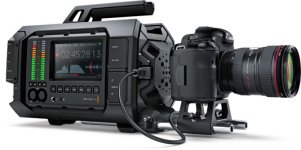
Or how about this one from Blackmagic (was announced but never released)...an alternate version of the URSA that was just meant to be a 15lb recorder for DSLRs.

URSA HDMI they called it...:smile:
wAAACH5BAEKAAAALAAAAAABAAEAAAICRAEAOw==
​​

Click image for larger version  Name:	URSA HDMI.jpg Views:	0 Size:	47.0 KB ID:	5711043
 
Wow! That Blackmagic recorder module is wild. I never knew about that one.

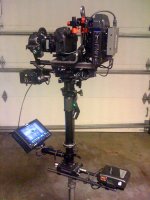
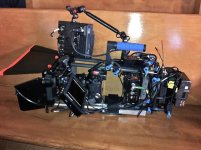
I got really deep into the DSLR build-out thing in that wild and wooly 2009-2011 era. I got out of it before outboard recording to improved codec became viable. A rogue's gallery of build-outs starting with bits I already had--an old Steadicam low model plate for Arri cameras repurposed sideways in the first one, then later pics with a custom baseplate I had machined with integrated camera mount and rods. It all gives me anxiety to look at now, haha!

Nimblecam5Dcamwave.jpg

bama2018-3.jpeg

1d2 Large.jpeg
 
I mentioned shoulder camera in the post, right? :engel017: ...maybe vague but of course implying 2/3, 1/3.

As far as being paid for owning stuff, I have to say I never supported that. Even in the old days, it just never seemed right to me.

Either way, it was always going to end sooner rather than later.
Oh yes, wasn't too clear what you meant by shoulder camera, but yes versus the in-the-hands smaller camcorders.

As far as it ending sooner rather than later, I'm not sure on that one. It would have been really interesting to see the path things would have taken if RED hadn't come along. It's possible some other company may have come along to do something similar, but I don't think things would have upended as fast or as far.
 
Based on the history of every other consumer/prosumer electronic in...history, someone was going to swoop in, you know?

Say if RED didn't exist then you got a C300 for $20K a few years later. Now maybe it wouldn't have been $20K since the price bar was lowered by RED but eventually someone is going to come in with a cheaper price for a camera.

Inevitable; whether it's RED, China, other countries, some small start-up in the USA, a Jeff Bezos side project, an Elon Musk F YOU my camera is better project, etc.

Someone was going to make a pretty good and cheaper high-end video camera and it's exactly the vision that JJ had all along.

But now we have phones....go figure.

___

No one probably remembers this one (I had to just spend 25 minutes typing in random words to find it), but this one was super-hyped in 2016 on BMCuser...never came, mysteriously ceased.

The people/brains for this modularity should be working in the camera design industry somewhere.

 
And the thing about Jim Jannard is like, what business did he have making a camera, you know?

I mean, I don't know, maybe he really did love cinema cameras and wanted to make one, but it doesn't matter.

Rich people have teams and groups always looking for ways to make them more money in other areas.

Someone could have approached him and said, "Hey, what if we do something with cinema? You know, the United States doesn't have any solid camera representation and right now it's just Japan and Germany...what do you think?"

Not saying that happened, but any rich person could have thought about making one back in the early 2000s.

I really do love that he tried to make a phone.
 
Jim loved and collected cinema cameras. He owned a bunch of 35mm film cameras back when they were really expensive items.

He loved using them to shoot motor sports, his other playboy expensive passion.

He decided to build a camera more for himself at first and it grew from there.

Also, a lot of what RED did was bought in. Their color science co-paytent holder is a freelancer. You can go hire him if you like. He’s not exclusive to RED. They bought exisiting IP and tech and then branded it as RED. Their lenses. They bought Element Technica for making accessories. The EVF was originally a company called Accuscene making the first color EVFs. The motion mount was a different company.

I think it’s hard to argue the innovation. More like they Packaged a bunch of independent contractors really well and when you’re not aiming to make money with it, then you can afford to just burn though things trying things out and shooting for the stars.and also filing patents 12 months after you show the damn camera.
 
No one probably remembers this one (I had to just spend 25 minutes typing in random words to find it), but this one was super-hyped in 2016 on BMCuser...never came, mysteriously ceased.

The people/brains for this modularity should be working in the camera design industry somewhere.

And the money people should be strung up, because they have $2000 of my hard earned cash as I put down a deposit on two Craft cameras. My last involvement in the Kickstarter model. Never ever again. Thanks for the PTSD flashback!!
 
oh, man - that stinks. I don't remember anyone on BMCuser saying they didn't get a refund, and their website said they were refunding everyone!
 
oh, man - that stinks. I don't remember anyone on BMCuser saying they didn't get a refund, and their website said they were refunding everyone!

Yep, they said that. And then disappeared without a trace a few weeks later. I put in some time trying to track down individuals attached to their LLC but it was a series of ghosts. At the time I think people were too embarrassed that they had given them money to talk much about it.
 
That's something, I'm sorry that happened.

Out of all the cameras I've had in my life, I never funded anything like that.

Not that I didn't trust anyone but I got such a thrill out of tracking down models, like watching one appear in stock at B&H at 4am in the morning when their system might automatically do it, or hunting them down at a local mom and pop shop across the country.
 
This is a strategic purchase for control of IP.

What I find amusing is to reflect on all the revolutionary communist branding of RED as a nod to this power to the people make cinema cameras accessible and overthrow the overlords of cinema by upending norms. But it was a lie. A marketing hype sold by a billionaire who started a camera company for fun.

Yes, this is logical.

REDCODE was their greatest achievement, not a camera.

And that is what Nikon paid for.

No, this is not logical. Red's compression codec is the mjpeg atom as noted in R3C header info. Hardware mjpeg encoding is through existent chips from Silicon Image and Burr Brown that predate the patent filing. The only patentable feature according to Jinni-Tech was the debayer from Graham Nattress.

Red Raw underwent a change from wavelet processing to DCT. MJPEG does not specify a particular compression method, so it is flexible enough to accommodate various compression algorithms, including those based on wavelet compression or DCT, so nothing unique there either.

I disagree that Red Raw is special. My opinion is that it was a rip-off of mjpeg to call it their own. Sony F55 and F65 cameras used a proprietary raw format rather than MJPEG compression for their 16-bit linear raw output, and they didn't pay Red royalties, they countersued Red, and both companies settled.

Peter C. said:
I think people expectations for the merger are unrealistic.

^+1
 
Do not misunderstand.

I think there is nothing special about REDCODE too.

it is just that they control the IP.

What they did achieve was introducing a workflow that made sense to film trained DPs and filmmakers.
 
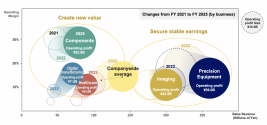
I might have missed it, but I didn't see anyone linking to Matt's excellent article on Newsshooter.com. Nikon's strategy is clearly laid out there: Get competitive advantage through patents and IP. Expand production in domestic factories.


Screenshot-2024-03-07-at-22.39.19-1536x817.png
Screenshot-2024-03-07-at-22.39.56-1536x912.png
Screenshot-2024-03-07-at-22.45.53-1536x328.png
Screenshot-2024-03-07-at-22.34.19-1536x718.png
Screenshot-2024-03-07-at-22.49.09.png
 
I might have missed it, but I didn't see anyone linking to Matt's excellent article on Newsshooter.com. Nikon's strategy is clearly laid out there: Get competitive advantage through patents and IP. Expand production in domestic factories.


Those are older slides that don't explicitly pertain to purchasing RED, though I agree that this acquisition fits within the strategy described here.

Regarding domestic (Japanese) production, it looks like they're only referring to lenses. A quick Google search suggests the same thing: they make some lenses in Japan but their cameras are manufactured in Thailand.

The article suggests that RED is trading compressed RAW usage with Canon for RF mount. If Nikon wanted to play hardball with Canon, they could try to kill Canon's raw license and just switch to Z mount. I doubt this will happen.

Regarding Doug Bee's point that RED has only sold 20k bodies and is small potatoes to Nikon -- I'm sure that's true. But they're much higher value bodies than a typical Nikon, and also require expensive accessories. Each buyer could buy $10k+ of Nikon lenses as well. If it's worth it for Sony to sell cinema cameras, which surely sell in lower volume than their stills cameras, then I don't see why it wouldn't be worth it for Nikon to try to beef up the RED business. The RED brand has outsized respect and recognition. With additional features and more competitive pricing (from cheaper manufacturing), I bet it could be quite profitable.
 
The strategy chart reveals how detached these companies are at the top from the desires of their camera users.

I still think the Red acquisition isn't going to help them compete against Canon or Sony cine line. Those lines are not really meant to be used on film sets like an Arri or Red. There is a middle ground for high end corporate, event and ads that those cameras slot in. Those types of cameras can use the same lenses as photo/hybrid cameras. So I don't see how Nikon getting RED would slot them into competing with Sony FX or Canon C cameras.
 
Per usual it depends on the price, you know...people aren't using FX9s and C300 Mark IIIs as much as they used the previous generations (FS7 and C300 Mark II).

A rebranded Nikon/RED slotted in the $4500 area would be a smash.

Like, I'm sure the Z9 and Z8 are great - but this is about marketing as much as anything else and any new Nikon mentioning anything-RED is going to be heavily looked at, no doubt.
 
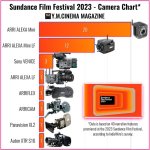
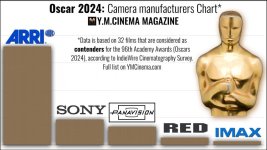
Not sure what you guys are smoking, but Sony Venice is far more popular on major productions than RED, even though it's trounced by ARRI.

Sundance-Film-Festival-2023-Camera-chart.001.jpeg.001.jpeg.001.jpg

Oscar-2024-Camera-manufacturers-Chart.001.jpg

RED is in the conversation. But as far as I know, they're primarily used by people who need extra resolution, or by directors who have bought into the lifestyle brand, or by expensive owner/operators who have as well. Correct me if I'm wrong.
 
Back
Top