GREYSCALE - feature film - OFFICIAL THREAD

So you started in February this year with literally nothing?!

Well, I had my HVX that I purchased back in Nov of '07, an old tripod from my old VX2000, an ancient Sennheiser shotgun (don't even know the model), and a 2 piece light kit that was 4 years old... only the HVX is being used for Greyscale.

I'll eventually get into the gear acquisitions and the miracles the preceded them (and by miracles, I mean pretty much miracles... checks out of absolutely nowhere and more).

-R
 
Well, I actually didn't mean gear. I meant everything. Like script and real connections and actors and everything. So you started in February from ZERO? Wow, I am listening for sure! From zero to wrap in like 10 months... not bad.
 
I had some local connections, but it was limited to a small portion of the Treasure Blind cast/crew. Things really took off after I made two connections in LA (one of them being Brandon), but I'm getting ahead of myself. ;)

-R
 
Chapter 2 - Research

Even though I had about 6 years of production experience, I am of the mindset that I will always keep learning and that when I feel like I've learned everything I can, I probably need a good slap in the face.

I've been a creative writer for over half my life and have always been fascinated with films, books, stories in general, whatever their origin. I knew that if I was to start out with basically myself, I would need a good story. I would need a hook.

I vastly expanded my library on books on screenwriting, lighting, editing, acting, directing, etc. Mostly screenwriting, and I think I have about 7 of those sitting around here somewhere...

One thing most of the books said: "Never show anyone your first draft. You won't write a good screenplay until you've written X screenplays." X tended to fall between 5 and 20.... usually the number hung around 10. So, for a first time feature writer, I was mortified. Here I was, thinking I would make a film, and I was a novice screenwriter.

So I broke the rules a little.

I broke the first rule of not showing my first draft to anyone. I finished my first draft in a month (based off the CeltX challenge that I took upon myself a little early). Truth be told, I'm a little afraid to go back and look at it right now.... But I wasn't afraid to get it ripped to shreds. I sent it out to a variety of people who (mostly) had good intentions toward me. I got the general mottle of "Oh, that's nice. I like it." to, well, the other end of the specturm. I was constantly looking for how my imagination translated to paper and then to readers. To this day I'm incredibly thankful to the half dozen of readers who slogged through each draft and killed a small forest in the process.

After the first draft, I wrote my second draft from scratch. It was based off of the first draft... some characters changed, most of the dialog changed, and the little nuggets from the first draft would stick around. I'd send that out, get my notes, and write my third draft based on my second draft. Again, I kept the good bits and reorganized/replaced the rest. Each draft was an improvement (thankfully), and when I reached my seventh draft, I ran out of creative steam. Anything I would rewrite or change would be just a tweak, and I was getting mostly positive reviews. So technically, I wrote seven screenplays before I got to the point that I was happy with the finished product.

All in all, it toughened me up as a writer, and realized what my weak spots were, and how to more effectively create a visual story. Rewriting felt like skiing down a hill at breakneck speed, and when I had reached the bottom, I remembered that I had to pop off the skis and walk up the mountain again... But the ride back down... totally worth it.

2.1 - Litmus

My new litmus test is whether an actor will read it and be interested in the project. When Doug Jones said he thought it had heart and that he gave it two thumbs up and wanted to play the role I had in mind for him, I hit the roof. I don't claim to be an amazing writer, but I do claim that I had an amazing team that would poke and prod me to question little things here and there throughout the process and dig deeper overall. They were invaluable (and still are).

Story is/was king. I wouldn't be anywhere in this production if I had sat on my first draft and shooed away all naysayers. I learned never to be afraid to throw away what I thought was good, and that the first ideas are usually just gleanings from things I've already seen (and probably forgotten), or just mashups of my favorite movies...

That's enough for tonight. I've been putting off my actual job this evening (I do production for a very, very large financial corporation... that's another story altogether... and I have a deadline tomorrow morning).

Soon I'll get into the gear I went after and how I went about laying the foundation for the movie to build upon and found out how to find people to give my hats away to.

-R
 
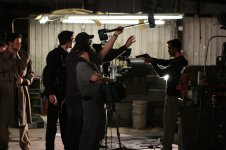
Quick BTS pic from this past weekend's shoot... hopefully we can get an update from Ryan soon.

1227629802.jpg
 
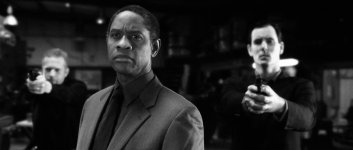
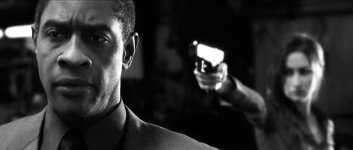
Hey guys, finally getting a chance to come up for air. We just wrapped on Tim Russ and shot the most complex of the scenes (about 7 pages with a lot of gunplay and people going down) with a lot of blocking... quite a bit of coverage went on, but overall I think the day went along well.

I'm about to head to St. Louis with the wife for some Thanksgiving vacation from working on the film (resuming Monday), but we're now 70% done with filming, and I couldn't be happier. The crew has been great, and Tim's performance was definitely excellent.

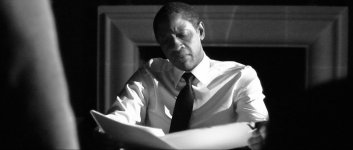
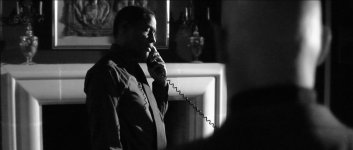
When I have some time I'll post some screengrabs.

-R

p.s. Brandon, where did you find that pic, btw?? Do I have a leak on set? ;)
 
Hey guys,

Looks great, I'm looking forward to keeping up with what you're doing and watching the movie.

Ryan, "I broke the first rule of not showing my first draft to anyone." The only the rules worth breaking are nearly all of them, at least once.

My best and good luck!

Mike
 
Hey guys, heading back in from St. Louis to Tulsa early tomorrow. I'll get up a new chapter hopefully soon.

@steve_jaggi: Brevis has been mostly problem free. My DP bought one for the project, and I decided it would be good to have some redundancy (and I've been looking at one myself), as well as opening us up to being able to use a 2nd HVX (which we had access to).

We've only shot with both cameras once thus far (had a cramped timeline in a coffee shop that graciously allowed us to keep them "open" until midnight). But unfortunately there is something wrong with my DP's Brevis, and he'll be sending it up for repairs this week. Strangely enough, we've only used it once on the project and it was the one that isn't working... go figure.

I've been using the new XL ground glass for the project, and I've loved the looks it's been giving me so far.

-R
 
Well, I'm up transferring Thanksgiving photos anyway, might as well update...

Chapter 3 - Keep It Simple

While writing my first draft, I took a look at what I had around me. I had about 6 local actors I knew I could rely on if they were given a role... I had someone I figured could be my DP if he wasn't too busy at the time... yeah, that was about all I had.

So I began to write the story with characters based around the actors I knew I could get. I wanted them to come off looking as natural as I possibly could get them, so I wrote the characters fairly similar to their speech patterns, cadence, etc. My best actor of the bunch was SAG, so I knew I'd have to face the paperwork, but I'd deal with that later...

3.1 - Location, location... and begging.

Not knowing exactly how many go-rounds I might get in the local indie film industry (in Tulsa, especially), I decided to not hold any locations in reserve. Any place I could beg, borrow, or steal, I decided to put into the movie. Anywhere from my alma mater to an old warehouse my dad owned before he retired... any anybody who was in the cast/crew's house was fair game as well. I didn't want to look like all we had was my house/kitchen/garage and call it neo-noir... I wanted streetlamps, dangerous looking warehouses, graveyards, etc...

And I learned something...

Quite a few folks in Tulsa, Oklahoma get really excited about the idea of having their place/coffee house/diner/warehouse in a feature length movie. Sure, it helps if you know a guy who knows a guy who knows the owner, but everyone has been incredibly helpful thus far (just wait until I tell the story of how we got Tim Russ' character's office...)

-R
 
Chapter 4 - Lights, Camera, GEAR!

I've realized I've been yammering on about not starting with anything (or anybody, really), and I really need to get to the technical side of things... after all, I trolled around here long enough to do quite a bit of research, so I feel I should give back, y'know?

4.1 - The Look

Noir obviously had a very stylized look to it. Well before I got any names/faces attached, I realized that if I wanted to get noticed in the sea of indie features, I had to grab attention at first glance. I had begun talking with a writer/producer out in LA that wanted to read my screenplay, and I showed him a little viral piece I wanted to do called "The Oliver Sessions," which were somewhat modeled after "The River Tam Sessions" for Serenity (which I love).

After a loving kick in the pants, he told me that nothing about the black and white imagery grabbed him. Nothing popped. Nothing sizzled. So, I pushed things a big, and got closer to where I needed to be.

I'm getting a bit ahead of myself now. Before we shot a frame on tOS, I did quite a bit of research...

4.2 - Lights, Camera (check), Audio

4.2.1 - Audio
Let's go in the opposite order. First of all, I have to give major props to Ty Ford for his book, recommendations, and insightful posts here and anywhere else that worthy audio dialog happens online (so I found). Looking at the budget, I decided that while the Shoeps might be a dreamboat, I could afford the MKH-8050. I also purchased the MKH-416 as my trusty shotgun, and a Sound Devices mixer (the one with the 3 inputs, I'm forgetting the name at the moment). Add on a heavy duty Rycote Zepplin, a K-Tek collapsable boom pole, and I was in business.

We did quite a few weekends of equipment tests with audio (and our sound man was originally pretty green but very zealous to learn the art... and he's doing a wonderful job right now, btw), and we got all the rookie mistakes out of the way fairly early (so we believe).

4.2.2 - Lights
Our DP had experience with lights. If you'll remember Chapter 1... I could have definitely used more practice. Since I had already written in a lot of locations where a character was standing next to a large source of light at night (no coincidence), I figured I would do what I could within my budget, and then add on as needed (or rent accordingly). Surprisingly, we've gotten along swimmingly with a Lowel DV Creator 1 package, my DP's 4 Lowel totas, and some various clamp lights and C-stands. Granted, we borrowed a 5k for our last weekend with Tim Russ, but the 750s have been champs thus far, and since we tend to shoot on the close side, we've been pretty set.

4.2.3 - Camera
Already had the HVX. Already shot a few things on it, and felt really comfortable with its workflow. I liked the look it gave, but not necessarily for the level of professionalism I wanted to show. To be fair, I originally decided that the trouble of getting a 35mm adapter outweighed the benefit on my first feature... but the more and more footage I looked at, I decided that if I wanted to be taken more seriously, a 35mm adapter was in my future.

So, I invested in glass... (KEH.com was my friend...) Nikon manual primes to be exact...
2.0 28mm
1.2 50mm
1.4 85mm
1.8 105mm

On a trip to NYC I picked up a Sigma 15mm 2.8 fisheye for photography, and it made its way into a quick peephole shot, but I have used it elsewhere.

Also picked up the Brevis with the XL ground glass. A few more equipment tests and we were ready to begin rolling. Granted, there were quite a few more expensive purchases that came along with the Brevis (rails system, Panasonic monitor, Redrock FF).

Picked up a nice Sachtler fluid head tripod with some Miller SOLO DV sticks to support it all. Love the motion, hate setting the thing up... which makes me very thankful for my team of grips, 1st AC, and DP who do the heavy lifting for me. :)

At this point, if anyone has any specific questions they'd like to ask, please feel free to throw them my way. I'm sure I'm forgetting plenty and I want this to be as complete as I can make it (because I'm sure I'll look back at this and chuckle from time to time).

Ok, now that I've made two updates, I'll wait until I get back to Tulsa to make the next. ;)

-R
 
Brandon, are you and Joseph Hutson working together?

Joseph does our EPK/BtS video (some photography, and occasionally we let him helm a shot or two behind the A cam).

Brandon is mostly involved in helping us get a couple of our named talents, and also as a good guy to just chat with about production and lending some practical advice when I bug him. ;)

-R
 
Ryan, thanks for putting these chapters up. I am learning a thing or two from them. :D

You have got to be the best director I have worked with.:dankk2:
 
Chapter 5 - Crew

Let me get this out of the way. I wouldn't be anywhere without my crew. Seriously, a feature length project (done right) is not a task for one person. I had a friend in the industry take me aside and say, "Who do you have AD'ing for you?" He went on to tell me the pitfall of not having a solid AD on the project.

If you'll recall, I started out with myself. I thought I could wrangle a DP that I liked, but it's something of a house of cards... if there is someone that might be interested in your project, there needs to either be a level of assurance that you are not wasting your time. It can be difficult to approach someone about working on the project when they say, "Who else is on the project?" and all you have to respond with is: "Well, ah... nobody yet."

So, having a core group of individuals that were in the game from the start has been an immense help... but, as we all know, Story is King, and I'm pretty sure that even my core group (as loyal as they are), wouldn't have followed me this far if I had set out with just my first draft in hand.

I could make this a long, sappy love note to my crew, but they've heard all this before, so I'll iterate what I think an indie director needs out of a crew. Thankfully, I have these requisites out of my people, and things are working well, so this is my take on what one needs.

Assistant Director (AD)/Unit Production Manager (UPM): Someone to keep the director on task during the day and to ensure that everyone gets where they need to be, when they need to be there. My AD/UPM has been an immense help of keeping me isolated in the creative realm, not worrying me about when Bodyguard #3 is lost and looking for the location that we're shooting later during the shoot and that one of our bulbs blew.

Sound Recorder/Mixer: Seriously, if you don't have someone that knows what they're doing on set, then you'll be screaming their name when you get your dailies... and the three little budget-inflating letters become a reality... ADR. Having a solid sound person that knows their equipment is a solid asset, and having poor sound will immediately show lack of experience within the first 5 seconds of your movie.

Director of Photography: Having someone that knows how to frame, light, run camera and rack focus at the same time has been a blessing. Yes, we have an crew of grips and an AC, but our DP is very hands on, and there have been countless times where he'll ask me, "You want to run this shot?" to which I'll reply, "No, you do it... it's why I hired you." We're usually in perfect step with what the other thinks looks good, which is a major plus.

Grips: I have grips that don't gripe. In fact, they're so eager to help that when one even mentions "C-stand" they leap into action. Granted, they're guys that came to the casting call that said, "If I don't get a part, let me know how I can help... I'd like to get involved at whatever level I can." Make note of those people. They have the drive to start at the bottom and do it with a smile. And we definitely notice when they can't be on set...

There are other important roles, like a script supervisor, makeup/wardrobe, etc, but these have been my core group, and this movie wouldn't be happening if it weren't for them.

-Ryan

P.S. Now, as promised... Tim Russ screengrabs.
 

Attachments

  • tr1.jpg
    tr1.jpg
    76.7 KB · Views: 0
  • tr2.jpg
    tr2.jpg
    75 KB · Views: 0
  • tr3.jpg
    tr3.jpg
    71.4 KB · Views: 0
  • tr4.jpg
    tr4.jpg
    73.5 KB · Views: 0
Back
Top