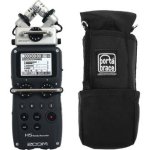
Wondering RFI in Zoom H5

Depending on the phone this is a problem with sound devices of all sorts not a DR40 specific issue. I used to leave my iPhone near the Mackie mixer in the classroom to drive the point home to the students that you DO NOT want to have live cel phones around sound gear. Some phones I think are less of an issue but certainly the iPhone was an issue, huge RF warble when it would check in to the cell tower.

I would sincerely doubt that any recording device is immune to the RF blast. On the other hand I haven't noticed it as a problem in recent years (though I haven't actually tested) so maybe something has changed in cel phones.
 
Thank you Noiz2 but as you can see in the link the point is that somo even lower budget devices like the Sony He shows in the link
works like a charm with the phone right besides, so the point is some recorders have better isolation than others.
And wonder if Zoom H5 has good isolation
As well happens with mics , check this

 
Last edited:
Hi and welcome to planet earth. No matter what you buy, your not going to be 100% immune. I've heard the telltale warble in many instances with all kinds of environments with all kinds of high-end gear. It can enter through cables and many other components.
That said, based on the Zoom's price, I would not expect much shielding.
 
Do you live in Disneyland, or in planet earth. This a real live situation, not as want it to be.
is not only my phone are other people phones.
You didn't say what you're shooting but while if you're shooting ENG or weddings, etc you may not be able to control the environment, for many types of doco shoots and certainly for most studio-type scripted productions you can indeed control what goes on at the set. It's not unheard of for the director to confiscate cell phones and flat out prohibit them within the vicinity of the set.
 
Disneyland is a swarm of cel phones, probably much worse than the rest of "planet Earth".

In the demo I mentioned the RFI was getting picked up through the balanced line cables or through the shielded metal frame of the mixer. This was a MUCH more immune setup than your typical field recording.

However something has changed recently in phones or? I really haven't heard a problem when the phone was more than five or six feet away in quite awhile. But since you don't really know the vintage or cel system of the various devices people are carrying, if at all possible you need to have them on airplane mode at least. At events/ ENG that is not really possible but in almost any other situation it is and not pushing for the phones to be off is really skipping out on part of your responsibilities.

That said I would love to see some tests on what is currently out there and how big the problem actually is today. I believe the power of the transmitters in phones has been reduced because of the side effects with things like pacemakers but???

You are probably correct that some devices have designed their shielding better RE: cel phone feq's ,but? I wouldn't trust that it's more of a specific device VS a specific Phone with out someone doing real tests. There are thousands of "tests" and "experiments" that get put out on the internet and maybe 0.1% of them are valid. In most cases the procedure is very flawed and the conclusions are far more sweeping than the data will support.

So for instance in the link you provided it looks like the phone is resting against the Rode mic cable and just next to the Sure, the roll around thing is very general and has a number of issues such as it's on a glass table so you are getting significant bounce thus really confusing the issue, and of course it's not travening equidistant on the full circle.

On the reading, again he looks like he is talking into the Rode while the Sure is a bit off Axis.

ANd of course he is recording into a camera so "sound quality" is not that great to begin with.

The takeaway is not that any of these tests are very definitive but that it looks like the Rode is more susceptible to RF from his make and model of phone. Though since it appears that the phone is actually touching one cable and not the other the issue maybe setup or cable related.
 
Thank you all you trying to understand my point, however , again since some recorders have better, isolation than others and some one has have the experience with the zoom h5
will be nice because the tascam dr60 d has very good isolation as shows here :


different to this :

 
Again these are pretty meaningless "tests". THe first is an iPhone and all we have is that he hasn't had a problem yet. He didn't test at all. THe second is a Samsung Android, they may well not even be using the same cel system. GSM was a bigger problem. And neither this or the earlier one sounded like typical cel RF issues. It definitely sounds like RF of some sort but it actually sounds like processor bleed rather than the infamous "call home" which sounds like an old FAX or Modem. Also of course the DR40 is recording with it's mics and the DR60 doesn't have any. Mics are fairly susceptible to RF, cables less so and line levels even less.

And of course in all cases so far the phone has been a LOT closer than it would be unless it was your phone. Talent, even on a wild ENG shoot doesn't cum up and press their cel phone to your recorder. What is the issue at three feet? That would be about as close as anyone you don't have control over will get to your recorder. Heck what is the amount at one foot? IF you regularly tape your phone to your recorder then I think you need to do the tests because there is no good reason for any phone to be that close to a recorder, ever.
 
BTW I'm not trying to be a PITA. You are asking a question that is legit, but it's a really big question with a lot of variables and you want a one size all answer.
Cel phones use a variety of transmissions and there are a number of different kinds of cell services. On top of which there are a ton of things in and related to the cel phone that generate RF of some sort.

Shielding is not a one size fits all prospect either. You can shield against just about everything but you would need a truck to haul the recorder around.

I am certain that somethings will be better shielded than others. BUT they are all just shielded from what designers thought would be the biggest problems.

So in the last one that buzzy staticy sound sounds like a fluorescent ballast hum. That could be bleed from the phones computer clock or maybe a buzz of the screen light? Maybe it's the BlueTooth? The constantness of it sounds like it may not be transmission related but just the RF that phone puts out. That RF signature will not be the same as an iPhone and may not even be the same phone to phone depending on what features are running.

My main point is that if you get a response from someone who says I have the Zoom and have no problems with my phone, it really doesn't tell you much of anything. It tells you that his phone the way he uses it hasn't caused problems (that he has noticed) with his recorder. Since your phone, recorder, how you use the phone, etc. will ALL be different it is of little practical value. If you get 20 people with different phones and all of them say the Zoom is great then at least you have a trend that makes it more likely you won't have a problem. But even that is not a sure thing by a long shot.

And these internet video "tests" are really misleading since they have no controls and are generally comparing Apples to Oranges and then drawing conclusions based on their un calibrated/ un verified not very valid "data". Very much like the "S/N" tests that folks keep doing by turning on a recorder in a downtown apartment and measuring the "noise". Kind of like a similar "test" in one of the above videos. They proved that their ambient noise seemed the same. Since the ambient noise will be a lot louder than any recorder noise, and apparently their ambient noise was pretty even, they came out about the same.
 
Is well known that Tascam DR40 can not have cell phones around because RFI becomes a problem. Wonder if some one has test the Zoom H5 in this field.

RFI comes from all kinds of devices, not just cell phones. One big source on sets is light ballasts, for example. Well made ballasts are shielded, but that doesn't stop the light head itself from radiating, and some do.

Well made mixers and recorders are shielded, but that doesn't stop all RF from getting in. One well known way in is through the power supply, especially when powering a mixer or recorder via its wall wart. My SD MixPre-D (a well made mixer) does this with my lights if I don't properly deploy all the cables (here, neatness counts against you -- you can't leave cables neatly coiled as they can act as transmission antennas). Switching to battery power eliminated this specific problem for me, but that can be sorta painful for all day shoots.

I've heard of people picking up RF interference through the grille on the mic, etc. I'm just sayin' that there are many sources of RFI, and many paths into the audio stream for RFI to follow. The best thing you can do is buy well made and trusted equipment, follow industry best practices when using said equipment, and monitor all audio through headphones 100% of the time. Because you can be sure that the 30 seconds that you aren't listening are when the glitches are going to occur.
 
Again thank you all
Yes I'll have to do what I do with the Azden FMX dslr, is not to use it under or on top of the camera.
But in a proper case or bag ( say metal case or Portabrace ) around my belt, and when RFI comes from some where, I just move it around my belt
to a position where doesn't get it. It has worked despite of the fact that is more comfortable under the camera.

1082486.jpg
 
Last edited:
Back
Top