Will a pre preamp make a difference?

Amadou

Carbonite Member
We record audio by plugging the microphone directly into the camera XLR inputs using camera phantom power. There is a theory whereby it is suggested that putting a Sound Devices pre-amp in between the microphone and the camera will yield better audio. In other words if I let the external sound devices pre-amp record with phantom power and then send the signal to the camera as a simple line in signal without gain... some people suggest this will yield better results. If so... why should the result be any better? Gain is gain... if the levels are fine either way then why would the Sound Devices solution yield better results? Is it worth it? Thank you.
 
A pre amp or mixer feeding line level to your camera may well sound better and more importantly have a better quality level limiter should the sound you are recording go too high and potentially overload your camera input.

An external mixer will also give you far more flexibility allowing you to mix several microphones together as well as recording a camera mic for B roll FX, the new modern mixer recorders will also allow you to record each individual source so you can access them and mix later in the edit.

The quality of components in the sound devices and other external pre amps is far superior to the mic pre-amps in your camera and as said feeding line level and using an on board limiter may yield better more controlled results.
 
We record audio by plugging the microphone directly into the camera XLR inputs using camera phantom power. There is a theory whereby it is suggested that putting a Sound Devices pre-amp in between the microphone and the camera will yield better audio. In other words if I let the external sound devices pre-amp record with phantom power and then send the signal to the camera as a simple line in signal without gain... some people suggest this will yield better results. If so... why should the result be any better? Gain is gain... if the levels are fine either way then why would the Sound Devices solution yield better results? Is it worth it? Thank you.

Different pre amps have different noise floors.

Plus the Sound Devices MP1 would have a better limiter than the FS7


But you are making a big mistake here... why care so much about the camera audio? Is just for scratch audio!

You need a dedicated sound guy, with his own sound recorder, and use timecode to sync the two up together in snap during post.
 
Content removed, but I left the post for continuity of Noiz's post. I made a snarky comment that contributed nothing to the thread.
 
Last edited:
WEll...
Nobody actually answered the question. Why assume because someone can ask the right question that they know the answer? I can ask you pretty decent questions on string theory and I sure as heck don't know the answers.

Better preamps sound better. Some cameras have pretty good sound sections and some have really lousy sound sections, so how big a difference it makes will vary.

As mentioned the SD limiters are really good and the camera won't have anything comparable.

There are good arguments for having a dedicated sound person if possible. The main reason is you can only pay attention to the visual or the sound at any given time so your cameraman makes just about the worst sound person possible. They may be a great sound person when they are doing sound but if they are shooting they are not paying attention to the sound, or they are not paying attention to the picture. Either is bad news. You can't really use a sound person without an external preamp or mixer. They need to be able to listen and see and control the levels and they can't do that if all of that is in the camera.
 
We’ve run in circles on this topic so many times. There are two ways to look at this, and they’re both correct in context: best attainable sound and best practical sound.

Unequivocally, second system sound recording can yield the best attainable sound quality: better pre-amps, better limiters, better signal routing, and multi-track recording. A skilled and dedicated operator can focus on sound and sound alone instead of multitasking with camera and lighting. These are two parts (gear and talent) of the same equation. As a side note, while a seasoned PSM can get better results even with lesser gear, quality of gear cannot overcome lack of experience or poor application.

However, asserting that everyone should be relegating in-camera sound recording to scratch and using a dedicated PSM with a cart or bag is short-sighted. Yeah, that’s definitely the way to go... if there are budget, time, and crew for it. But lots of people out there are shooting on shoestring budgets and have to OMB their productions. It could be ENG for local news, or it could be low-budget run-and-gun event coverage. Or they’re hobbyists and are just trying to do better on a no-budget level. Whatever the circumstances, there are different solutions for best practical sound. Which begs the question: what kind of work is being done? In other words, there’s a solution that is the best possible for the budget and resources available.

Camera pre-amps used to suck as a general rule. Some of them still do (if you’re shooting on DSLR, that’s a guarantee), but in-camera sound recording has improved over the last few years to the point that some cameras have decent and passable pre-amps for some situations. Is it now on par with something like a Sound Devices 600-series, or even one of the new MixPre recorders? Pound-for-pound, no... but the gap isn’t quite what it used to be. There are projects where in-camera can work just fine based on budget, workflow, turnaround time, delivery requirements, etc.

Adding a mixer or external pre-amp in front of the camera’s audio chain bypasses the camera’s pre-amps and can yield better results. It’s also one more piece of gear to juggle if you’re working alone, or don’t have someone on hand who can focus on just that. So, which is more important?

If money, time, and workflow are no barriers, then we can look at best attainable sound. On a tight budget, or for several other reasons, we may be looking at best practical sound.

I work narrative and follow-doc projects that require (allow for) multi-track recording with a wireless camera hop for reference. But I also work on stuff for C-SPAN where they literally want to pull the card from the camera and put it straight to air as soon as possible.
 
Perhaps the question would be more relevant if one asks about very limited budget audio recording where a sound person is unavailable. In such a situation would the Sound Device preamp bring something noticeably worthwhile to the audio quality? We are of course comparing it to high end cameras such as the C300 or FS7. Also, would it be possible to get a forum moderator involved to to delete the ongoing harassment of my posts by some members who seem to have too much time on their hands. Thank you.
 
Well sir, as you could have noticed, a moderator took time to answer your question.

My 2 cent advice, test, test, test and trust your own ears. I think the xlr inputs of the FS7 are good enough for most audio. You can use up to four microphones and eight audio channels. Wireless lavalier and a shotgun microphone will cover a lot of your needs.

I wish you good luck with your project. And I hope you will share your filmproject on vimeo or youtube in the near future.
 
I've always found most cameras with XLRs do a pretty good job of recording decent quality audio = just let down my the ease of overloading and level matching, plus over enthusiastic clamping by vicious limiters, and of course unpredictable auto level operations. When the cameraman can spend time actually adjusting audio - it's fine really. However, the cameraman often has not real chance to manage sound properly, so upping the level, and engaging a limiter means at least some reasonable sound rather than no sound or distorted sound.

Gary mentioned it right up the top, but turning down the camera gain and using the better and quieter preamps in an external device make an improvement on quiet sources. You don't see people using breakaway cables between mixer and camera very much nowadays - but external mixer into camera still makes a workable solution.

As for sync - I must admit with solid state recorders, I don't use sync at all - its just a few moments in the editor and it's done. Long takes have very little drift nowadays assuming you don't drop any frames.
 
Another big reason to record audio separate from the camera is for ease of camera movement e.g. jib shots, steadicam shots, dolly shots etc.
 
Perhaps the question would be more relevant if one asks about very limited budget audio recording where a sound person is unavailable. In such a situation would the Sound Device preamp bring something noticeably worthwhile to the audio quality? We are of course comparing it to high end cameras such as the C300 or FS7.

On a purely techincal level, the Sound Devices pre-amp will be of better quality and will offer better limiting.

But again, let’s talk practical. You say there’s no sound person available. Is somebody swinging a boom? Who is monitoring sound recording from the camera?

The SD pre-amp adds another segment of gain staging, and becomes another piece of equipment to have to monitor and adjust. Without a sound person available, is it correct to assume those responsibilities fall on the camera op? The technical quality gains you get from the SD pre-amp may be outweighed by not being able to devote enough attention to it.

Last, are you not satisfied with the in-camera sound recording that you’re getting? If you’re just asking about better pre-amps for the sake of asking, maybe this isn’t something you need to worry about right now. If you’re getting sound that works for you, roll with it. The more complex you start to get with your audio chain, the more you’re going to want to get someone dedicated to sound... even if that means getting someone on the team who is learning but is committed.
 
An external preamp will give you better internal audio if you are attempting to run a microphone directly into camera. One reason is that an external preamp will have a better noise floor that eliminates most of the hiss that can often be heard when trying to use a camera to add gain to mic or boost the sound level in post. The second is that the external preamp limiters will save you for people who speak with a wide dynamic range. The third is that it is much easier to monitor and change the levels and gain on a small mixer than it is directly on the camera. All of this depends on having the proper gain staging, but most cameras proper gain staging when the input is set to line level and the gain is set at five.

I have a full professional sound kit and often act as a location sound recordist on larger projects, but use a Sound Devices MixPre and run sound directly into my Canon cameras when doing interviews or events for my own productions.
 
I usually check audio levels on the camera meters before a take. I the record the same audio on 2 tracks with one track having slighly lower levels for safety. I never had any clipping with this method. However I have never used a Sound Devices pre amp and can therefore not know what I missed.
 
WEll...
Nobody actually answered the question. Why assume because someone can ask the right question that they know the answer? I can ask you pretty decent questions on string theory and I sure as heck don't know the answers.

Better preamps sound better. Some cameras have pretty good sound sections and some have really lousy sound sections, so how big a difference it makes will vary.

As mentioned the SD limiters are really good and the camera won't have anything comparable.

There are good arguments for having a dedicated sound person if possible. The main reason is you can only pay attention to the visual or the sound at any given time so your cameraman makes just about the worst sound person possible. They may be a great sound person when they are doing sound but if they are shooting they are not paying attention to the sound, or they are not paying attention to the picture. Either is bad news. You can't really use a sound person without an external preamp or mixer. They need to be able to listen and see and control the levels and they can't do that if all of that is in the camera.

I'm a professional sound recordist but on rare occasion I'll OMB and doing a video shoot that I'm doing video as well, and even with myself doing sound (who is much better at it than the average videographer) I know I'm not getting as great sound as I might like and a good part of luck is involved as well!

Which is often a difference between having a dedicated sound person vs not.
It is a lot riskier! You might luck out and still get good sound anyway.

And having a higher level of risk is ok if you're just doing say a $500 video as if the sound is fvcked up you might be able to sequeeze in a reshoot or figure out a work around in the edit which is acceptable to the $500 video level standard.

But on a $10K TVC? Nope, you don't want to take that level of risk! You must have a dedicated person to sound.

In between those two levels it can somewhere get into a hazy crazy zone where it is a judgement call.

But a scripted narrative feature film being shot on a C300mk2? That seems like a no brainer clear cut decision to me, you almost always should be using a dedicated person to sound. If you have to make a cut somewhere, you cut an AC or someone from the lighting crew, or heck even cut the MUA rather than sound. As the minimum minimum two person crew is camera + sound.


We’ve run in circles on this topic so many times. There are two ways to look at this, and they’re both correct in context: best attainable sound and best practical sound.

Unequivocally, second system sound recording can yield the best attainable sound quality: better pre-amps, better limiters, better signal routing, and multi-track recording. A skilled and dedicated operator can focus on sound and sound alone instead of multitasking with camera and lighting. These are two parts (gear and talent) of the same equation. As a side note, while a seasoned PSM can get better results even with lesser gear, quality of gear cannot overcome lack of experience or poor application.

However, asserting that everyone should be relegating in-camera sound recording to scratch and using a dedicated PSM with a cart or bag is short-sighted. Yeah, that’s definitely the way to go... if there are budget, time, and crew for it. But lots of people out there are shooting on shoestring budgets and have to OMB their productions. It could be ENG for local news, or it could be low-budget run-and-gun event coverage. Or they’re hobbyists and are just trying to do better on a no-budget level. Whatever the circumstances, there are different solutions for best practical sound. Which begs the question: what kind of work is being done? In other words, there’s a solution that is the best possible for the budget and resources available.

I agree, but too often I read on forums / facebook groups people thinking that not using a dedicated person for sound won't be a compromise.

Thus while I am completely fine with people going the OMB path if they wish, and us giving them advice in helping them out to make the best of a bad situation, I still feel it is highly advisable to make it clear from the start that this is a compromise and not ideal.

So when they do get the budget/time to have space have someone for sound then they will as this will be top of their mind, rather than thinking of putting the money elsewhere that will have less of an impact on the final product.

I usually check audio levels on the camera meters before a take. I the record the same audio on 2 tracks with one track having slighly lower levels for safety. I never had any clipping with this method. However I have never used a Sound Devices pre amp and can therefore not know what I missed.

Again, on a practical level: having someone dedicated to booming, & having someone dedicated to monitoring all lavs on everyone, will lead to a bigger leap in improvement than putting a Sound Devices mixer in front of the camera vs going directly in.
 
Last edited:
I usually check audio levels on the camera meters before a take. I the record the same audio on 2 tracks with one track having slighly lower levels for safety. I never had any clipping with this method. However I have never used a Sound Devices pre amp and can therefore not know what I missed.

Meters won’t tell you anything useful if you aren’t also listening through headphones. Checking levels before a take won’t tell you what’s actually being recorded during the take. Great, so the meters are bumping. But what’s making them move? Clean sound? Crackles from a bad cable? And even if everything else is okay, is the mic in the right place? If it’s slightly off-axis, or worse, sound will still move the meters but it won’t sound quite right in post.

This has been said many times by multiple folks on the forum: recording sound without listening is like shooting pictures without looking through the viewfinder. Before you spend money on a fancy pre-amp, get some good headphones and start using them while you record.
 
Monitoring goes without saying.

One would hope. I know way too many news shooters, corporate videographers, and other OMB folks who think that as long as the meters are moving everything’s fine. So, when someone says that they “always check the meters on the video monitor before recording,” it’s actually quite common that headphones aren’t involved.

Glad to know that you actively monitor your sound. At this point, it’s totally up to you whether you want to invest in a pre-amp. If you think you can give it due attention during production, it can make a difference - even a slight one. If it isn’t set up properly and is left to run itself, it’s a waste of money.
 
Of course audio "should" improve with a dedicated audio person, but extra crew doesn't always happen until you get to a certain level. For my work, I'm locked down or on stix more than half the time and alone. When I'm on stix, I'll nearly always use a SD mixer in front of the cam and use line in. Besides recording a better audio signal, in fact I prefer having the audio controls off the cam so I can better see them. The big LED meters on the 302n and MixPre are the best thing ever. I'm not as enthused about the newer generation LCD displays on most all new mixers and recorders. Even if the audio quality was equal with or without a mixer, I'd still use a mixer when on stix. So for me, the last generation of SD gear is probably where I'll stay for now.

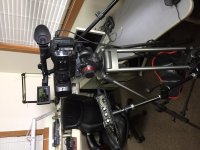
Edit: Sorry about the photo rotation.
 

Attachments

  • IMG_0122.jpg
    IMG_0122.jpg
    95.2 KB · Views: 0
I have found that my ability to monitor audio is seriously compromised by operating a camera. I can hear audio is present, but I might miss and aircraft flying over, or perhaps not notice a stray hum from a loop system or similar. I might also miss the occasional peak and stereo field is simply absent - my brain is on the picture, the focus being a real brain power user, I've got back to base with some crazy audio problems - once even a track missing - I got the camera mic but the other mic channel was blank - I never noticed.
 
I've run s/n and distortion tests on my own cameras. Camera preamps are in a very tight, hot, EMI hostile environment inside the camera. For my Bolex the difference between recording at mic gain levels VS line gain levels is about a 14dB improvement in signal to noise ratio using a high quality external preamp. I got similar results with my old Canon GL2. Most likely this is Johnson noise, thermally related random noise, due to the hot environment inside the camera.
Be interesting to test some of the newer cameras to see how they compare, but best S/N using internal mic pre generally ranges in the middle to high -65+dB range. Line in is in the high -80's. Both referenced to 0 DB VU/-18dB FS output levels. A good mobile mixer like a Sound Devices will have SN levels at common condenser mic gain ranges in the -78-84 DBu range by comparison plus typically significantly more headroom before clipping.
 
Back
Top