
Navigation
Install the app
How to install the app on iOS
Follow along with the video below to see how to install our site as a web app on your home screen.
Note: This feature may not be available in some browsers.
More options
You are using an out of date browser. It may not display this or other websites correctly.
You should upgrade or use an alternative browser.
You should upgrade or use an alternative browser.
why the 70-200mm f2.8 is that big?
- Thread starter deleuze3
- Start date

http://static.flickr.com/26/39513592_59e04b6f78_m.jpg
This is sigma 28-150. The lens is so small and light.
The canon 70-200 is just heavy and so big.
Even the 28-300mm from sigma is 635g
http://www.amazon.ca/Sigma-28-300Mm-3-5-6-3-Aspherical-Samsung/dp/B0009XQPJS
The canon 70-200 is 2.3 kg!!
THAT IS ALMOST 4 TIMES THE WEIGHT!!!
I don't really understand why they make them more cumbersome.

DPStewart
Veteran
To get serious for a moment - there are a number of different ways that lens makers can approach making zoom lenses.
This Canon, like some older Nikons, does not "telescope" as you zoom - the lens barrel does not go in and out making it longer or shorter. So the lens must be big enough to accommodate the full zoom length already. In most cases this results in a better overall lens quality and image quality.
Also the image stabilization built into it is a part of the size and weight too.

Egg Born Son
Veteran
Not to mention parfocal, close focus, fast (for a zoom) and constant speed, optical and mechanical quality. And perhaps the psychology of wanting to feel the premium paid in your hands.

Samuel H
Major Contributor
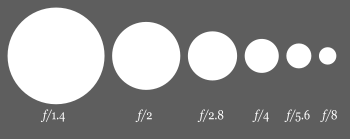
Do you know what f/2.8 actually means? It means that, on a 200mm lens, the aperture blades, when fully open at f/2.8, have to leave a hole that is 71.5mm wide. Which means the glass around them has to be even bigger.
Add to that that the simplest design for a 200mm lens is around 200mm long, and the thing just has to be big, no way around it (well, yes, there are things you can do to make it smaller, but many of those will mean a worse image).
Of course, if your 200mm only opens to f/5.6, then a 35.7mm hole is enough and the lens can be a lot smaller.
combatentropy
Veteran
As a few others have said, it's the f/2.8.
You will find many 70-200s smaller, but you will not find a 70-200 f/2.8 smaller.
Many things affect lens size, but most of all is max f-stop.
You will find many 70-200s smaller, but you will not find a 70-200 f/2.8 smaller.
Many things affect lens size, but most of all is max f-stop.
Last edited:

egproductions
Veteran
The canon 70-200 is 2.3 kg!!
You never mention which 70-200 you are reffering too, the 2.8 version is heavier because a wide aperture requirs more glass. The IS version is heaver because it has additional components. I'm also not sure where you got that number from. Even the heaviest 70-200...The canon website has the 70-200 IS II at 1.49kg.
If you think there is no difference between the lenses then get the lighter one.

mainstreetprod
Veteran
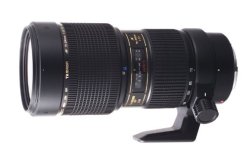
I have the Tamron 70-200 for Nikon, used on a dumb adapter for the FS7. Yes, it is huge- but it A) can focus on a fly B) can focus a half mile away with great DOF 3) Needs very little light , 4) is only about $770 5) commands respect anywhere you go, because - did I mention- it's HUGE!
combatentropy
Veteran
Do you know what f/2.8 actually means? It means that, on a 200mm lens, the aperture blades, when fully open at f/2.8, have to leave a hole that is 71.5mm wide. Which means the glass around them has to be even bigger.
While a 200mm lens at f/2.8 will no doubt be massive, the physical aperture may be bigger or smaller than what the f-stop demands.
I may be getting too technical, but hey, it's DVXUser. Just as the focal length isn't exactly the physical length of the lens, so the f-stop isn't exactly the aperture's size. The f-stop is the ratio of the focal length to the entrance pupil. The entrance pupil is how big the aperture looks through the lens. The glass before the aperture can make it look bigger or smaller. This sounds like cheating, but it works (http://en.wikipedia.org/wiki/F-number, http://en.wikipedia.org/wiki/Entrance_pupil).
Haven't you wondered how constant-f-stop (parfocal) lenses work? If it depended on the physical aperture size, then yes, a 200mm f/2.8 lens would have to open to 71.5mm. But if it was a 70-200 zoom, then when you zoom out to 70mm, that aperture should give you an f-stop of f/1. Wouldn't that be nice! And that would mean that you make a lens parfocal by crippling it. But that's not the case.
Googling "how do constant aperture zoom lenses work," I came across this quote:
There are a couple of related misconceptions about lens design, and once you understand them the whole thing about constant vs. variable aperture zooms makes more sense. The first is that the size of the aperture in question is the actual size of the physical aperture in the lens. The related misunderstanding about constant aperture zooms is that they have to change the physical aperture size as they zoom in order to maintain their constant f-number.
Actually, the f-number depends on the size of the "virtual aperture", that is the apparent size of the physical aperture as it's seen through the lens. If the lens has a positive front group*, like most normal and longer lenses, the positive group works as a magnifier, so the virtual aperture is larger than the physical aperture. If the front group is negative, like retrofocus lenses, the negative group makes the virtual aperture smaller than the physical aperture.
When you zoom a zoom lens, it works by changing the magnification of the front group, the rear group, or both. If it changes only the front group, the change in the focal length of the lens is exactly the same as the change in the magnification to the aperture, so the f-number remains constant as you zoom. If you change the magnification of the rear group, the change to the lens as a whole will be smaller than the change to the front group, so the f-number will change as the lens zooms. If you made a lens that worked by changing only the rear group, the change in aperture would be as big as the change in focal length. Some lenses actually do that; AFAIK it's restricted to very long telephoto zooms. In practice, most lenses do the majority of their zooming with the front group.
Last edited:
i do have the f/4 version with IS, would you guys recommend upgrading to the 2.8 IS II? I have been doing a lot more video shooting now, would the extra stop help a lot?
Unless you are shooting in very dark environments, no you do not. If you haven't noticed needing to crank your ISO by this point I recommend sticking to the lighter f4 and investing your money elsewhere.
