Why is it so hard to make a camera with a decent form factor?

Gillvane

Veteran
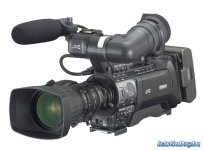
This works really well:
jvc-hd-camcorder.jpg

Why can't a company simply put the guts of a modern big sensor camera into a housing like this? You don't need some monster rig and rails, you don't need a separate monitor and EVF, and it can go on the sticks or handheld no problem.

It would be light because today's small cameras don't need a lot of space for the electronics and you'd have plenty of room for added things like XLR inputs, media storage, long lasting batteries, etc. I'm sure you could stuff all that stuff in there and make it balance on your shoulder.

Why have all the manufactures seemingly abandoned this style of camera when it works so well? How expensive can it be to make a case like this?

I can't imagine this would add a lot to the cost of the C300 or the FS700 and it would make the camera so easy to use right out of the box. Put a lens on it, put it on your shoulder, go.

Ok, so you've got cine gammas and big sensors and beautiful HD, Raw, interchangeable lenses, etc., etc. Yay! Why does this HAVE to go in a box that's hard to hold without a frankenrig?

I get the small form factor and you can put a 5D Mark II anywhere. That's great. But how about something for when you want to put it on your shoulder? You can use both.
 
"Decent form factor" is entirely project-specific.

I, for example, shoot very little which would be shoulder-mounted, so it doesn't mean anything to me to have the capability built in.
 
I also have very little use for a shoulder mounted cam. I'm usually on sticks, and have a rig for shoulder. If I worked in news gathering, I would be all over it. But I don't, so i'm not:O)P
 
I would rather have a camera body with a very low size and profile and then add grip to it as needed.
 
Agreed. While I have shot shoulder mounted it's the exception and I'm all for the current standards. Modular is nice. Also, those styles continue to be used on professional level cameras where this matters.

The answer to your question is that you don't represent the primary market. Either do I. The primary market wants a camera that they can carry around easily and, in the case of HDSLRs at least, take some family pictures with while moving beyond the point and shoot level.
 
I can't remember the last time I shot anything shoulder mounted. I think it would have been somewhere around '94-96 w.hen I covered the school sports day with panny S-VHS cam (Nowadays I just do photos).

My cameras belong on a tripod
 
Yeah, handheld and shoulder is a niche market for big sensors.
But you always can rent an Alexa, if you absolutely need that form factor.

Personally I prefer the modular approach.
 
Best modular form factor cam

Best modular form factor cam

I also have very little use for a shoulder mounted cam. I'm usually on sticks, and have a rig for shoulder. If I worked in news gathering, I would be all over it. But I don't, so i'm not:O)P
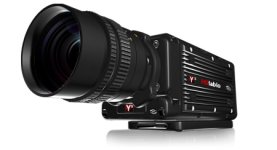
Here is my favorite, albeit their form factor is accidental AFAIK.
Perfect for modular- long and narrow.
With shoulder pad the lens can be really close to the shoulder.
in stick configuration plenty of room for base plate LW or studio on the bottom. you could probably fit an AJA ki pro mini there
You even could put a brick on top of it and it would still feel good.
Also a biggie in my book- easily swappable lens mounts PL, Nikon, etc..
The funny thing is they have no clue they'd made a great modular form factor camera. When I tried to explain it to them they drew a blank.....
BTW I'm not associated with them in any way- just stumbled upon this and have not found better form factor since...
 

Attachments

  • print_y5hd.jpg
    print_y5hd.jpg
    22.5 KB · Views: 0
Last edited:
Why can't a company simply put the guts of a modern big sensor camera into a housing like this?

Well, the laws of physics being what they are, a bigger sensor requires a much bigger lens (if maintaining equivalence). This lens would be more expensive to make, be heavier, and longer. This in turn would require a bigger heavier camera body to support the lens, and more precision machining because the bigger sensors have tighter tolerances relative alignment with the lens.

The resulting camera would be heavier, longer, and might prove difficult to balance. Perhaps the compromise would be to make the lens zoom range shorter. But then it would be less useful to the ENG crowd who typically buy ENG form factor cameras.

There are a number of drivers pushing ENG sensor size. One is the demand for large zoom ranges so they can zoom in on the politician's face outside the courthouse from beyond the police line. Another is the demand from the producers that the footage actually be in focus. Those two drivers push for smaller sensors. Drivers pushing for larger sensors include increased sensitivity / better high ISO performance, and image quality, just to pick two.

The compromise seems to have ended up at the 2/3" sensor point. There are a lot of ENG cameras out there using 2/3" sensors today. There are a lot of ENG users who are very happy with these cameras.

So I'm guessing that the reason that none of the companies are offering a large sensor ENG form factor camera is because there's little demand for it.
 
Back
Top