Why is a mixer necessary or even practical

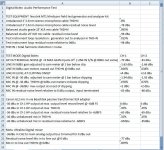
For an objective look at audio signal chain performance here is a chart of tests I did for my Digital Bolex, which does have very high quality preamps. Compared to most low end camcorders the preamp distortion is 1/10th as much, but mic level signal to noise is about the same. Why? A camera body is a hot inherently noisy electronic environment. Using a decent mixer for line level input to the camera significantly improves performance. All of this is independent of mic quality. Before any considerations of appropriate microphone choice, the recording chain quality looks like this:

1. Mic direct to camera: worst
2. External high quality mixer to camera: better
3. External high quality double system recorder: best

D16 sound test.JPG
 
What is your camera? Does it have XLR inputs?

Im gonna go against the grain here and say buy the best mic and recorder combo you have a budget for now. You are making a film to learn, having decent equipment to grow into is always nicer than equipment you'll quickly grow out of!

If you have a camera with XLRs then maybe just a mic will do to begin with. If you're on a DSLR type then definitely get a recorder (with built in pre-amps) as well. You can always add a mixer down the road.

Learning the basics of audio recording is essential even if you hire a separate audio guy once you start doing more serious production. And if you have the equipment then you might be able to get away cheaper when hiring someone. It will also help you know what you need to rent etc.

I come from an audio background (had a music studio for 10+ years) still it's difficult to do proper audio at the same time as filming. But it sure helps.

For example, I have a Sony A7S (dslr) and a Sony FS700. For most things I've done so far the built in audio (XLRs, pre-amps) of the FS700 have been good enough. However, the audio of the headphone output is noisy as hell, and it's really hard to know what is noise from the actual mic/recording or the headphone output! A dedicated mixer with a great headphone output would be a great help here. Just like with video, you need to see what you are shooting to do a good job, with audio you really need to hear what you are doing to do a good job.
Also, many times I wish I could bring just the A7S, but also need audio, so have to bring the FS700 to get the audio. If I had a recorder I wouldn't have to.
 
As Alex pointed out the "weakest link" needs to include everything including your people. For hardware it's true in that whatever is noisiest in your chain that is as quiet as you get. If you have some weird thing that only has a 80Hz to 5,000Hz range you won't see anything out of that range down stream.

BUT and it is a big but, really inexpensive gear will get you into the top 80-90% quality wise if properly used. Since nothing you have said leads me to think your sound person is going to be an experienced top level person the "extra" quality you might get from expensive gear will be lost in use.

I still don't think you should buy anything till you have made a few films. Nobody who hasn't gone through it realizes how much time and effort goes into even a bad film. As much fun as it sounds like you quite possibly may hate the process or just not have the patience to finish it. I have an archive of a short that may get resurrected if the director gets around to finishing it some day but it was started 28 years ago so?

Filmmaking can be a career, a hobby, or a lark. What you should spend depends a LOT on which of those you fall into and nobody can really tell till they have made a few. Now this is against my interests since I have picked up barely used gear at great prices from folks who jumped in before deciding it wasn't for them, but I would find someone who is interested in sound and film and also wants to see if they like doing it.

As a professional, other than sound people and some documentary folks, nobody buys a lot of sound gear because they will be hiring someone who does.

As a hobbiest...? it's all over the place. My hobby is home brewing and I have spent more on that than I have saved on beer, because I enjoy making beer so it's the cost of that fun, not a practical investment. I would still avoid spending a lot till you find out if it's a hobby you really want to keep doing. Kind of like cars the resale price drops a lot once it's "used" so dropping a few thousand bucks on something you may not like is not the best choice.

As a lark... Use your phone or a camcorder. Yes the "quality" will go up with better gear but only if you spend the time to do it right and that is very counter to the whole idea of a "lark".

In both of the later two categories there is also a downside to "better" sound and that is complexity. The number of things that can (and at some point will) go wrong more than doubles when you bring in a separate sound system. Unless you are a serious hobbiest or one of the very few professionals that are semi OMB the most complicated I would go is to have a decent inexpensive mic feeding your camcorder. The exception is if you get a partner who wants to do sound and then they deal with the sound. In that case the two of you may want to get more complex.

People don't think about sound much and often think it's relatively "easy" to do a "big budget" style sound track. You see threads like that fairly often. The what mic do I need to get that Hollywood sound.

Well the harsh truth is that on the picture side you have a DP a camera man and a few assistants, then in post you have an editor and a couple of assistants. On a whole big budget feature you may only have 6-10 people working on the picture and never more than maybe five at one time.
That same film will have three maybe four folks in production a mixer a boom op and an auxiliary or two. In post you have you supervisor and your first assistant some where from 5 to 70 sound editors (much more commonly 5-15) plus an assistant for every five or so editors. You also will have Foley artists and Foley mixers, Recordists etc. Plus you may have FX recordists (in some places that is done mostly by editors) and often a sound designer plus an assistant. Then you get to the mix and have two or three mixers, plus the music folks have now joined the party, and a slew of mix tech's and engineers to keep it all going.

Even on a rather minimal big budget film you probably have 20 to 30 people on the sound team.

And that doesn't even get into relative equipment costs. Cameras and lenses are almost always rented but the sound mixer is expected to bring their own gear (they will rent that to the show but they own most or all of it where generally a DP or camera man won't own any). Picture edit takes a couple of computers and software, drives etc. Relatively cheap and small enough that films are often edited in homes, either the directors or one rented for post. Sound requires a rather expensive set up for the each of editors, computer sound interface speakers and decently tuned room to work in. And a more basic set up for the assistants. You also need a mix stage for the pre mixes and the final mix and since this is a big budget film those need to be Dolby certified so you can mix to Dolby 5.1. Those mix stages run around $650 a day and up (labor not included).

It's a big rabbit hole to jump into. Even on the micro level you get a lot of that split, IF you are going for a polished final track.
 
If you go with a Tascam DR-60D, be aware that the battery life is completely crap. It really needs to be connected to a USB power bank of some kind to get you through a day. Otherwise I feel it is a decent choice and the first version is around $100 used. They changed some things in the Mk2 version, but I wouldn't worry about that right now.

If you go with the phone for camera, I suggest getting some of the magnetic mount lenses so you have a telephoto and a wide. Tripod mount and handheld mount will be a little harder for a phone, but some of that stuff is easy to build with a few dollars in pvc pipe and fittings. You really can make good looking projects from a phone. One other requirement is one of the camera applications that allows you to do things like lock the focus and exposure. You'll want dual audio with a phone (external audio recorder).
 
Hi,

Or just reduce the volume in post.

Hi Rehdarh
that one sentence says a lot. Think of your situation like this; those starting out are in prep school and some of the replies are from people with university qualifications.


There's a guy on YouTube, Curtis Judd, who you may want to watch for a bit before buying anything.
https://www.youtube.com/watch?v=ZmgP09fKg4I
Curtis covers a lot of sound related topics(as well as lighting). His video's are very informative and they cover sound recorders, mixers, microphone reviews, how to place mics etc etc.
 
I am curious to learn about the output of the AT875R - is that what the term is called? Output? I am curious for researching purposes. I don't want this thread to go the route of me asking a bunch of questions but I have had my eye on the NTG-2 for a while as well. How would you compare it with the AT875R. Also, do you know of any "good examples" of short films shot with lower end audio set ups. I have found a couple that I find inspiring.

The best,

Reh
 
I think Curtis Judd has compared these microphones on his YouTube channel :happy:

and my comment above is from someone (me) who has screwed up in a big way on a client shoot.
 
That is one thing about some of these 4 channel recorders, they can record the 2 main tracks at both the set level, and at up to 12db lower as a safety. As long as the preamp doesn't clip, you can probably save a mistake with the lower safety track.
 
I am curious to learn about the output of the AT875R - is that what the term is called? Output? I am curious for researching purposes. I don't want this thread to go the route of me asking a bunch of questions but I have had my eye on the NTG-2 for a while as well. How would you compare it with the AT875R. Also, do you know of any "good examples" of short films shot with lower end audio set ups. I have found a couple that I find inspiring.

The best,


Reh

The key to any location recording is the monitoring not what is at the front end! You need to be listening and making sure that each take or sequence has clean valid audio that can be cut together in the edit.

I had the NTG1 for a short while and found it hugely lacking and very artificial sounding. I then changed to the AT875r and now have it as my stock short shotgun.

As for examples I did this short film with one AT875r on the end of a gitzo carbon fibre pole with no mixer and the mic was fed straight into the back of the panasonic HPX371 P2 camera.

https://youtu.be/r6-03NdlK6Y

This kids workshop film was also shot using one AT875r straight into the back of the camera via a G2 radio mic link!
https://youtu.be/_C5zy1l4c_U
 
Last edited:
OMG!
This guy is absolutely just starting out, and the advice ranges to, well it&s a hobby, pretty much forget the whole dumb idea, to go out and pay $1,000 a day for your team of 20-30 sound engineers, and you'll maybe get OK sound.

Here's what I did. I come from a background in do animation and stop-motion films. Then I graduated to doing PA work and BTS photography.

One day, the sound guy didn't show up. So they asked me if I wanted to do sound. They gave me a Zoomh4n, a painter's pole, and a Sony camcorder mic. The sound turned out pretty good, because I got good advice from the DPvand others. I enjoyed it, went out and bought a Marantz PMD 660 used on eBay, a Sennheiser ME66 on eBay, a carbon fiber pole, used, cables and the like.

I've upgraded to a Marantz PMD 661, modified, several mics including the Rode ntg-3, used from this site, an Audio Technical 4053b, several others, a 10' carbon fiber pole, cars, etc.

I work in Sacramento, Cal, definitely not 'Hollywood North, but there is steady work, local commercials and the like.

My point is that one can have a low-end kit like mine, record decent sound, make a little money working part-time, and enjoy the whole process.

I really think this is where the OP us coming from. Yes, there is an upgrade path, but you can decide how far you want to go, what kind of money is out there (not much locally), and go from there.

I have never had a complaint about my sound quality. Yeah, I know I'm going to be roundly attacked with my 'one-step-up- up-from-a-tin-cup-and-twine equipment from the redkexive professional sound engineers who are making room on the shelf for the next Oscar, but...who cares about them?
 
You really need to use a mixer to get that really professional quality and texture.

Sure, you can try to go old-school and hand fold it yourself, but that really is not going to give you the evenness people expect.
I don't know, maybe some old pros are really good at it, but that's a skill that just takes too long to develop.

Seriously. Use a mixer. It's faster and the results are better.

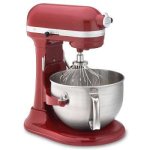
This is the one I've been using on jobs lately and it's been really great.

Especially for more delicate applications - like macaroons or puffs.

.
.
.

mixer.jpg
 
You keep pulling stunts like this, DPStewart, thinking you're delivering witticisms. Har har. But for every occasional person who thinks this is just a fantastic kneeslapper, there are all those folks who are annoyed and disappointed. I know you just can't imagine that everyone is not waiting breathlessly on your funnies, but please spare a thought for those who are (1) pressed for time (2) on mobile devices (3) actually interested in the topic, not what some jacka$$ thinks up for yuks... these people click on the thread for a new post, and discover that a "wit" has decided to waste everyone's time.

If you really feel that people just can't get enough of your great wit, there's always an amateur standup night at your local comedy club where you can wow the audience. Here, to be honest, it's really off topic, and if we continue to encourage this, it'll soon be a morass of competing "comedians" trying to top each other and drown out any usefulness of these forums. If you really must get your rocks off this way, go to the Cafe forum a few sections below, where you can dazzle everyone with your funny bone. In the sections here devoted to pro gear and actual questions, there are thousands of people reading and looking for information. And then they have to see your "funny".

This has been a public service announcement. I may be the one to say it, but I'm not the only one to think it.

Thank you kindly for your consideration!
 
After four pages discussing the benefits of a mixer, we finally have an answer. But how many channels does it have?

Although I have a premium recorder, for many projects, I record through a mixer to the cam at line level. I might add, my newer Panasonic PX270 records at 24bit. For most work, that is spoken word audio, this combo works quite well.

Grant
 
Back
Top