What's your experience of manual WB on your AF100?

chroma

Member
I have been having some real trouble setting WB using a white card on the AF100 and would appreciate anyone who can give me some advice.

I'm using a white card in an interior room room lit by a large window providing lots of daylight.

On my Canon I point my white card at the dominant light source and get a beautiful result every time. With my Af100 it's really sensitive about what angle the card is pointing at (shadow direct light). Unless I place my card in a shadow area my mid tones are going horribly yellow - the white card is always white but mid tones / skin tones can get really ugly.

At this stage I've lost faith in the white card method on my a f100 and am just dialing in my color temperature.

Has anyone else had any issues using a white card with their AF100?

For the sake of completeness I haven't had any issues with dialling in the Kelvin or using AWB (though the AWB is a little cold sometimes..). I'm really frustrated as I've seen sone beautiful work from you guys and am curious if you're dialing in the WB or going white card route. I would have expected a white card to remove not add a variable:)
 
I gave up on the white card route as well and just dial it in manually now. It's seems to be a lot easier, faster, and more accurate.
 
Thanks Brian - I thought I was going mad. When I'm mixing with a Canon I get great results when. I dial in the AF100 400k warmer than the canon. With a white card I'm farting around sticking it to wall out of direct light to get anywhere close. Just really surprises as me as a white card has been the reference point on every other camera I've worked with. Weirdly I've got more consistent results using a grey card.

Will probably hire a 2nd af100 on my next client job to compare put the matter to bed unless I find a second AF100 owner in NY.
 
I bolted this little 3 axis white balance cube to my slate, works like a charm.

cor.jpg


Here is some writeup, I did on my blog.

http://frankglencairn.wordpress.com/2011/03/23/handy-little-white-balance-gadget-on-your-slate/

Frank
 
Great blog post - the spider is on my shopping list...

What method do you use to set your WB in the field Frank ahead of tweaking In Post? Your starting image looks pretty peachy to me.
 
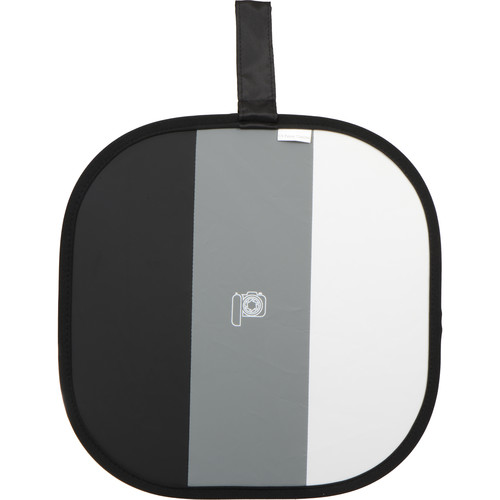
Try a grey card , just like what still guys use. I have been using a grey card now for years and get great results. White tends to reflect to much. Grey is neutral. I also roll a few seconds on it so in post I can use a color picker to set balance if its not right.
 
Really appreciate your input Erik. Just confused why I can get satisfactory results with a grey card in the Af100 but a white card is so hit and miss compared to other cameras.
 
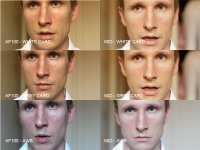
Just did a quick sanity check balancing off a white and grey card under natural day light. Interesting to note quite how far off the AWB was on both cameras. To my eye the AF100 using a white card has too much yellow.
color-balance-test.jpg.
 
I made the same experience: skin tones are really a problem with the af101, often too yellowish - espescially after manual wb with a white card.
You can try to work around but it is really a shame the camera is not reliable, not professional when it comes to reproducing accurate colors.
 
I bolted this little 3 axis white balance cube to my slate, works like a charm.

Sorry to be such a n00b (and I did read your blog post) - but what does one do in post to white balance with the cube?

I assume you select an area on the cube with an eyedropper, and then use a white balance feature in your software to balance from that - is that right? But which part of the cube do you select, and why? (BTW - what software do you personally use?)

I know Shooter mentioned using the silver ball as well. How would that work?

Thanks in advance.
 
I think the camera is reliable - its just an extremely "fussy bugger". With a Canon you can pretty much fire away and always salvage in post. With the Af100 - what looks fine on your LCD could be completely unusable once you get it into your editor. Having experimented with setting WB on teh Af100 I have come to realize just how subjective it is and you're better off dialling it in.
 
I made the same experience: skin tones are really a problem with the af101, often too yellowish - espescially after manual wb with a white card.
Nonsense. I mean, not to sound harsh, but -- really, that's nonsense -- the skin tones are exquisite on the AF100/AF101. The only time you get a yellowish tint to them is when you're overexposing them.

You can try to work around but it is really a shame the camera is not reliable, not professional when it comes to reproducing accurate colors.
See, this kind of statement really rubs me the wrong way. The AF100 is THE most accurate camera I've ever seen for reproducing colors. Put it in HD NORM gamma with NORM1 matrix and point it at a color chart -- it will absolutely perfectly reproduce every color you point it at. That was something that really gobsmacked Leo Ticheli and I when I first took the AF100 to his studio, is how insanely accurate and spot-on perfect the colors were, with zero adjustment. On a properly-calibrated professional monitor, the colors were PERFECT.
 
And for the record -- if you want accurate colors, do a manual white balance. Dialing it in is not as accurate as having the camera balance to white. The more pristine the white is, the more accurate your colors will be. I use a DSC Labs CamWhite.
 
I know Shooter mentioned using the silver ball as well. How would that work?


I dont recall having an opinion or comment about the silver ball but I do know that I would find the balance cube a very helpful aid to exposure and the basis for the exposure decision.

Apart from using it to check and balance color I think it has a number of ways to be utilised. (eg waveform, spot meter, eyeball...)

I expose and light for tone values and having a convenient Black, Grey and Mid tone object in the scene makes this very easy. The fact that the device is 3 dimesional makes it more advantageous than a greys scale card ( although I use them as well).

I often use my hand in a fist or the hemisphere on my incident meter to see how and where light falls on a 3d object/ subject. This device is far better for that purpose

Thanx for reminding me about these. I had forgotten about them. I am on a hunt to locate and buy one right now before I forget again.

As regards WB. We manual WB and have had no issues with the process. I went as far when I first got the camera to WB off a white card and then shoot a grey card which I took into the suite and viewed with the vectorscope. Close to perfect as I would expect. ie Neutral with no hues or color.
 
Back
Top