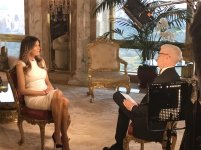
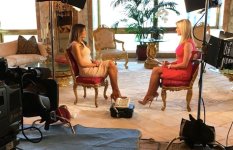
What type of lights used in this video by MSNBC

Keep 'em coming! I love all of the insights and observations.

However, can someone please elaborate on what you mean by Jumping the Line and Crossing the Axis?
 
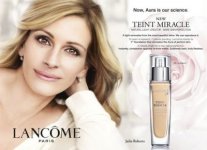
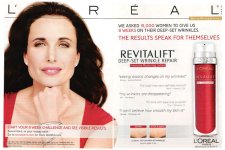
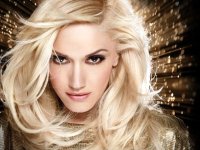
Flat, boring lighting does not make women looks their best

Well, all a matter of opinion but it is 'the' standard beauty look as so often seen in adverts for cosmetics.

loreal-hair.jpg

LOREAL.jpg

andie-macdowell-revitalift-loreal.jpg

diane-keaton-loreal-vogue-08-2010.jpg

I don't think it is being done merely because it is "quick". Those photo shoots generally have plenty of time for setup. Often they get a full day for pre-lighting.

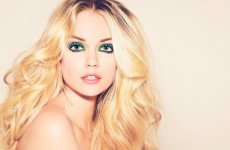
They are lighting "flat" because it is considered flattering to the subject, even if boring. Sometimes they will execute it with a relatively defined chin shadow...

Beautiful-Blonde-Victorias-Secret-Model-Lindsay-Ellingson-Modeling-For-Harpers-Bazaar-UK-United-.jpg

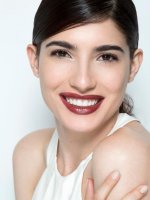
Sometimes with almost no chin shadow at all...

Clinique-Pop-Model-Shot-in-Berry-Pop-2.jpg

But the key-light is dead center over the lens. I've even seen where they use a soft light that has a hole cut out in the middle for the lens.
 
Keep 'em coming! I love all of the insights and observations.

However, can someone please elaborate on what you mean by Jumping the Line and Crossing the Axis?

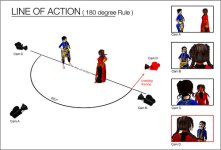
If you draw an imaginary line between the interviewer and the interviewee, all cameras should remain on the same side of that line. A camera that is positioned in a position that is across the line from another camera or from other cameras is said to have "crossed" the line. It is also known as "breaking a 180", as in 180 degrees in the circumference of a circle as seen from a bird's eye view.

180-degree-rule.jpg

https://en.wikipedia.org/wiki/180-degree_rule

It used to be something that was more adhered to than it is today. It all depends on the nature of what you are shooting. For something rather vanilla, like a 3-camera / 2-person interview, you would generally adhere to it more than you might in a music video where things are more free-flowing and less structured.

Breaking a 180 can be intuitively disorienting. You are moving the viewer's perspective / spatial relationship to the subjects in a manner that contradicts an established spatial relationship. It suggests that one of the two subjects has moved in relation to the other subject and can be confusing.
 
Thanks for the breakdown. That makes a lot of sense. I suppose that was a very googleable question, so I appreciate you humoring my laziness!

BTW, I see three very distinct catch lights in Malania's eyes, so definitely not just the Astras at work. Presumably the one on the lower left of her eyes (from our perspective) is from the Arri. However, there are two vertically stacked catch lights, so only one of those would be the Astra. Another light remains a mystery.
 
Well, there is another unit visible in that behind the scenes shot at far left (both subjects have that secondary catch underneath the one from the Astra so I imagine they duplicated that light on the other side as well). Small head, maybe a Fiilex. I assumed it was an accent light for the background at first glance but now I'd assume it's intended to be a bit of back edge (you can see the effect of it on the back of Milania's chair, but it isn't strong enough to glow her hair much apparently). Unusual lighting concept, high and low from the camera side.

Looking again at that still, it's my guess that the foreground stand is actually what they used to arm the Astra out, judging from the orientation of the legs and what looks like sash tying off the end of the boom in some version of a menace arm.
 
If you want to know where light is coming from, look at the shadows. There's a big light behind her on the fill sure from high. There's also some hard lights raking the out of focus background. When you look at the reverse shot of the interviewer there is a high keep coming from BOTH sides, flattening her out. And in the wide 2-shot there is obviously a lot of fill coming from way outside the frame.

These shoots have a LOT going on that has nothing to do with how one may wish to shoot it. Likely a very short amount of time to set up and great limitations on where and which direction to shoot. But also the talent (either one) may insist on being photographed on their "good side" and you have to scramble to adjust. Usually the talent is not available at all during setup, so it's just an educated guess as to levels, what color clothing, etc. And a lot of talent has been photographed before, and will insist on at-the-moment changes that have nothing to do with your original lighting setup. I used to keep an inky or Lowell Pro right by camera pointed kinda near the subject but really effectively doing nothing. It was there specifically so that the talent could change it to make things more flattering to themselves.

Flipping the axis wouldn't have been my first choice, but I can also imagine being told "subject here with this background, interviewer here, and I like the way this looks for the two-shot." and then I have to live with it. Or maybe just "Melania will be sitting here and you must shoot this side of her face," and then the two-shot is facing windows that you can't compete with so you have to face the other way.

There are plenty of times you just "make it look nice," put your hands in the air and walk away to collect the paycheck. All in all I thought that the look was rather pleasing. Being surrounded by glittery gold works nicely for her skin tone and hair. I'm sure the likely $5000 hair & makeup session that morning helped as well.
 
I admit I did not watch the entire video but where there four cameras? With only 3 cameras the 180 deg rule seems kind of random if two are facing each other. The third could be anywhere and that would be your chosen side.

Thanks for clearing up the concept though. It reminds me of how sports are filmed. There is a main side which is where most of the cameras are. Cameras on other sides are specialty shots and do not disorient the viewer.
 
With the less-than-ideal interview situations i've gone through, i can absolutely imagine the crew dealing with less than ideal setup situations and/or producer/talent demands, and in the end it's unfortunately not at all about what you want/think is visually best, you're working for the client. It's one thing to inform them of how it can be done better, but you have to work with what you have and if they firmly want something, it just isn't worth your sanity to convince them otherwise.

This one time, i was hired to shoot a dozen or so interviews, planned in a single space, supposed to just be simple setup, look nice, etc... 90ish minute interviews with 20min break in between. The producer (who was great BTW, not his fault), calls me up the night before and informs me that the client wants each interview to look like it was in a different space....

Long story short, i pull a lot of cats out of my arse to accomplish it, including borrowing a tree from the lobby that barely fit in the elevator. Client happy, payment made.
 
I admit I did not watch the entire video but where there four cameras? With only 3 cameras the 180 deg rule seems kind of random if two are facing each other. The third could be anywhere and that would be your chosen side.

Thanks for clearing up the concept though. It reminds me of how sports are filmed. There is a main side which is where most of the cameras are. Cameras on other sides are specialty shots and do not disorient the viewer.
The axis is the line from one person to the other. The cameras are all either on one side or they cross over to the other. There could be two cameras, there could be 200. Either they are all on the same side or they are not.
 
Well, there is another unit visible in that behind the scenes shot at far left (both subjects have that secondary catch underneath the one from the Astra so I imagine they duplicated that light on the other side as well). Small head, maybe a Fiilex. I assumed it was an accent light for the background at first glance but now I'd assume it's intended to be a bit of back edge (you can see the effect of it on the back of Milania's chair, but it isn't strong enough to glow her hair much apparently). Unusual lighting concept, high and low from the camera side.

Looking again at that still, it's my guess that the foreground stand is actually what they used to arm the Astra out, judging from the orientation of the legs and what looks like sash tying off the end of the boom in some version of a menace arm.

The 3rd catchlight in Melania's eyes is likely Mika's backlight.

So the three hits in Melania's eyes are...Melania's key ( Astra ), Melania's fill light ( Arri ) and Mika's backlight ( unit unknown ).

As to the flat / centered key light, I did a two-cam shoot today and went with that look for an older female sports reporter who is particularly mindful of how she is lit. Flat key and gave her a small bit of under-fill using a Litepanel "brick" placed at the height of her waist, on a short floor stand between her and the interview subject. I covered the light with some grid cloth diffusion. I find the trick is to keep the output low enough in relation to the output of the key light so as to avoid any upward nose-shadow from the "under fill" light.
 
... As to the flat / centered key light, I did a two-cam shoot today and went with that look for an older female sports reporter who is particularly mindful of how she is lit. Flat key and gave her a small bit of under-fill using a Litepanel "brick" placed at the height of her waist, on a short floor stand between her and the interview subject. I covered the light with some grid cloth diffusion. I find the trick is to keep the output low enough in relation to the output of the key light so as to avoid any upward nose-shadow from the "under fill" light.
Wouldn't you want to overexpose her face a little, so her wrinkles (presuming there are any ... unlike on Melania who had obviously visited her plastic surgeon on more than one occasion ... and with fantastic results) are far less visible and are in fact blown out?

PS. I was reading some Hollywood piece recently about all the "touch ups" that stars go through before the award shows. With filler injections and wrinkle erasing treatments, a female in her 50's and even 60's can look younger than she did in her 30's. Of course, one can go overboard with these injections too. See Ryan, Meg.
 
The eyeline didn't bother me, but jumping the line for the two shot did.

Definitely. Crossing the axis to get the gold doors? I guess sometimes you gotta do what you gotta do (or what the producer wants you to do...).
Melania's on the right, no wait, she's on the left, no she's...

And Chris, how'd you find that still?
 
Those Led's will be my next purchase, I have been an avid tungsten user because of better color rendition and the cheaper led's ($300 range) I have used in the past have not produced as good skin tones. My biggest problem with tungsten is heat. Now As we discuss the lighting setup and lights used in the MSNBC video I have bumped into the video below which produced the opposite results, horrible lighting. The video is not HD but you can see that the lights are hot (overexposed) and hanging way too high producing extreme shadows under the chin and neck, making the guest look 20 years older :happy:.

Video was deleted on youtube, here is a differnt copy in HD

 
Last edited:
I think Kellyanne looks better when her face is overexposed. Too many wrinkles otherwise (and, as it is, for closeups). Unlike most female personalities in her age group, she has no traces of nips or tucks.

The interviewer seems to be wearing a darker makeup, making the contrast between the two a bit spooky.
 
IMHO using overexposure in 2016 is a poor technique as a beauty treatment.

The majority of the high-end cameras used in broadcast have skin detail settings which work pretty well when not over-done. When cranked up there tends to be a lag when there is movement which looks out of place.

I tend to use Hollywood Black Magic filters now on female talent wanting a little smoother finish. But I keep others on hand, including certain nylons which I have had to use in the past as required.

One issue which pops up aside from wrinkles, are large pores which HD and above cameras tend to show on closeups.
 
IMHO using overexposure in 2016 is a poor technique as a beauty treatment...
Indeed. It's a last resort treatment and a director would not dare to use it on an own star (let's not talk about the potentially nefarious factors at play here)

I remember, back in the late-1990's, a well placed TV "insider" told me about the Vaseline dabs/smears on the lens that made an aging - generous term - TV personality look less aged. I had never thought about that before and decided to pay attention the next time that TV personality was a guest on another show. The difference in appearance was quite staggering.

But I do think they overexposed the camera that was responsible for the aging star's closeups on top of diffusing the lens. The master shot looked a stop and a half or so lower.
 
Back
Top