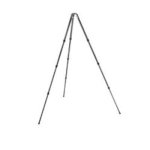
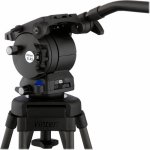
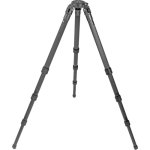
What exactly is a video tripod?

ralfmouth

Well-known member
The problem is my manfrotto vibrates pretty easily when shooting video.
Will a "video tripod" help with dslr or small cam, or does one need a (very expensive) gitzo.
How are video tripods different anyway (besides the video head).
They usually look something like this:
thanks
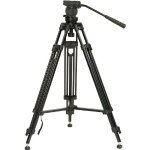
41XhM-Uat2L._SL500_AA300_.jpg
 
A video tripod will often support more weight, will rarely extend past 5-6 ft and usually features a bowl to make it faster to level the camera. As for vibrations travelling up through the tripod from the floor, unless you buy a heavy one I don't think it will make much difference. The video head is the part that differs the most, featuring a pan bar to enable dynamic tilt/pan. A fluid head is the way to go especially with adjustable drag functionality. This will minimise vibrations through movements.
 
How are video tripods different anyway (besides the video head)?

Tripods for still camera use and for video camera use are very different animals. They have very different design goals.

The goal for still photography is to hold the camera very still. I know, duh. But for this discussion it's perhaps worth it to say that out loud as it were.

The goal for video use is to hold the camera steady while the operator moves it. This is a completely different thing than locking the camera down so it's completely still. It's much more complex, and considerably harder to do. Remember your high school physics: for every action, there's an equal and opposite reaction (Newton's third law of motion).

What you want out of a video tripod / fluid head is buttery smooth movement in pan and/or tilt. This means that the tripod has to resist moving while the operator puts pressure on the pan bar to pan / tilt the camera; this is a lot easier said then done. If the tripod itself moves in response to moving the camera, you'll see it in the resulting video. It'll show up as jerkiness at the start / end of the camera movement. It can also show up as unwanted acceleration / deceleration in the middle of a pan / tilt movement, and also as overshoots at the end of movements. I can't begin to describe all the possible visual artifacts you can get from poor tripod design. Suffice it to say that all of these artifacts call attention to the camera motion itself, which of course detracts from the viewers' experience of the video.

There are other design goals as well. Quick and accurate setup, and of course the need for accurate leveling. Pans that aren't exactly horizontal and tilts that aren't exactly vertical are typically quite easy to spot in the final video, thus the use of half balls on nearly all tripods for video use.

I could go on and on, but I'm sure you get the idea.
 
A fluid head..will minimise vibrations through movements.

Never considered fluid heads reducing vibration, thanks!

They have very different design goals. What you want out of a video tripod / fluid head is buttery smooth movement in pan and/or tilt. This means that the tripod has to resist moving while the operator puts pressure on the pan bar to pan / tilt.

I see why they emphasize torsional rigidity now.
So i guess video tripods are more for the cinema crowd, and less for nature / outdoor stuff i plan on doing.
Hey thanks for answers.
 
...A simple test to see if a photo tripod can be used for video work, is to grab the top of the tripod legs and twist. Good video tripod legs will not budge when you try to twist them. ( I still use an old compact Gitzo still photo tripod for DSLR video work because it is extremely rigid and will not twist at all )
 
Honestly, in my experience it doesn't matter what kind of legs you get (photo or video style) so long as they are rock solid and rated for the kind of weight you're putting on them. The difference is ALL in the kind of head you use.

I use a Gitzo GT3541XLS as my primary set of legs, with a bowl adapter and a Vinten Vision 5AS head. Solid like a rock and smooth like butter:

21vl3rB2yTL.jpg IMG_87277.jpg
 

Attachments

  • 567550.jpg
    567550.jpg
    63.6 KB · Views: 0
KKeep in mind, they make them in different lengths. The XLS is the longest, and is great for shooting up high.
 
Well quick follow up....The Gitzo is rock solid and i'm really happy. No more vibrations, just a momentary thud when tapping the tripod.
Before, i was getting like 5 second vibrations (some sort of resonance going on) just from things like wind. Anyway appreciate it!
 
Back
Top