What are these called and where can I buy them?

AlexNOR

Active member
Hi guys

Is there anyone of you who can tell me what these are called (see picture below). Rode provides one in the box when purchasing any of their XLR microphones, and it's used between the male and female XLR connectors to remove any kind of wobble. It's not to be found on Rode's website, and I cannot seem to find it anywhere else either.
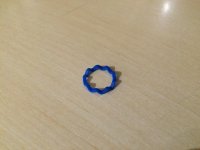
rode_ring.jpg

Really appreciate it if anyone can point me in the right direction. Could use a few extra of them.


- Alex
 
In my 20+ years, I have never needed an anti-wobble device between male and female XLR connectors. A large portion of that time was spent on remote production including a lot of time on TV live trucks. If you connectors are that bad, replace them!

Color coding would be the only reason I could see for these between male and female, but usually we use tape or colored boots.
 
Thanks for the reply, Greg.

My explanation was a bit off. They are placed inside the male connector, so that when you plug them together (male and female) it sits between them as some kind of rubber shim.

I only use Neutrik connectors, so they should all be good. However, all my 90° angled female connectors (the male connectors are fine) have a little bit of play in them that I thought using this shim would eliminate. Although at closer inspection it's the connector casing with the strain relief that is moving where it joins the plug, and not the plug inside the receiving xlr terminal.
 
A little play is normal where the shell latches to the other shell can be normal, the contacts are springs so they don't lose connection. The neutrik have a rubber O ring on the females, this is for dust and water rejection more than any other purpose. I would probably just toss those things, shouldn't need them.
 
So that would make it a "blue rubber padding ring".

I also in 30 plus years have never seen one or used one.

You can leave it on your desk and make people ask. Which sounds like a better use than what they propose.
 
We have a few of their lav mics with the XLR connector "adapter" (I forget what they call it), these did not have the little blue ring thing, most be something they started doing in the last 2 years. Fresh Neutrik connectors can be hard to seat, the O ring can take a while to crush down.
 
We have a few of their lav mics with the XLR connector "adapter" (I forget what they call it)
- Rode Micron adapters? I'm not fond of em'.. another connection to be compromised by breakage, oxidation and stresses the cable.

"Fresh Neutrik connectors can be hard to seat, the O ring can take a while to crush down"
- Yes indeed. But they don't rattle with free play noise, even after the break-in period. if lost or broken, it's a $0.20 cent O-ring at Home DePot or an auto parts store.
 
Re-inventing the wheel for the sake of it, Rode do it all the time and some of their mic's are Ok but others are just re marketed at higher cost than cheaper alternatives.
 
Thanks everybody for your replies, really appreciate it.

As it turns out it is not a sloppy connection between the male and female xlr connectors, those are solid as they should be. The slight wobble I see in my 90° Neutrik connectors is caused by the multi-piece design of the whole connector itself, and as some have pointed out it is perfectly normal.

Thanks again!


Thought I would pass along a link of someone who makes very nice cables for those interested...... http://locationsoundcables.com

I just found out recently that I'm very lucky in that regard. There is a professional sound shop near where I live, and their experienced staff can make me any cable I want using only industry standard components. I've had a few cables made already and they are top notch.
 
The best skill to get early on in your career is soldering. It will save you a fortune over the years, means you can customise your cabing, and being able to solder means you can fix many faulty devices. You don't need expensive tools, but never need pay somebody to put a plug on!
 
The best skill to get early on in your career is soldering. It will save you a fortune over the years, means you can customise your cabing, and being able to solder means you can fix many faulty devices. You don't need expensive tools, but never need pay somebody to put a plug on!

I'll second that… and I'll add something that's been huge for me: a tabletop drill press, and 1/4-20 and 3/8-16 taps. Learning to properly drill and thread a hole means you can adapt all sorts of gear and customize mounting points. With cheap aluminum you can make shims, mounting blocks, etc. You don't necessarily need a drill press over a hand drill, but (at least in the US) Sears and Harbor Freight sell decent drill presses, often on sale for under $50. Just having the two industry standard size drills and taps is really big bang-for-the-buck. Under $20.
 
They are for putting in the male XLR when using Switchcraft female connectors (and a few others) - they are not needed with a Neutrik XLR.
 
The best skill to get early on in your career is soldering. It will save you a fortune over the years, means you can customise your cabing, and being able to solder means you can fix many faulty devices. You don't need expensive tools, but never need pay somebody to put a plug on!

I'll second that… and I'll add something that's been huge for me: a tabletop drill press, and 1/4-20 and 3/8-16 taps. Learning to properly drill and thread a hole means you can adapt all sorts of gear and customize mounting points. With cheap aluminum you can make shims, mounting blocks, etc. You don't necessarily need a drill press over a hand drill, but (at least in the US) Sears and Harbor Freight sell decent drill presses, often on sale for under $50. Just having the two industry standard size drills and taps is really big bang-for-the-buck. Under $20.

I definitely agree with both of you.

Soldering is one of those things I've done many times. I'm not good at it, but I will probably do an "ok" job for the most part. When it comes to critical equipment I don't mind paying a small fee to have a professional doing the soldering job instead of me. At least for the time being while I'm still honing my own skills. I ended up paying less for my custom cables then what it would cost buying a similar cable from B&H. But don't get me wrong, I get your point and I agree that in the long run it will save me a bit of money if I learn to do it properly myself.

I also have a drill press (and a garage full of other tools - lucky me), and over the years I have used it quite a few times to adapt and customize various gear. I'dont have the 1/4-20 and 3/8-16 taps though (they are impossible to find here in Norway, unless you pay a huge premium), so I'm limited in that regard. Though I should be able to find them online I guess.

They are for putting in the male XLR when using Switchcraft female connectors (and a few others) - they are not needed with a Neutrik XLR.

Thanks, John. I figured it out after I created the topic that I didn't need them after all.
 
Back
Top