What are the do's & don'ts of selecting a business name?

In my view, the name holds a place of importance
That is why it is worth grabbing both the company name and the domain. It usually costs peanuts to hold.


but in the end, if you do exceptional work, you will be hired.
This is also true. However most of us, in reality, are good, or even very good, but not the exceptional 1%. The other thing is they need to remember who you are and where you can be found. No one is going to spend time and energy looking for you when they can find a lot of other [almost] as good people whilst looking for you if you are not easy to find.
 
Last edited:
Are there recommended best practices or do's & don'ts of selecting a business name?

I remember reading something years back about how words like media & productions carry specific connotations, so it's important to pick a descriptor that aligns with the service that you offer.

I see a lot of people using their surname, but I think my Nordic surname would be a poor choice, as nobody can figure out how to pronounce or spell it. I'm also averse to using my name because, I perceive people who name their business after themselves as unoriginal narcissists; perhaps that's unfair, but it's my gut reaction. It also implies one-man-band, which isn't conducive to growth.

This question is precipitated by my day job corporate AV support contract ending in August, and I may pursue video production in earnest as a full-time business.

A practical filter I like: can a client hear it once, spell it, find it, and say it without feeling awkward? If your surname fails that test, I’d avoid it, unless you’re already known by it locally. Personal names can work, but you’re right that they can signal “freelancer” more than “company,” depending on the market.

I’d also be careful with words like “media,” “films,” “productions,” “creative,” etc. They’re not wrong, but they set expectations. “Films” may sound more wedding/narrative/commercial, “production” is broad, “AV” sounds corporate/technical, and “studio” can imply a team or facility. Before falling in love with anything, check domain availability, social handles, local business registration, and obvious trademark conflicts. And say it out loud in a sentence: “Hi, this is ___ calling about your project.” If it feels natural, that’s a good sign.
 
Make sure that people can spell it. Mine is quite simple but I have to spell it out letter by letter when people ask for the email, which is the name. After 30 years it really annoys me now.
 
Make sure that people can spell it. Mine is quite simple but I have to spell it out letter by letter when people ask for the email, which is the name. After 30 years it really annoys me now.
I agree, being very cool several decades ago my company name started with a "ph" and phonetically was an "F" had to spell it by letter every time.
Also, the domain name (for various reasons) was a shortened concatenation of the legal name. That didn't help either.

It is worth thinking about the company name and domain and run the what-if's for a day before committing. Also ask other people to get their reaction, not everyone will see/hear it the same way you do. Especially if you are going international.

It is the same process with the company logo.
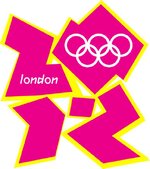
The UK had a good one for the 2012 Olympics that after launch most people said it looked like Lisa Simpson giving Bart a blowjob....
IT was supposed to be
20
12

Once seen you can't unsee it. So do take care at the start with names and logos.


OIP-871647634.jpg
 
Last edited:
One thing I'd avoid is picking a name that sounds cool but could easily be confused with three other businesses in the same field. It's worth checking Google and domain availability before getting too attached to it. I've seen people put more thought into their logo than the actual name, and honestly, I'd do it the other way around.
 
I've always wondered about this so I asked good old AI as I've always found two syllable names easier to remember. This is what he or she said!

While two-syllable names (Google, Apple, Nike, Tesla, Uber, Target, Disney) dominate market leader lists, research shows that brevity itself does not guarantee success. Rather, short two-syllable names align naturally with key psychological principles that make brands easier to adopt and remember.

Why Two-Syllable Names Perform Well​

1. High "Processing Fluency"​

Psychological studies show that the human brain favors information that requires minimal cognitive effort to process (known as processing fluency).
  • Easier to speak & hear: Two-syllable words are quick to pronounce and easily recognized in noisy environments.

  • Perceived trustworthiness: When a name is effortless to read and say, people subconsciously register the brand as more familiar, reliable, and less risky.
2. Natural English Rhythm (Trochaic Meter)

In English, the most common natural speech pattern is the trochaicmeter—a stressed syllable followed by an unstressed syllable(GOO-gle, AP-ple, TWIT-ter, SNOO-DOG, CAN-va).Because thiscadence feels native to how we speak, trochaic two-syllable names feel intuitive and slip effortlessly into everyday conversation.

3. Practical Business Advantages
  • Word-of-Mouth Virality: Short names reduce friction when recommendations are shared verbally.

  • Digital Formatting: Shorter names fit better on app icons, mobile screens, social media handles, website headers, and merchandise.

  • Verb Potential: Short, punchy names are much easier to turn into verbs ("Google it," "Uber there").
What the Research Actually Says: A Nuanced View

While branding guidelines traditionally advocate for short two-syllablenames, scientific studies reveal important nuances:
  • Attitude vs. Recognition: Recent consumer research indicates that 3–4 phoneme (typically 1–2 syllable) names generate the most positive customer attitudes, but slightly longer invented names can actually score higher in distinctiveness and recall during initial exposure because they provide more visual/phonetic cues.

  • Industry Context Matters:
    Tech & Consumer Goods: Benefit heavily from 1-to-2 syllable, high-fluency names (Slack, Stripe, Spotify).

Make of it what you may but Iv'e always found two syllable names slide off the tounge quite easily. In our trade? Sony, Canon, Nikon, Sigma, Tamron.

:D :D(y)

Chris Young
 
Back
Top