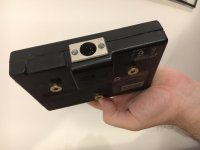
Vlock Dummy battery

morgan_moore

Major Contributor
Hi

Ive got a Vlock plate on my FS7 - sometimes Id like to run it on external power.

Taking the plate off is a PITA..

Does anyone know is a someone makes a 'dummy battery' for Vlock?

Ideally 4pin XLR in.
 
MM

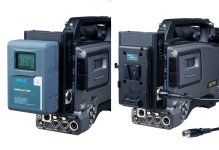
Core SWX GP-LS Single Position Charger which runs off mains and sits between your camera and V-Lock plate. Has 4 pin power OUT. Not cheap though. Sony also made one. Whether they still do I'm not sure but it was very pricey I thought. I run an aftermarket V Lock plate on the FS7 and it's just a matter of unplugging its cable and plugging in a power supply when needed.

https://www.bhphotovideo.com/c/product/438772-REG/Switronix_GP_LS_GP_LS_Single_Position_Charger.html

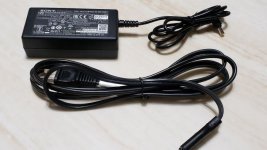
I bought this after market EX1/3 power supply as it has the right connector, a la EX series, FS7 etc, works well.

https://www.ebay.com/itm/Sony-AC-UE...802016?hash=item2cd2b77f20:g:zQ8AAOSwIzda1sfq

Chris Young

gp-ls.jpg

PS for FS7.jpg
 
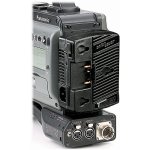
With A/B making batteries in V-Lock, now, it's too bad they haven't re-tooled their on-cam power supply in a V-Lock version. I have several and they are small, light, work as power supplies and battery chargers and switch instantly from mains power to the battery on the back(if you choose to put one on), so you never have to worry about losing power. Also makes it quick to pop-off almost instantly, because you just unplug the power cable and go. But like all things A/B, they're not cheap.

https://www.bhphotovideo.com/c/product/227829-REG/Anton_Bauer_TANDEM70_Tandem_70_On_Camera_AC_Power_Charger.html

1533159041000_IMG_20451.jpg
 
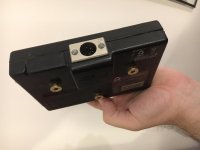
Years ago I took an old Anton Bauer Gold Mount battery, ripped out the guts (sent to recycling) and mounted in a 4-pin XLR. Worked great. The whole thing probably cost $10 as I got the battery case from a rental house that was going to recycle it anyway. You could easily do the same thing with a V-mount brick. It was especially easy because the old AB batteries had an LCD display on the side that was just a bit smaller than the panel mount plate for the XLR4 socket, which meant I had a perfect mounting spot with minimal work and a nice finished result. The whole operation took me maybe 30 minutes, but with a Dremel or other plastic cutter you could probably do a modern battery in under an hour.
 

Attachments

  • IMG_0537.jpg
    IMG_0537.jpg
    42.4 KB · Views: 0
Years ago I took an old Anton Bauer Gold Mount battery, ripped out the guts (sent to recycling) and mounted in a 4-pin XLR. Worked great. The whole thing probably cost $10 as I got the battery case from a rental house that was going to recycle it anyway. You could easily do the same thing with a V-mount brick. It was especially easy because the old AB batteries had an LCD display on the side that was just a bit smaller than the panel mount plate for the XLR4 socket, which meant I had a perfect mounting spot with minimal work and a nice finished result. The whole operation took me maybe 30 minutes, but with a Dremel or other plastic cutter you could probably do a modern battery in under an hour.


Yup, done the same. Used back plates that were too broken to repair and made battery convertors. Did the same with the camera side mounts to make things with only 4 pin accept batteries.
 
I use the kayo maxtar vmount batteries. You can use the charger (dtap) to plug directly into the battery while it's mounted to the camera and it will supply AC power to the camera at the same time.

Also I have the tilta vmount for my FS7, it's easy enough to unplug it from the power tip and plug in the regular AC adapter for the FS7. I often unplug it to plug in the power tip from my steadicam, so that I can power the camera through the sled and hang my vmount at the bottom.
 
Looks like what Im after :)

What a crappy product page.. cant see where the power goes in or what type of power lead or the power input (110, 240?)
 
Edited my post by adding a link to CVP’s page which you might have missed.

Under specifications it reads, “Operating Voltage: Input: AC100-240V / Output: DC15V”.
 
looks like a handy thing - thanks for that.

Using that fat 3pin cable is a bit dumb though as they are not very flexible and not required (I guess) to deliver the current.

Ideally id still be after 12v 3pin XLR in and deal with the voltage step down off camera.

Thus opening options for running the camera from remote batteries.
 
I still prefer my dummy battery and off board power supply. That FV unit has the power socket in the worst possible location: on top. BTW, 12v power is XLR4, not XLR3.
 
I've successfully run for hours on a variety of cameras, EXs, PMWs and FS7s using one of these units. They are 16.8 volt D Tap travel chargers with an output of 16.8 volt at a nominal 2.0 Amps with a peak current draw of 2.5 amps. You run your V Lock battery as normal but have one of these plugged into the battery and mains at the same time. If you need to use the D Tap out on the battery for other accessories you can replace the D Tap plug with a ring/tip plug on this charger if your V Lock batteries have a ring/tip charge socket. IMPORTANT NOTE! V Lock batteries that have a ring/tip charge socket are normally wired CENTRE NEGATIVE and OUTER POSITIVE which is the reverse of the normal ring/tip plug wiring you find on power supplies. The power supply supplied with the FS7 is rated at 12 volt 2.0 amps when being used as a DC camera power supply. When the FS7 power supply is in charge mode it is rated at 16.4 volt @ 1.9 amps. I find these D Tap travel chargers double up quite nicely as a supplementary power supply when plugged into a V Lock battery. Basically what you are doing is putting in around about what camera is drawing out current wise. Generally speaking I find running an EX, PMW or FS7 this way the viewfinder will indicate a pretty constant battery voltage of about 16.4 volt. Obviously if you are running external recorders, monitors etc this will affect the charge/drain ratio. If only the FS7 is running off the V Lock you will get almost indefinite run time. When you unplug the charger you generally have a fully charged battery on the camera that's now ready for handheld work. Your experiences may vary but that's been my experience to date.

https://www.ebay.com.au/itm/16-8V-D...e=STRK:MEBIDX:IT&_trksid=p2060353.m1438.l2649

Chris Young
 
Last edited:
Years ago I took an old Anton Bauer Gold Mount battery, ripped out the guts (sent to recycling) and mounted in a 4-pin XLR. Worked great. The whole thing probably cost $10 as I got the battery case from a rental house that was going to recycle it anyway. You could easily do the same thing with a V-mount brick. It was especially easy because the old AB batteries had an LCD display on the side that was just a bit smaller than the panel mount plate for the XLR4 socket, which meant I had a perfect mounting spot with minimal work and a nice finished result. The whole operation took me maybe 30 minutes, but with a Dremel or other plastic cutter you could probably do a modern battery in under an hour.
IMG_0537.jpg

If I did this and ran it to one of these Super Power Generator -- D&O Lighting 900Wh Lithium Power Generator do you think that would allow me to power an Aputure 300DII at 100% ?

I'm not an electrician by any stretch of the imagination so I don't understand how all of this works, but it seems at minimum if I had two of these dummy batteries that Mitch made I should be able to run the 300DII off of that ^ D&O battery right?
 
Last edited:
Talking with Aputure's customer support it seems that this idea^ wouldn't be a great long term use as the 300DII lights want 15A and this Super Power Generator only supplies 12A, but I still want to try it out and see how it performs if I ran the light at say 75%.

(please chime in if you can shed some light on the viability of this DIY project)
 
Talking with Aputure's customer support it seems that this idea^ wouldn't be a great long term use as the 300DII lights want 15A and this Super Power Generator only supplies 12A, but I still want to try it out and see how it performs if I ran the light at say 75%.

(please chime in if you can shed some light on the viability of this DIY project)

Even 12A is too much for an XLR.

To take it from first principles, which may be clear to many people but is worth reiterating, a 300-watt load is a 300-watt load. A lot of people are very keen on the idea that LEDs are battery powered but a 300W LED is no easier to battery power than any other 300W load, such as a kino 4-foot 4-bank. Three hundred watts at 12V is twenty-five amps which is what we technically refer to as "a lot." Many practical camera batteries protect themselves at 10A, so even a pair of them is not sufficient to run an Aputure 300D. If you are content to run the 300D in 1-battery mode you can do that, probably, but again you need to be careful about how much current it's pulling.

At these power levels, XLR connectors become inadequate. The best of them are rated at 10A. I have had some luck with Anderson Powerpole connectors which are widely used in motorsport and other automotive and RV (motorhome) applications to power things like refrigerators which may be very thirsty. They are big and chunky, accept big and chunky wiring, and even the smallest of them handles up to 50A. They are great on inverters. I have several lead-acid leisure batteries in wooden cases for easy carrying which have Anderson connectors for high power applications. There's also the safety issue of high power, low voltage DC systems. Accidents leading to short circuits are far from harmless and with serious current available can cause arc flash injuries and start fires very easily. Think of it as an arc welding torch.

In short what you are trying to do is tricky. You can do it with camera batteries but you need the extra-big camera batteries with at least 15A fusing, which are expensive, and you will need two on the light and two on the charger at least. The power system for the light ends up costing more than the light itself.
 
Even 12A is too much for an XLR.

To take it from first principles, which may be clear to many people but is worth reiterating, a 300-watt load is a 300-watt load. A lot of people are very keen on the idea that LEDs are battery powered but a 300W LED is no easier to battery power than any other 300W load, such as a kino 4-foot 4-bank. Three hundred watts at 12V is twenty-five amps which is what we technically refer to as "a lot." Many practical camera batteries protect themselves at 10A, so even a pair of them is not sufficient to run an Aputure 300D. If you are content to run the 300D in 1-battery mode you can do that, probably, but again you need to be careful about how much current it's pulling.

At these power levels, XLR connectors become inadequate. The best of them are rated at 10A.

Thank you for explaining this, now I have a better idea of what’s going on. So do you think the Aputure light is pulling 15A at all times, even if being ran at 50%? Or does the AMPs go up and down based on what brightness level the lamp is at?
 
Thank you for explaining this, now I have a better idea of what’s going on. So do you think the Aputure light is pulling 15A at all times, even if being ran at 50%? Or does the AMPs go up and down based on what brightness level the lamp is at?

Almost certainly it will, although I'm not sure what the behaviour of the thing is as regards coming on at full brightness then expecting you to wind it down.

Risky, I'd say. You're asking for a melted mess.
 
Back
Top