FS7: Viewfinder Waveform -- Gratical Eye vs. Camera Viewfinder

Vintegreo

Well-known member
I'm trying to get the waveform monitors to agree with one another and have some odd issues that I don't think are deal breakers, but they do make my head hurt a bit.

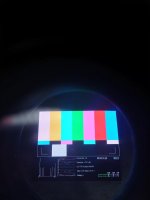
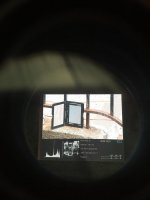
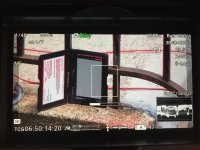
If I'm in Cine EI mode and feed bars to the gratical eye and the Sony viewfinder on my FS7M2, both waveforms seem to agree. However, when shooting an actual picture, this doesn't necessarily seem to be the case. I wouldn't doubt for a minute that I'm missing something basic. I did make sure that the signal monitor on the Sony viewfinder is measuring SDI 1, which is the port I have feeding the gratical eye.

Here are some pictures which hopefully will help, although I know they're not the best.

Thanks,

Tim
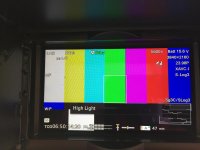
image4.jpgimage3.jpgimage1.jpgimage2.jpg
 
Duh! It dawned me that in addition to not outputting a LUT when you turn off LUTs on the output, that you also are sending the native sensor ISO to the gratical eye. So...you have to feed a LUT to the gratical from the Sony if you want to monitor the waveform the same on both viewfinders. A gotcha I didn't think about.
 
Duh! It dawned me that in addition to not outputting a LUT when you turn off LUTs on the output, that you also are sending the native sensor ISO to the gratical eye. So...you have to feed a LUT to the gratical from the Sony if you want to monitor the waveform the same on both viewfinders. A gotcha I didn't think about.

I don't quite get that statement. If you are outputting a bare Slog3 from SDI to the Gratical and have the FS7's WFM set to reflect the Slog3 signal then I would expect they should match as long as Gratical is also showing bare Slog3. The mismatch is probably caused by Gratical applying a LUT and showing levels of that LUT'ed signal. But I don't own Gratical so that's just my guess.
 
I could be wrong about this, but my point is that it seems that if you output a LUT-free signal via SDI 1 or 2 that you're monitoring an SLOG3 signal that's IS0 2000. This is in contrast with the fact that the viewfinder of the camera sees a signal that changes when you select L M or H for the ISO setting which in my case is 500, 800 and 2000 respectively.

Am I understanding this correctly or am I missing something here?

My expectation would have been that when you turn off the LUT on the output, that the gratical eye would still see and measure based on ISO 500, 800 or 2000. It seems sort of like the fact that if you shoot IS0 500 that you have to apply an exposure compensation to your footage if all you're going to do is apply a LUT.

Hope that clears it up.
 
Frankly the way your describing this is a little convoluted and I still can't follow it.
If you're in CINE EI though the VF will display based on the EI setting (500 etc) . The viewfinder has a setting also which can show a LUT or not and your not telling what thats set at.
However - Yes if no LUT is applied to the output and that's going to the Gratical eye then that will be at 2000. How would the GEye know what your EI (ISO) is - that's just for monitoring?
 
I could be wrong about this, but my point is that it seems that if you output a LUT-free signal via SDI 1 or 2 that you're monitoring an SLOG3 signal that's IS0 2000. This is in contrast with the fact that the viewfinder of the camera sees a signal that changes when you select L M or H for the ISO setting which in my case is 500, 800 and 2000 respectively.

Am I understanding this correctly or am I missing something here?

My expectation would have been that when you turn off the LUT on the output, that the gratical eye would still see and measure based on ISO 500, 800 or 2000. It seems sort of like the fact that if you shoot IS0 500 that you have to apply an exposure compensation to your footage if all you're going to do is apply a LUT.

Hope that clears it up.

Sorry, but this reveals that you don't understand how Cine EI works. Simply switching your Cine EI does nothing directly to the underlaying Slog signal, it only affects how you expose and THEN as a result of opening / closing iris, adding / subtracting lights, etc. the levels of the Slog change. You are never changing what you are calling a base ISO, you are changing rating of the camera - it's quite different.

I'll also add that your initial evaluation that the waveform levels match when you display SMPTE bars in Sony EVF and in Gratical is wrong, just look at the pictures you submitted. Cyan bar is at around 56 IRE in FS7 EVF, and over 80 IRE in the Gratical EVF - that is a dramatic difference! This confirms that the discrepancy you are seeing is caused by the fact that you are applying a REC709 LUT (which the picture of the Gratical EVF confirms, I can clearly see that you have it selected) on top of the signal coming from FS7 - including the signal with SMPTE bars.

In order for the IRE levels to match when the camera is feeding an Slog signal to any external monitor while displaying a LUT in its own EVF, you'd need to have compensating LUT in the Gratical for every Cine EI rating, and change it as you change the EI rating (ISO switch).

What I think you want instead is perhaps to simply send a LUT'ed signal from SDI2 while keeping SDI1/Internal recording as Slog and make EVF display LUT as well. In addition you'll have to make the FS7 WFM refer to the SDI2 (to see levels of the LUT'ed signal and not underlaying Slog). Finally, you will then have to turn any LUT's in Gratical off otherwise you'll end up with a double LUT'ed image in the latter.
 
Last edited:
Just to clarify a point raised in this thread, the Gratical Eye's "scopes can reflect data based on the raw input signal from the camera, pre LUT, or from a LUT applied image, POST LUT". The Overlay Features, including False Color & Zebras, "can only see pre LUT applied image. When using a LUT, these features will work off the original, non LUT image".

http://www.zacuto.com/PDF/graticaleye_fullmanual_6216.pdf
 
Sorry, but this reveals that you don't understand how Cine EI works. Simply switching your Cine EI does nothing directly to the underlaying Slog signal, it only affects how you expose and THEN as a result of opening / closing iris, adding / subtracting lights, etc. the levels of the Slog change. You are never changing what you are calling a base ISO, you are changing rating of the camera - it's quite different.

I'll also add that your initial evaluation that the waveform levels match when you display SMPTE bars in Sony EVF and in Gratical is wrong, just look at the pictures you submitted. Cyan bar is at around 56 IRE in FS7 EVF, and over 80 IRE in the Gratical EVF - that is a dramatic difference! This confirms that the discrepancy you are seeing is caused by the fact that you are applying a REC709 LUT (which the picture of the Gratical EVF confirms, I can clearly see that you have it selected) on top of the signal coming from FS7 - including the signal with SMPTE bars.

In order for the IRE levels to match when the camera is feeding an Slog signal to any external monitor while displaying a LUT in its own EVF, you'd need to have compensating LUT in the Gratical for every Cine EI rating, and change it as you change the EI rating (ISO switch).

What I think you want instead is perhaps to simply send a LUT'ed signal from SDI2 while keeping SDI1/Internal recording as Slog and make EVF display LUT as well. In addition you'll have to make the FS7 WFM refer to the SDI2 (to see levels of the LUT'ed signal and not underlaying Slog). Finally, you will then have to turn any LUT's in Gratical off otherwise you'll end up with a double LUT'ed image in the latter.

Thank you for your detailed explanation. I do understand that in Cine EI mode that the signal is being recorded one way and that we're only changing how things are rated. What I took for granted was not sending a LUTed signal also meant that the ISO rating would always be 2000 due to the fact that as you said, the SLOG signal itself does not change. When I edit, I apply an exposure compensated Alister Chapman LUT to my footage fairly often knowing that's this is the case.

I'll also admit to being a bit sleep deprived as I've tried to write these posts, so I haven't been as articulate as I would like! It's a lot to keep straight and the Gratical eye is new to me. I'm used to scopes changing in the viewfinder regardless of whether a LUT is applied or not, so I really do appreciate your help in resetting my brain on this one!

When I use the Grat EYE with Slog .. I just set the SDI for the in camera REC 709 LUT..as I would a monitor.... I only use the EYE Luts for off speed ,when the camera cant do it.. I set the WFM to be post LUT.. simple.. thats all you really need to do..
 
When I use the Grat EYE with Slog .. I just set the SDI for the in camera REC 709 LUT..as I would a monitor.... I only use the EYE Luts for off speed ,when the camera cant do it.. I set the WFM to be post LUT.. simple.. thats all you really need to do..

I'm the opposite, & always point the Eye to the Pre-LUT signal.
 
I'm the opposite, & always point the Eye to the Pre-LUT signal.

Sure either way.. what ever you are used to.. its just how I work/ worked with the LCD EVF.. I think the in camera REC709 LUT is fine.. no doubt the EYE one is too.. its like cooking.. as long as the pudding in tasty at the end, it matters not..
I,d rather the scopes are reading what Im looking at.. not the Slog underneath.. but only because that how I started with Slog and Ive never had any complaints so far.. what ever works.. was just putting forward I would think the most basic way to get up and running with Slog/EYE if your unsure.. and end up applying double LUT,s and other such undesirable out comes..
 
Back
Top