URGENT. Need Lighting Tips for shoot tomorrow night.

peter917

Active member
So our prep and test day go rained out so we did not get to prep light setup for location. It will be a night shoot with 2 characters under a fallen tree having a conversation. I wanted to share my light setup and ask for tips or suggestions as I couldn't test this myself but it is my thoughts just based on my own experience, but I have not done a night scene with this much lighting before.

This image shows what I want to and was thinking of doing. We will be pumping fog into the background.
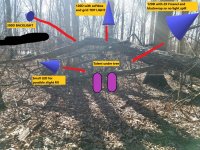
Night Light test.jpg

We will be blue gelling for a moon light look. Here was a test I was able to do during the rain but only one light was able to be used. The issue is this shot has no depth due to only having one light because of the rain and not having enough cover to test the rest. This shot is a bit too dark. This is a dramatic film so not looking for beauty light.
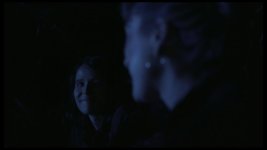
dialed down blue.jpg

Any help would be appreciated on placement of lights, distance from subject and if I am going overkill. Shooting on a C200 in RAW. One camera, we are trying to light where we dont have to adjust much during the shoot for time sake.
 
That light setup works for close ups and mediums.

With a wide, you’d have to be slightly more creative with those lights, but could totally make something work.
 
That light setup works for close ups and mediums.

With a wide, you’d have to be slightly more creative with those lights, but could totally make something work.

Yeah, the wide shot wont be to wide, just wanted suggestions on my setup, if I am over kill on the lighting if placement makes since and any tips or pointers. First time doing a big outdoor light setup like this and with no time to actually test I do not want to waste a lot of crews time.
 
At night, you are never overkill.


You are not just lighting the characters, but also lighting the whole world. So, you end up needing a lot of different lights. Unless you have some big balloon thing to songle source it, but i doubt you do. You are in a good starting spot. Should look great!
 
I don’t know about your application of the lights, because i am not as familiar woth the output of aputure.

Possibly it might be better to diffuse the 300d since diffusion sucks up the most output. And use the 120d’s bare or “fresneled”

So, using your 300 as a soft key and the 120 as hard light for the background. The little led could be a hair light? But what do i know. Just thinking out loud.
 
Last edited:
I am hoping NorBro or DLD give you a better answer soon.

(I feel like i am only making posts for Paul F these days)
 
Last edited:
I am hoping NorBro or DLD give you a better answer soon.

(I feel like i am only making posts for Paul F these days)

haha...thank you.

But NorBro doesn't know enough about lighting or lighting setups to provide any particular advice. If anything, I'd tell someone to use an a7S, haha.

I do what I think looks good with the absolute bare minimum, and stay in my lane with lighting.

(And I'm not sure DLD actually ever worked in video production...haha, IDK.)
 
NorBro said:
I do what I think looks good with the absolute bare minimum, and stay in my lane with lighting.

This is pretty much what matters most.
 
LED sources and blue gel looses huge amount of light. If you want the background lit properly then you need power to generate enough light. As in mains power and silent gens. The stage type RGBWUA kit does blue very well in high powers. A quick experiment shows my video white led kit is very poor with ben medium blue. Again, I've not tried but by accident have found some very moonlit nighttime shot looks when doing colour channel adjustments in the edit. Of course these were mistakes so I immediately scrapped these and moved on. In the film days night time was a chemical process and we still expect night to be that look despite real moonlight not being blue at all!

I suspect your kit will onl light faces, lighting the scene further away fruitless as you just won't have enough level. Lee 181 Congo is a wonderful colour but over 95% of the light is lost. Could you try the other trick of shooting daylight and putting the gel on the lens?
 
You can also go less heavy on the blue gels, and push it further in post if you need to.
 
... And I'm not sure DLD actually ever worked in video production...haha, IDK...
It depends how one defines video production!

LED sources and blue gel looses huge amount of light. If you want the background lit properly then you need power to generate enough light. As in mains power and silent gens. The stage type RGBWUA kit does blue very well in high powers. A quick experiment shows my video white led kit is very poor with ben medium blue. Again, I've not tried but by accident have found some very moonlit nighttime shot looks when doing colour channel adjustments in the edit. Of course these were mistakes so I immediately scrapped these and moved on. In the film days night time was a chemical process and we still expect night to be that look despite real moonlight not being blue at all!

I suspect your kit will onl light faces, lighting the scene further away fruitless as you just won't have enough level. Lee 181 Congo is a wonderful colour but over 95% of the light is lost. Could you try the other trick of shooting daylight and putting the gel on the lens?
It doesn't appear they have the funds for the larger lights, gennies, etc.

Well this is just me, but I wouldn't have the light coming from all those different angles. The moon is one large source, not 4 lights coming from different directions.
That's right. Shadows would have to come from one direction off a very diffused source. It might mean that they have to have two different set-ups - one for the closeups, the other for a wide shot. The wide shot is is probably better served shooting at twilight at the ISO 100-200 or so, i.e., not the real darkness but one might get the desired diffused look.

PS. And there's always a chroma screen.

PPS. These new RGB/RGBW lights have the bonfire effects built-in. Not exactly moonlight but something that may work with the story itself.
 
maybe I'm missing something on your setup, but

set your camera to 3200K and forget about the gels (which will cost you almost 2 stops of output) then:

1. use the 300 as a key in a softbox or bounce, 3/4 backlight, over the whole set. use the 120D to light the far background. Then use a small LED up front as fill/eye light. forget the fresnel.

OR

2. alternately light up the smoke in the backgound with the 300D and 120D and silhouette the talent. use the small led as an eyelight.
 
maybe I'm missing something on your setup, but

set your camera to 3200K and forget about the gels (which will cost you almost 2 stops of output) then:

1. use the 300 as a key in a softbox or bounce, 3/4 backlight, over the whole set. use the 120D to light the far background. Then use a small LED up front as fill/eye light. forget the fresnel.

OR

2. alternately light up the smoke in the backgound with the 300D and 120D and silhouette the talent. use the small led as an eyelight.
+1

I’d probably end up doing it this way. There are still some reasons to use gels, though i would’t go full ctb on a daylight led. But the OP said they did a test, so i assume they are happy with the look. If they have fire in the scene it will be extra warm looking, whether it be a match or lighter, lantern, or campfire.
 
I'd tell someone to use an a7S, haha.

Strangely enough, according to the A7S, with enough sensitivity, moonlight looks like daylight, https://vimeo.com/105690274. And here I was cringing every time I saw badly done day-for-night in 1950s westerns.

Seriously, I don't see the need for gels when you got post, especially if you're going to gel all your lights the same color.

It may be too late for this shoot, but I would love to see some more tests of day for night with modern post. I think it's still best to shoot when the sun is low in the sky (or would overcast work for moonless night too?)
 
Strangely enough, according to the A7S, with enough sensitivity, moonlight looks like daylight, https://vimeo.com/105690274. And here I was cringing every time I saw badly done day-for-night in 1950s westerns.

Seriously, I don't see the need for gels when you got post, especially if you're going to gel all your lights the same color.

It may be too late for this shoot, but I would love to see some more tests of day for night with modern post. I think it's still best to shoot when the sun is low in the sky (or would overcast work for moonless night too?)

It depends on what color you want everything else to be. If you white balance for incandescent and then tint everything blue in post, you may lose some warmth in sub 4000K sources. Just depends on how far you want to push the colors.


The A7sII looks awful with moonlight, would be even worse in a forest. And operating at f1.2 can be limiting.

If you want to talk naturalism though, it can be worth taking a look at light and the eye.

The cones in our eyes responsible for representing ‘blues’ are the most light sensitive, but also the least dense in the center. As it get darker, the other cones begin to lose sensitivity, whereas the ‘blue’ perform better. However since they are more dense on the edges, they are also representing a less “sharp” image than we are used to during the day.
This results in a more monochromatic visual sensation and a drop in percetible resolution. This also gives moonlight the look of “softness”, but the eyes are just working with less resolution and more noise.

Most of the natural light we experience at night is from the moon on a clear night, which is a very hard light. When there is no moon or heavy overcast, we don’t see quite as much.

So, using hard light gives a more natural look, while a shift towards monochromatic and even bluish is also “realistic”, and not just old movie tricks. But with 4K and 8K cameras, maybe night scenes should also be down res’d a little too.
 
Last edited:
Took this during a very clear night, by moonlight, with the Canon 1DC. The only real indication it is moonlight and not the sun is the drop in color and sharpness, but it definitely didn’t look this way to my eye.

So, as cameras outperform eyes, ‘the old tricks’ will still be useful.
 
Back
Top