Two mics & mini-adapter

Kirk Gillock

Rebel with a cause
Just got a Rode NTG-2 and AT lavalier for my HV20 camera. Individually they work great and plug into the mic input. But when I want them both to record audio at the same time, it's a problem.

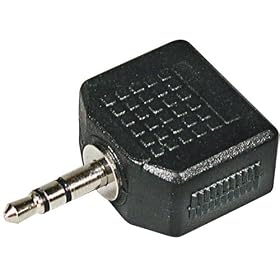
I bought a small adapter (exactly like the photo), thinking it would allow for both mics to be plugged into the mic input on the camera. Unfortunately, when both are plugged into the adapter there is no sound. When one is unplugged the other works fine. So only one can work with the adapter, which voids the purpose of the adapter.
51QCS4KPVHL._AA280_.jpg


The man at the shop said both mics can't work together. He said a lot of other technical stuff but it was all in Thai and I didn't understand most of it.

Other than buying a Beachtek for $175, what are the options for getting two mono mics into 1 stereo input? (Both mics use batteries.) Controlling the levels is not important (can do that in post.)

Thanks.
 
I'm thinking your adapter there is the sort intended to let you plug two stereo headphones into a single stereo outlet, though it's hard to tell by looking at the picture. Without knowing how your other cables are wired - in particular the XLR to mini cable you've got for the Rode - it's hard to tell for sure just what is connecting to what when both are plugged in but it seems like the combined effect is first combining the signal hot from both the Rode and the lav together and sending it to the tip of your adapter plug which is the left channel signal path. So it's trying to parallel both mics to the same mono channel and that won't work. What should happen is the tip of one mic's plug should connect to the tip of the plug you see in your adapter picture but the tip of the other mic's plug should connect to the RING of the adapter's plug - that doesn't happen in a stereo splitter. It also sounds like the other connections in the plug/adapter combination are ending up shorting signal to ground as well but to decipher exactly how requires more info.

What kind of connections do you have for the two mics individually? Are their plugs for the camera end TS or TRS? When you use the Rode by itself does the signal appear on both the left and right channel or just the left channel? Exactly how is the adapter wired that you're using to convert the Rode balanced XLR into unbalanced mini? How about when you use the AT lav and which model receiver is it - does it give you a recording on both left and right channels or just the left channel?

Your best bet ... get the Beach or similar - all things considered it's a cheap enough addition to your kit. And contrary to what you said, being able to control levels during recording is important. Overloading and clipping in the camera original cannot be fixed in post. Levels too low, OTOH, can be raised in post but at the cost of also increasing the noise so that's no good either. Just like Goldilocks' porridge you need to insure the levels are just right at the time you shoot..
 
Last edited:
PK, this kinda is a job for the Beachtek, and you know it. :)


But.. there may be a workaround. Sort of.

That unit simply splits all 3 contacts of the mic socket into 2 ports, and that normally won't work properly for input - as you end up with 2 stereo inputs in paralel.

What you want is something that splits the Stereo mic input into 2 mono inputs so that each mic is on an isolated channel.

Do you know the pinouts of the connectors on the 2 mics you are using? With that info, it's easy to build a correctly wired adapter. Without, it's kinda tricky.


- Mikko
 
Thanks for the help.

I think you're right, the adapter is probably for stereo headphones which is why the signals are conflicting. It only cost .50 cents so not much of a loss.

The XLR-to-mini cable for the Rode is a mono cable (the guy opened it up and, even though it has a stereo plug, he said it's mono). Sorry, I don't know what TS or TRS means (I'm sure it's something simple, but it's very late here and my brain is already asleep).

Both mics are mono because they only show up on one channel when recording. That means we should be able to build a mono-to-stereo input jack with left and right inputs, correct? Or will both signals still cancel each other?

You're right, a Beachtek is the way to go and I'm eyeing a few on eBay right now. But, for now, adjusting levels while recording isn't that important. Just doing some basic interviews and I wanted the person asking the questions to speak into the shotgun (off camera) in case we wanted to use her audio later.

Thanks again for the help.
 
TS = Tip Sleve. Mono un-balanced.
This connector:
ts_plug.jpg


TRS = Tip Ring Sleve. Stereo OR Blanaced Mono.
This:
trs_plug.jpg


Your camera has a TRS (Stereo) Mic jack.

You mics will have either: TRS Blanced, TRS Unbalanced, or TS (unballanced) connectors.

You need to adapt as follows to the camera's jack:
Camera "Sleve" - Sleve on BOTH mics, also the "Ring" on both mics if ballanced.
Camera "Ring" - The "Tip" on the mic you want to record to channel 2 ("Right")
Camera "Tip" - The "Tip" on the mic you want to record to channel 1 ("Left")

This is probabaly best done as a custom "Y" cable by yourself or someone who is handy with a soldering iorn.
Parts as follows:
2 x 3.5mm Stereo jacks
1 x 3.5mm Stereo plug
Some wire

- Mikko
 
Thanks for the help.

I think you're right, the adapter is probably for stereo headphones which is why the signals are conflicting. It only cost .50 cents so not much of a loss.

The XLR-to-mini cable for the Rode is a mono cable (the guy opened it up and, even though it has a stereo plug, he said it's mono). Sorry, I don't know what TS or TRS means (I'm sure it's something simple, but it's very late here and my brain is already asleep).

Both mics are mono because they only show up on one channel when recording. That means we should be able to build a mono-to-stereo input jack with left and right inputs, correct? Or will both signals still cancel each other?

You're right, a Beachtek is the way to go and I'm eyeing a few on eBay right now. But, for now, adjusting levels while recording isn't that important. Just doing some basic interviews and I wanted the person asking the questions to speak into the shotgun (off camera) in case we wanted to use her audio later.

Thanks again for the help.

See Mikko's post for illustrations of TS and TRS plugs - TRS is the proper term for a 'stereo' plug. Still uncertain what the adapter on your Rode is, but no matter - having a stereo plug on it sets off alarm bells and I think you should redo it in any case cause an awfully lot of XLR to TRS adapters aren't wired correctly to unbalance a mic in the first place. The Rode's XLR pin 2 needs to connect either to the tip OR the ring of the plug going into the camera. Both its pin 3 and pin 1 need to go to the sleeve of the plug going to the camera. The tip of the plug from the A/T needs to go to either the tip or the ring of the plug going to the camera but it needs to be the opposite of the other mic. In other words, if Rode signal hot ( pin 2) goes to tip at the camera, the A/T signal hot (tip) goes to the ring at the camera, or vice versa. The A/T sleeve goes to the sleeve going to the camera. Or to put it another way, the Rode pin 3 and pin1 and the A/T sleeve all go together to the sleeve of the plug going into the camera while one of the mic's signal hot needs to go to the camera plug tip and the other to the camera plug ring, take your pick which you want to go where. (Sheesh that's hard to explain in words!)
 
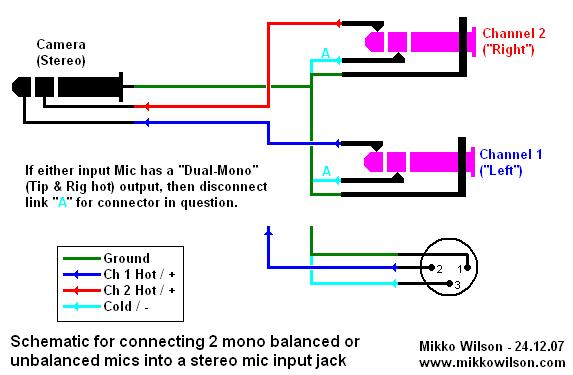
Steve and I are saying the same thing, and yes it is hard to explain in words.

So I drew a picture :)
monomicsYstereojack.jpg


The XLR connector on there is optional if you want to eliminate the Mic's own adapter cable.

Before you start: Plug each mic that has a TRS plug into the camera with it's mini-plug and listen through headphones to the audio. If the mic is on both channels, then it's wired for "Dual Mono", in which case leave out connection "A" for that mic's connector. If it's only on the left, then it's regular mono and connect up all the wires.
Any Mics with TS connectors, will of course connect the Ring and Sleeve contacts with the Sleeve and therefor are Mono-unbalanced.

- Mikko
 
And this is why DVXuser ROCKS!!!

Thanks, Steve. And thanks A LOT for the diagram, Mikko. You make it look easy enough for even my tiny brain. :)
 
2 things
1 i dont know if you will be able calibrate individually ( dont kow the camera )
so if not use beachteck adaptor
b- you will need block bias( the dc your camera suply for electert mics) with capasitors to eliminate hum problems

for cheap solution , you can buy nicrotrack or zoom recorder and use it as gain controll device feeding the camera line level + outside recording
probably would work better
 
Back
Top