The Germans are (not yet) coming - directors perspective.

Rolf Silber

Veteran
Okay - The Germans. Nothing I write is a dogma. Lots of people may disagree - Germans foremost. If you don‘t like it remember that oldcorpse is responsible for it. He made me do it so I make a fool out of myself here:

We start as most German tales with: Once upon a time .... and here our trouble with current films start: There was a German writer called Christoph von Grimmelshausen. It’s around 1670, the 30 Years War with more than 50% of all Germans killed by the sword, the canon, the torture, the pest or hunger, just over. And he writes a book called Simplicius Simplicissimus (The Simpleton), a big book and it’s a grim and cruel comedy about a Forrest Gump-style mercenary in this great war and he knows what he is writing about, because he himself was very probably a mercenary in this war.

And he writes another novel about a certain Madame, a whore, a peddler, a business woman in this war whom he calls “Courage”. Both books cruel, thrilling, entertaining, funny and wise. They are more or less the first “modern” novels in the teutonic language, they have highly interesting style changes and they cover the ground of the greatest disaster of Germans national history next to the WW2. And, no: Christoph von Grimmelshausen is not THE national writer of the Germans. And there you have it.

Much later: Goethe (great stylist but stuffy storyteller), Schiller (excellent dramatist but so serious, milk will turn sour as soon he enters a kitchen) – these are THE national writers a few hundred years on, while the English had Shakespeare (drama & comedy) and the French Moliere (comedy with drama) we have “deep thinkers” who only once in a while get disturbed by Grimmelshausens ghost, rattling his chains because a young, highly able writer called Buechner just died much too young who showed that he could work both in comedy and drama, be intelligent and highly entertaining. But: Hunted by the authorities and dead now. Meanwhile at least the Brothers Grimm go out and find a strange and rich and wonderful culture of folksy tales, interesting, strange, blood soaked, thrilling – but that’s for kids, no? Grimmelshausen’s ghost moans and begs to differ but nobody listens….

Short stop in the late 20’s of the 20[SUP]th[/SUP] century: Film is inventend and something seems to change with the Germans all of a sudden. They start, in literature, theater and especially in film to become …. more entertaining all of a sudden. “Nosferatu”, “Der blaue Engel”, “Der letzte Mann”, "Der Golem", "Das Kabinett des Dr. Caligari" ……. Grimmelshausens Ghost begins to have some hope. He has to accept though that he still is more or less forgotten, until only a young dramatist comes along, steals his "Courage", rips her from all the dark humour and most of the sexy parts and makes it into a highly successful but also “deep” theatre-piece and doesn't mention Grimmelshausen name often. But okay.

Meanwhile Lang shoots “M”, German film-industry is big, a certain Mr. Lubitsch and Mr. Wilder and others working in Berlin – and along comes a “deep” and neurotic Austrian hyena and the German decide to have a love affair with a flaring, burning, murderous socio-path. And Grimmelshausen’s Ghost packs for Hollywood.

Late 70’s of the 20[SUP]th[/SUP] century: So called “Young German Film” started out really good a decade ago, overrunning the bastions of the “Tearjerker Cartel”, the old UFA-Guys with often a brownish past who had the cinema in their grips but now sit with them in an unbecoming kind of a truce in the cinematic bunker where they try to survive the onslaught of Hollywood. Which is about to shock & awe the national German film production into oblivion.

This is maybe Grimmelshausen’s Ghost’s revenge. The Young German Films becomes “deeper” every year (with some distinctive exceptions) and makes no money, the films by the “Tearjerker Cartel” become sillier and sillier and sometimes make money. We have re-established a situation the Germans have trouble coming out of: Either a movie is entertaining (then it must be stupid, no?) or a movie is highly intelligent (then it must be boring, no?). Note: There always have been exceptions to the rule - as always.

What we have now is what is called a dichotomy. But at times directors like a guy called Roland Klick dare to at least try to revoke Grimmelshausen’s Ghost and make films that are both entertaining and intelligent and raw and full of energy. Nervousness in the bunker. And those guys have problems to establish themselves between the cinematic deeply high and the outright flatliner-culture. They get dissed big time. And there we at times got what oldcorpse in the other thread so nicely called: Bratwurst mit Scheiße. Very Grimmelhaus’ian expression, btw.

Around the 90’s younger directors make first steps into the “danger zone” between high and low-culture, some successful, other try too much to copy-cat Hollywood with 3% to 5% of the budget of an American film (German action movies – bwaaaah!) but later come some even some nationally very successful, not too stupid comedies.

As of today: I see highly interesting things happening in German cinema - not to the least through directors from immigrant background. Still it has problems talking to the national audience and the international at the same time. Too much navel inspection often, I concede. And “Berlin School” is another bout of “Teutonic Deepism” all though there where a few great films among it that just would not “travel” so I don’t dismiss in total. I believe there is hope. The proponents of Young German Film then had to overcome the mountains of s**t left behind by Nazi-culture and for this alone I respect them all though I am and never have been a great fan of it. The now young German cinema has to find it’s role and I see hopeful signs that Grimmelshausen’s Ghost may have at least his vacations over here more often again.

All what I wrote is of course a fairy-tale. I am born just twenty kilometres away from where the Brothers Grimm came from and 50 from where Grimmelshausen was born. So have mercy with me and remember how every good tale ends: And if they have not died, they still live on today….. ;-)

Okay, oldcorpse, did I now nicely enough dance to your tune?
 
Last edited:
There is hope Rolf.

I was just involved in the production of a film, that Grimmelshausen`s ghost may really like.
It´s and independent movie - Tom Bohn was the Writer, Director and Producer and he financed it him self with his life savings - a bold move, I may say.
He also managed to get Heiner Lauterbach, the brilliant Max Tidof and some other actors together doing this unusual adventure.

We wrapped shooting last February and Tom was able to distribute it to the cinemas by himself - cutting the distribution companies in the middle.
This is the "new breed" of filmmakers and future distribution I am hoping for. So we can bring movies to the cinemas, that would never passed the beancounters in the big companies.


Here is the official site: www.reality-xl.com

Frank
 
Hi Frank,

heard about the film and will try to see it. Someone I know, Till S., helps with distribution I heard. Hope it works out - would indeed be a bold move to produce outside "the system". I really cross my fingers without knowing the film yet.

postskriptum: Finding ways to talk directly with our audiences is the key. And economically: After having run into what is called "Martian Accounting" once it's even more important.
 
Thank you tipota, very much. As I expected, you provided a highly interesting and informative perspective. I am amazed by the historical sweep too - very fitting. Although perhaps I am a bit more of a fan of German literature, which I feel is the equal of any world literature (Shakespeare is a bit unique). I also have some thoughts on German cinema, I'll put down here, just to see what you think - coming soon.
 
Here's a theory I have, but I freely admit, it may be a bit personal. When I am in Berlin, I feel strongly, that this country has all the talent they need, but it is an issue of differentiation. Germany, is of course, its own country - that is obvious. But at the same time, it is within a certain cultural space, and I'd call that space broadly Germanic to which belongs also the Anglo-Saxon world. There is a very natural affinity between the Anglo-Saxon cultural expression, and the German. It is quite distinct from, for example French, or Italian, or Spanish - broadly Roman. It's Northern Germanic vs Southern Romance. This has been true for culture for centuries - music, painting, literature. There's the Germanic and there is the Latin.

So when a Frenchman or an Italian directs a film in France or Italy - or a Spaniard in Spain - you automatically get a perspective that's non-Anglo-Saxon. It already has the distinction of a flower from a different soil, and different climate - by the way, this is of course even more true for something coming out of Japan or Korea. But what about Germans? They really are at bottom like bread and meat and potatoes - culturally very familiar and hard to be "different" or "special" just by being who they are - we all know about bread, and potatoes... this is not sushi, this is not gazpacho or some exotic French or Italian dish. We are familiar with the culture in ways which make it hard to see them as automatically original.

Now a German films something, and it's very American, but on a low budget. And because it is only a bit different, it seems simply "worse". A Frenchman does it, and immediately it has an exotic flavor without even trying. Think of how Hollywood has done it - by incorporating exotic cultures by a proxy, enriched by the Italian cultures of Coppola and Scorsese, and by bringing in people from all over the world. The Germans, btw., have done a little bit something similar before WWII - their Jewish directors were the subcultural enrichment with a slightly different history and perspective. But then, the Jews left. And the nice sauce on the meat and potatoes was gone, and we are back to plain meat and potatoes. Boring, and familiar. But America took in the Jews - thank you!

Of course, with time, this should change. Germany is becoming also multi-cultural. There are people from all over the world (not only Turkey!) - I love Berlin! So I am quite sure, that the Germans are coming - I just don't know when... and I've been waiting for twenty years!

But for now, I feel like it's easy for a Frenchman or Italian or Japanese or X to stand out and be different and original. Remember how they say: "write/paint/play/shoot FROM THE HEART" - the Japanese opens his heart, and we are amazed and surprised. A German artist does the same - and we only say "we've seen this movie before... but why is the budget so low?".

So the German has a special challenge to make a different movie from Hollywood, to come up with something special. It's hard for a German to even imitate Hollywood - it comes across as a weak copy and a poor one. But ask an Italian to make a Western and you get Spaghetti Western - and we love it, it's so different. Ask the same of the Japanese, and you get the Samurai movie. Ask for a crime/gangster movie from Germany and what do you get? Ask the same from the Italian and you get Mafia films or Japanese you get Yakuza. You see the problem?

The problem in Germany is cultural. They are too close to us - and I feel this saps their energy. German directors look at Hollywood and cannot make their own interesting versions, like a Spaghetti Western or Yakuza movie. Then they look inside, and again only see meat and potatoes - but on a lower budget, so you get cheap imitation American movies. Germans cannot get out of their - and ours - cultural orbit and gravitational field, cannot become effortlessly original relying just on their culture (like French, or Japanese etc.), cannot easily start new cinema schools, and are always at a resource disadvantage compared to Hollywood.

I can confirm to you this in another way. Look how relatively easy it is for Germans to translate themselves to the U.S. - because they already are so similar - the Emmerich and Petersen hacks are easy to transfer. But a Fellini cannot work in Hollywood, a Godard cannot, a Kurosawa cannot - they are flowers that need a very different soil. But a Wim Wenders or a Herzog - much easier... they already share the culture.

I see this in many things, including music. A Frenchman sings - and it's an exotic, Romantic, French song. A German does it, and you get schlager. But exactly as in film... it's easier for the Germans to make convincing rock music that can cross over to the Anglo world, like the Scorpions, or the whole German electronic movement that started in the 60's and 70's. But the French rock bands remain local (of course, they can get out of it by using black or Arab French for some good hip hop!).

To sum up, I feel the Germans are coming, because their society and culture is opening up to different influences. But it is a bit slow. What do you think, tipota? Crazy?
 
All what I wrote is of course a fairy-tale. I am born just twenty kilometres away from where the Brothers Grimm came from and 50 from where Grimmelshausen was born. So have mercy with me and remember how every good tale ends: And if they have not died, they still live on today….. ;-)

Okay, oldcorpse, did I now nicely enough dance to your tune?

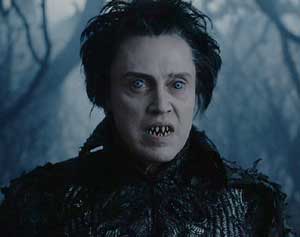
We in the US have ancient group memories of Hessians, and occasionally they come out in forms like this:

sh_059Walken.jpg


But for some time I've been looking at Gottfried Bürger for some 'inspiration'. I did use his poem 'Lenore', but the result ended up quite different...
 
The problem in Germany is cultural. They are too close to us - and I feel this saps their energy. German directors look at Hollywood and cannot make their own interesting versions, like a Spaghetti Western or Yakuza movie. Then they look inside, and again only see meat and potatoes - but on a lower budget, so you get cheap imitation American movies. Germans cannot get out of their - and ours - cultural orbit and gravitational field, cannot become effortlessly original relying just on their culture (like French, or Japanese etc.), cannot easily start new cinema schools, and are always at a resource disadvantage compared to Hollywood.

I do have a problem with some of this... the 'spaghetti western' were distributed in in the US in 'less than high art' form. The only places I saw them on the screen was in 25-cent theaters, that basically were warehouses for drunks and sailors who had nothing to do at 3 am until getting back to base at 6 am.

I think it is only in retrospect these became 'classic'... sort of like Ed Wood... I was flabbergasted when I visited a friend, at UCLA in film, in the early 70's to learn that she wanted to meet Ed Wood... as in 'uh? why?'...

I think the love affair with Wood is one of those 'it's so bad it's good' deals... 40 years later I'm still trying to place Wood... visionary with total lack of means... or flotsam/jetsam that some set of people have latched on to for no good reason, other than some schlock is determined to be 'cool'...

As a note, I sort of have the same feeling about Mr. Warhola... but I digress...

As for your theory on 'too close to Hollywood'... I think that may have some merit... Roland Emmerich would have never made any of the 'blockbuster' films he did in Germany. Yet he comes to Hollywood and makes a series of such... I can't think of a French/Italian/Japanese filmmaker who has done the same... The only other regions that produce such 'phenomena' are from the English Language speaking group, Britain, Australia, New Zeeland, and now perhaps South Africa.

And perhaps part of the 'problem' of German Film is some sort of attempt to avoid one's fate... rather than embrace Hollywood... there was an attempt to distance themselves from 'the americans', to no avail...
 
I'm afraid you got the spahetti western phenomenon not quite right. Because it started with Sergio Leone - he was the start. See here:

"Spaghetti Western, also known as Italo-Western, is a nickname for a broad sub-genre of Western films that emerged in the mid-1960s in the wake of Sergio Leone's unique and much copied film-making style and international box-office success, so named by American critics because most were produced and directed by Italians."

So it was Leone who started it. And he started it as much more ambitious than simply commerce - it had a unique style, much copied. Not exactly low art - in fact, the first were: A Fistful of Dollars, For a Few Dollars More, The Good, the Bad, and the Ugly - all of which featured a highly original style and music. But not only that - it was seen as such by Leone himself... in fact, he took inspiration from the high priest of art himself... Kurosawa! In fact this is so interesting, it's worth exploring:

"In the early 1960s, historical epics fell out of favor with audiences, but Leone had shifted his attention to a sub-genre which came to be known as the "Spaghetti Western", owing its origin to the American Western. His film A Fistful of Dollars (Per un Pugno di Dollari, 1964) was based upon Akira Kurosawa's Edo-era samurai adventure Yojimbo (1961). Leone's film elicited a legal challenge from the Japanese director, though Kurosawa's film was in turn probably based on the Dashiell Hammett novel Red Harvest (1929). A Fistful of Dollars is also notable for establishing Clint Eastwood as a star. Until that time Eastwood had been an American television actor with few credited film roles."

So it is fascinating how they all were taking Hollywood/American influence in some way: Dashiell Hammett --->Kurosawa-------->Sergio Leone. And in turn influencing each other. In their own minds, they were doing art.

But you ARE right, that American critics saw Spaghetti Westerns as cheap and tawdry. And only later did they come to see how radically artistic they were. But that's an old story - Film Noir arose as cheap and tawdry quick money makers made on super low budget by mass-market studios such as Republic Pictures... the stark look and cinematography were down to low budgets! And it took French critics to name it Film Noir and give it an art sheen, with big stars to follow. Exactly the same as with Spaghetti Westerns, which actually artistically transformed Hollywood Westerns! See here:

"The look of A Fistful of Dollars was established by its Spanish locations, which presented a violent and morally complex vision of the American Old West. The film paid tribute to traditional American western movies, but significantly departed from them in storyline, plot, characterization and mood. Leone gains credit for one great breakthrough in the western genre still followed today: in traditional western films, many heroes and villains alike looked as if they had just stepped out of a fashion magazine, with clearly drawn moral opposites, even down to the hero wearing a white hat and the villain wearing a black hat (except for the most successful of the 'traditional western cowboys' - Hopalong Cassidy, who wore a black outfit upon a pale horse). Leone's characters were, in contrast, more 'realistic' and complex: usually 'lone wolves' in their behaviour; they rarely shaved, looked dirty and sweated profusely, and there was a strong suggestion of criminal behaviour. The characters were also morally ambiguous by appearing generously compassionate, or nakedly and brutally self-serving, as the situation demanded. Some critics have noted the irony of an Italian director who could not speak English, and had never even visited the United States, let alone the American Old West, almost single-handedly redefining the typical vision of the Americancowboy. According to Christopher Frayling's book Something to do with Death, Leone knew a great deal about the American Old West. It fascinated him as a child, which carried into his adulthood and his films."

In other words, just as with Film Noir, the critics came around, and realized that the Spaghetti Westerns were an artistic breakthrough - even though they dismissed them at first. This is very, very, very, very different from the Ed Wood phenomenon, which is essentially a cult camp phenomenon. People don't flock to Ed Wood because they suddenly thought it was art - UNLIKE with the re-discovery and re-evaluation of Film Noir and Spaghetti Westerns - they flocked to him because he was high camp, as captured perfectly by Tim Burton's "Ed Wood". Very, very, very, very different. Camp and ironic - not artistically ahead of its time and resonating till today, as in Film Noir and Spaghetti Westerns. There, my friend, you got it dead wrong. Dead wrong.
 
Also, you are wrong about Andy Warhol. Leaving aside issues of taste, and Warhol's worth as an artist, you are wrong in equating Warhol with Ed Wood in several very crucial ways. One - technique. Andy Warhol was a very technically skilled artist - his drawings skills are extremely good, one of the best of his generation - (he made a living as a commercial artist for many years!), he understood composition and color theory and so forth. Ed Wood was an incompetent, technically. Yes, he suffered from no-budget problems, but he was technically incompetent, and that you can see from any budget. Two, Andy Warhol really did make a new chapter in art, one that reverberates to this day. Ed Wood was an worthless hack, who had no artistic impact of any kind on his contemporaries, and is only remembered because he was such a fun camp figure pulled to life by Tim Burton. Completely inapt analogy between the two. And that is quite apart from issues of taste wrt. Warhol or wrt. Ed Wood. But really this is getting quite afield from the thread - Warhol?!
 
Also, you are wrong about Andy Warhol. Leaving aside issues of taste, and Warhol's worth as an artist, you are wrong in equating Warhol with Ed Wood in several very crucial ways. One - technique. Andy Warhol was a very technically skilled artist - his drawings skills are extremely good, one of the best of his generation - (he made a living as a commercial artist for many years!), he understood composition and color theory and so forth. Ed Wood was an incompetent, technically. Yes, he suffered from no-budget problems, but he was technically incompetent, and that you can see from any budget. Two, Andy Warhol really did make a new chapter in art, one that reverberates to this day. Ed Wood was an worthless hack, who had no artistic impact of any kind on his contemporaries, and is only remembered because he was such a fun camp figure pulled to life by Tim Burton. Completely inapt analogy between the two. And that is quite apart from issues of taste wrt. Warhol or wrt. Ed Wood. But really this is getting quite afield from the thread - Warhol?!

Obviously I'm not a fan of Mr. Warhola, just as I've repositioned my view of Brecht... both seemed to have a knack for putting their name on material that often was the result of 'contributors'... and had the charisma to effect such. In the case of film, Paul Morrissey had the 'skill and talent', and Warhola's efforts look pretty juvenile, and from my view, further, can only be understood in terms of 60's 'do anything but something someone would what to watch' attitude. But that didn't stop Morrissey's 'collaborations' with Warhola being plastered with 'Andy Warhol's ....' in the title.
 
Oh OK, I see you are referring to Warhol's film work. I thought you meant his art. Well, that's different. Obviously, Warhol was a giant in the art world, but less than a gnat in the film world. But I still don't understand the comparison of Ed Wood to Andy Warhol. For Warhol, film was decidedly a side project and art was his main expression. Ed Wood was a filmmaker, period (a generous name for his activity - making films). And insofar as Warhol did anything in film, he did something highly original and different - whether you think it's artistically successful is a separate issue, but no question it was radically different. Ed Wood was the bottom layer of schlock - zero originality. No comparison.

As to "putting name" on collaborative products - film is a collaborative venture. Yet you have a credit convention of "A Joe Blow film" despite hundreds of contributors... so how's this different? And anyhow, it's not quite accurate in this case. Because Morrissey did get sole credit for a ton of his work during that time, and there is quite a bit of film work that Warhol did quite on his own, with no contribution from others - which wasn't difficult, since his philosophy on some of these was to "put film in, point the camera and walk away". Now, in art there was the "put name to" thing going on sometimes with Warhol - but you misunderstand... it was very deliberate artistically. It was making a point about art - just as painting a brillo pad or a Campbell's soup can. It would entirely miss the point to say "bbbbut Campbell already had a can like that!". It's a deliberate commentary in the conceptual dimension of art. It's not "credit stealing", lol. Anyhow, that happened only in specific instances, as an artistic expression. And how's that anything to do with Ed Wood? Was the idea that Ed Wood was somehow stealing credit from collaborators just as Warhol was, or was he making an artistic statement about the nature of collaboration, or ... I give up.

Ed Wood =/= Andy Warhol. Quite bizarre to bring these two in any kind of comparison. Very inapt in any case.
 
What do you think, tipota? Crazy?

Not crazy. Interesting points.

But: What is hard to get for people from afar and even for a lot of Germans is, that there still are the remnants a cultural divide within the borders of Germany. It is seemingly slight, hidden, you can not detect it easily but it still has some influence. And I do not mean west / east but the catholic south and west versus the protestant north and east. "Berlin School" is heavily, heavily "protestant" in it's approach. So within film-making you have at times two impulses that sometimes: Call it the Bergmann-faction vs. the Fellini-faction. Metaphorically spoken.

Another problem we had is with a tradition in German literature, theater and film that very often was centred around the key-words "Befindlichkeit" - which is only insufficiently translated as "existential orientation" - and "Idealismus". In this Germans are sometimes more like the French: We too can make movies where people talk "heavy stuff" and want to get to the “lastest of things” and that made German film-making at times a bit heavy-handed, especially but not only for foreign audiences. Anglo-Saxon storytelling is much more into conflict, setup and movement – things that travel better and fit to film almost “naturally”.

Hollywood can do what German cinema was doing - to it's own befuddlement sometimes it seems - until Hitler came to power: It started to become both inclusive for other impulses from other European cultures and it was about to develop what Hollywood did later so perfectly well (and so perfectly dull in some cases) - find structures of story-telling that work in different cultures alike and - once you have them - use your own national myths (and integrate other cultures myths) to export them via film.

Hollywood has, imho, quite efficiently tailored story-telling in film and Germans had and still have some problems finding their own way to do that and not just copying the U.S. and not getting stuck in the old Teutonic heavy-duty stuff.

With the current development I envy young film makers here. They – finally – start to become a bit less self-centred and can develop stories that are much more free, have more breathing space…
 
We in the US have ancient group memories of Hessians, and occasionally they come out in forms like this:

sh_059Walken.jpg


.

You should see my dentist bills..... ;-)

And, really, perfect: Sleepy Hollow is exactly, in it's style and grim humour, a very "Grimm'ian" and "Grimmelshaus'ian" film that could have been shot in the Spessart region. Since four years I try to find financiers for a film a bit like that over here. Next to impossible. We do not trust our own myths. Sad.

Getting late over here... tomorrow.....
 
During the 30s and even till the first days of WWII the German film industry produced the same stuff like Hollywood.
Including light footed singing, tap dancing, jazzy swing tunes screwball comedies like "Glückskinder".
Those movies where played all over the world, from New York to Berlin, Italy, Portugal andwhatnot.


And there where pioneers like Leni Riefenstahl, that actually invented a ton of stuff Hollywood is using till today.

During the war, they shot a lot of propaganda films, as every nation does during a war.
The Nazis start to forbid any art, that is not along the lines of the government.
A lot of directors, filmmakers, actors, writers and artists went to other countries, cause they where not allowed anymore to work
We lost a ton of talent here.

Than Germany also lost the war and the winners did the same thing the Nazis did -
the new masters start to forbid any art, that is not along the lines of the government.
A lot of directors, filmmakers, actors, writers and artists went to other countries, cause they where not allowed to work anymore.

We - again - lost a ton of talent there.

To understand what happened next, you have to read the pamphlets about re-education the US government gave out back than.
For example this one: http://www.historians.org/projects/GIRoundtable/GermanReEd/GermanReEd_TOC.htm

As a side note: If you search for "re-education on the English Wikipedia, it takes you to this:
Re-Education: A euphemism for Brainwashing, efforts aimed at instilling certain beliefs in people against their will.

They spend a lot of money to turn the Germans into little Americans.
The Office of Military Government for Germany US (OMGUS), under the US zone’s Military Governor General Lucius D. Clay, allocated $1.03 million to the education program in the period to 1948, while the amount increased to $48 million between 1949 and 1952 under the Office of the High Commissioner US, Germany (HICOG). In addition, by 1949 rehabilitation programs were already being undertaken in West Germany by more than 50 private American organizations, including the American Council on Education, the labor unions AFL and CIO, the League of Women Voters, and the Rockefeller and Ford Foundations.

The Americans re-educated the sh..t out of us (no pun intended) and that measure was meeting German perfectionism.
So the Germans tried hard to be good little Americans and that really worked out.

Everyday life in Germany today is steeped and soaked in US culture.
Also regarding filmmaking, but without the budgets and that´s why we struggle there.
Even the largest German productions would be considered as low budget in the US.

But as I said, there is hope. We have a whole new breed of filmmakers that work around the budget problems
(the latest development in digital cameras helps a lot) - trying to find their own language and play in the same league again as we did 1936 with productions like "Glückskinder"

Frank


.
 
You lost me here, Frank, big time.

For me, growing up in an almost suffocatingly German surrounding, in a staunchly catholic-conservative and nationalistic environment, sprinkled with a few blaring old Nazis, the influence of American (and Italian and French and....) culture was actually helpful in finding my own way out of this "Sleepy Hollow". Yes, we did listen at night to "Wolfman Jack" in AFN and our parents would go bonkers over that and it was, for me, very good.

Riefenstahl would be interesting to discuss - elsewhere. For me she was the epitome of an irresponsible artist. Not her - discussable - art is the matter, but that she would not really speak out after the war. But - that is a completely different discussion. And not for here and not for now.

And pleeeaaase not the UFA between 1933 and 1945. Not over and over and over again. I have discussed that until my voice chords did hang out of my throat with people from a lot of countries, with co-students, with friends whose parents had been real stars in this machine, with pensioners who worked there .... I get allergic reactions by now, really. If this is where this discussion would be heading to, I'd say with Sam Goldwyn: "Include me out".

Please have mercy.
 
Well everyone has different roots.
My grandpa and my dad run a repair shop for the US Army.
We had over 20000 GIs living in our town in 4 kaserns - so you can imagine how I grew up.

I spoke English before I get into school, played baseball and eat Hersey bars instead of Milka.
And yeah, how I miss the old AFN of the 70s and 80s.

LOL, looks like I pulled some strings with the UFA .
Don´t wanna get deeper into that, seems like you really-really don´t like that topic.

Frank
 
LOL, looks like I pulled some strings with the UFA .

Entry lane Frankfurt Rhein-Main Airbase over our house, garrisons all around us, first contact with "my father's enemies" at about age five, later member in the biggest American/German biker-club.... ;-)

Currently German directors face the "luxury" of - at least in theory - to step out of she shadows of history a bit. They have the ambivalent joy of being confronted, apart from normal co-production or distribution investing, with a system of subsidies and funds that - in theory - should make it easier to finance a movie. If you survive the bureaucratic nightmare to apply for this system.

This system is both: sometimes fantastic, because a lot of small budget films get made and sometimes rotten, because this system tends to give money films that meet the most common denominators and - at times - kick out projects that are too hot-blooded. And TV stations have a at times too big say and seek to "re-finance" indirectly their own production, which often is not healthy for movies. There is currently no other way out than doing what the guy did Frank worked with.

Aesthetically - wide range. Maybe too wide. Eichinger, The Big White Bad/Good Elephant of German Film, was about the only one who really could make films that where heading to an international marked and survive there. But he had, at least from my perspective, a rather rigid set-up: Make movies that either are a) made after big literary successes, comics or games or b) have a very big scope historically or c) make comedies for the local marked. Exemptions to the rule included. And have a kick-ass distribution that can be at least a mammoth to the US Behemoths. This was an excellent strategy for him and his company - no doubt about that.

Whenever a project is to be made outside these structures the quixotic question for directors and writers for now is: How to be no copy-cat and how to be German and be internationally interesting at the same time? Becasue this is the next step after German directors found new creative freedoms without the ghosts of yesterday haunting them at every corner.
 
Aesthetically - wide range. Maybe too wide. Eichinger, The Big White Bad/Good Elephant of German Film, was about the only one who really could make films that where heading to an international marked and survive there. But he had, at least from my perspective, a rather rigid set-up: Make movies that either are a) made after big literary successes, comics or games or b) have a very big scope historically or c) make comedies for the local marked. Exemptions to the rule included. And have a kick-ass distribution that can be at least a mammoth to the US Behemoths. This was an excellent strategy for him and his company - no doubt about that.

I was incredibly disappointed with 'Das Parfum'(2006), given that the novel was a major german work... I had expected a major 'german' cast... I saw it in München when it was in theaters, and all I can say is... 'uh???'

I think 'Hanna'(2011) could have been cast with an all/mostly German cast and done as well... well... at least outside of the Englishspeaking world were dubbing and subtitling is more frequent...

I've followed Tom Tykwer and Frank Griebe for a while, and I much prefer their 'german' films to the Big Hollywood splash film...

In that regard, I have this book on Frank Griebe and Tom Tykwer's collaborations.

http://www.amazon.com/Kameramann-Griebe-Wilhelm-Christian-Stammer/dp/3894723882/ref=sr_1_1?ie=UTF8&qid=1325968898&sr=8-1
 
Last edited:
Back
Top