

BobDiaz
The Professor
The December Lunar Eclipse Challenge:
The Lunar Eclipse December 2010 will be a full lunar eclipse and will occur in the early morning of December 21 (Night of December 20 pacific coast). A noteworthy aspect concerning this eclipse is that it will occur during the winter solstice. This doesn't happen all to often, so if you have a clear sky and can get out during the event, you will definitely want to.
NASA stated that : "The eclipse begins on Tuesday morning, Dec. 21st, at 1:33 am EST (Monday, Dec. 20th, at 10:33 pm PST). At that time, Earth's shadow will appear as a dark-red bite at the edge of the lunar disk. It takes about an hour for the "bite" to expand and swallow the entire Moon. Totality commences at 02:41 am EST (11:41 pm PST) and lasts for 72 minutes."
http://science.nasa.gov/science-news/science-at-nasa/2010/17dec_solsticeeclipse/
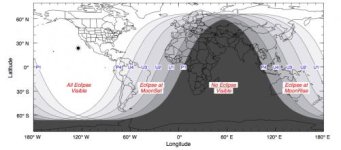
While many of us will miss this because the overcast skys will prevent viewing or you're in the wrong part of the world, some of you will be able to see it happen and record it on your HMC40 in timelapse.
Depending on how much you want to record will determine your settings for timelapse, but 1 frame every second may be the best choice, because you can always speed it up in post. For those who don't want to fix it in post, just set the speed for 1 frame every 10 seconds.
As for exposure, a 1/2 second exposure with 24 dB gain will get the stars in the background, BUT the moon will be way over exposed. I have no idea how the exposure will be once you reach full eclipse. I wish I had the correct exposure for getting the moon correct, sorry, but we have rain in Southern California and I can't go outside to check the exposure.
An ideal set-up would be to have a telescope clock drive to record the event, that way the camera moves with the Earth and the moon stays in view at all times. However, that's not something we have, so figure you could set the lens wide enough to cover the whole event OR wide enough to cover 1/2 the event and move the camera 1/2 way through.
The first would require 53 degrees coverage and the second would require 27 degrees of coverage. The widest angle would require that the zoom on the HMC40 be at the widest setting and the path of the moon must travel across the diagonal of the frame. For the second setting, the zoom should be at 30 and the moon could travel across the horizontal area of the frame. Put the zoom at 40 if you think you can get it to cover the diagonal of the frame.
For calculations on zoom range, see Barry's Book and this link:
http://www.tawbaware.com/maxlyons/calc.htm
Bob Diaz
The Lunar Eclipse December 2010 will be a full lunar eclipse and will occur in the early morning of December 21 (Night of December 20 pacific coast). A noteworthy aspect concerning this eclipse is that it will occur during the winter solstice. This doesn't happen all to often, so if you have a clear sky and can get out during the event, you will definitely want to.
NASA stated that : "The eclipse begins on Tuesday morning, Dec. 21st, at 1:33 am EST (Monday, Dec. 20th, at 10:33 pm PST). At that time, Earth's shadow will appear as a dark-red bite at the edge of the lunar disk. It takes about an hour for the "bite" to expand and swallow the entire Moon. Totality commences at 02:41 am EST (11:41 pm PST) and lasts for 72 minutes."
http://science.nasa.gov/science-news/science-at-nasa/2010/17dec_solsticeeclipse/
While many of us will miss this because the overcast skys will prevent viewing or you're in the wrong part of the world, some of you will be able to see it happen and record it on your HMC40 in timelapse.
Depending on how much you want to record will determine your settings for timelapse, but 1 frame every second may be the best choice, because you can always speed it up in post. For those who don't want to fix it in post, just set the speed for 1 frame every 10 seconds.
As for exposure, a 1/2 second exposure with 24 dB gain will get the stars in the background, BUT the moon will be way over exposed. I have no idea how the exposure will be once you reach full eclipse. I wish I had the correct exposure for getting the moon correct, sorry, but we have rain in Southern California and I can't go outside to check the exposure.
An ideal set-up would be to have a telescope clock drive to record the event, that way the camera moves with the Earth and the moon stays in view at all times. However, that's not something we have, so figure you could set the lens wide enough to cover the whole event OR wide enough to cover 1/2 the event and move the camera 1/2 way through.
The first would require 53 degrees coverage and the second would require 27 degrees of coverage. The widest angle would require that the zoom on the HMC40 be at the widest setting and the path of the moon must travel across the diagonal of the frame. For the second setting, the zoom should be at 30 and the moon could travel across the horizontal area of the frame. Put the zoom at 40 if you think you can get it to cover the diagonal of the frame.
For calculations on zoom range, see Barry's Book and this link:
http://www.tawbaware.com/maxlyons/calc.htm
Bob Diaz