Studio layout advice requested

its another thing Ive been thinking over.. is white.. or black for the cove

over my years ive mulled this and concluded..

1) white not lit is black - black is not generally lightable to white.

2) white is more fashion lifestyle while a black start may work for 'hard edgy objects' motors gearboxes and the like.

Ive mentioned before that the wall opposing the cyc should be shoot ready white breezeblock so one can build a loft apartment feel, which is possibly more in demand than a cyc.

(of course whte breezeblock loft apartment look is enhandced by a few gobos or fresnels tickling the back wall -' the dedo wipe') :)
'

did I ever show this.. ?
 
Gone for a few days and this thread get super active.

You need to think about short term v long term. About money you can spend now that will make back income but will be throwaway in a short period, or about spending too little and offering something no one is interested in paying for.

DMX. DMX means time and versatility. Whatever you can do on a basic lighting board and whatever controls the lights offer is vastly faster to adjust than pulling out the ladder even once. Producers know this and time is money, so there will come a point where even in a small market people will not be willing to pay for a studio that doesn't offer DMX lighting.

Color control. 90% of the time all you need is 3200 or 5600. But the problem is that if you mix brands or fixture types these don't match. One unit's 3200 is a little green, another is a bit lacking in red. So now you need to get on the ladder and try to match them using gels. And if you go bi-color then you will need to re-gel at whatever color temp you land on. What to change this on the fly using the DMX board? Well you still have to climb a ladder for the gels, and forget about doing it live in shot.

RGBW and RGBACL lights are designed for this. You can tune the color over DMX and program it live to shot. RGBACL is more accurate because it divides the spectrum between its different color emitters rather than trying to cover the whole thing in a warm white or cool white LED (disclaimer, I sell RGBACL lights) and you get more effective power for the same wattage compared to bi-color because you're always using all the emitters just at various levels. These lights are more expensive than simpler mono-color or bi-color lamps, but they are also more effective and will last you longer. Because just as producers won't want to pay for a DMX-less studio, soon enough they won't want to pay for one that doesn't have color-tunable lights. Time is money. Every modern studio I know of in mid-markets on up is speccing color-tunable lights for their cycs and for other uses. It might take a few years but eventually everything will be color-tunable and your mono-color or bi-color lights will be of little value but any decent color-tunable light you buy will still be able to earn you income.

If all you can afford right now is mono-color or bi-color than understand that you will likely need to consider those lights worthless in a few years and that investment gone. I wouldn't even consider non-DMX. The reality of a studio is not just the space but the gear contained within. It's all part of the business investment and a chain is only as strong as its weakest link.

For car shots please note that the photo you posted shows a large fabric with lights bounced off it from the floor, not with lights punching through it. Bounce light is softer and less directional and is the classic way to light cars so that reflections are smooth and even without distracting specular highlights. To some degree this can be done using blanket lights, but then that would be a very expensive bit of kit given the needed size. Lighting like this requires large, directional lights and those little Godox units wouldn't begin to cut it. You'd need dozens of them and I still don't think it would begin to work. Wrong tool for the job.
 
Wow thanks you guys are great!

-----------
Lights

Those aliexpress lights look bright and affordable and worth considering or trying.

As Mitch said if I mix different brands of lights they may not match color, and could even the same brand and type (especially cheap chinese) may not match themselves? Using something like those for the soft and spots looks very tempting!

For soft panels I also found this Lupo soft super panel. It's wide 115, big 25" x 13", and 400watts draw. Close to right idea?
https://www.bhphotovideo.com/c/product/1478134-REG/lupo_414_superpanel_soft_60_dual.html

The fresnels I'm seeing are around wide 15-60, even the aliexpress ones I see. Is 15 wide enough?
I also found dracast versions. If I use dracast space lights I wonder if it would be beneficial to use the same brand fresnels for color consistency maybe? Maybe not?
https://www.bhphotovideo.com/c/prod...l3000b_led_fresnel_3000_dmx.html?sts=pi&pim=Y

I want DMX for sure. And I see the big benefits of adjustable and longer usefulness of RGBAW and RGBACL vs limited bicolor. I certainly want the former , but cost is probably going to have to decide this.

---------
Floor

So idea was to paint about 20' of the floor white and cover it with mats/protection when not needing white floor. The non-white studio floor where the crew works (about 30') would start out grey concrete but I am wondering what you guys recommend for it? Sealed? Colored? Covered?
---------

-------
Walls
What do you guys think about hanging black "curtains" like Paul has talked about around the edges? I could reposition them for shoots and also might help with noise reflections?

I'm still not sure about wall color in the studio working space. Obviously I know the cyc walls are white, but the rest of the studio in front of the cyc?


I'm working up a budget of what will work for now and more what I want, and then see what I can afford to do. I have to hit the ground running with a functional studio at least even if more limited at first, but the better it can start as, the better :)
 
Floor wise - I've done two with vinyl. One was Harlequin Studio - grey and intended for dance floor - it's a British brand not sure if available in the US. It has a sponginess that works well for impact damage reduction for dancers, but it was great as general purpose studio flooring. In another build, budget was tighter and we use the thicker vinyl used for kitchens - the kind that can be welded at the seams. This too was pretty good - we did break it fragging some steel deck when a leg dug in and ripped it.

Another fixed grid lighting tip. Pantographs are brilliant but crazily expensive - although I note they come up in studio auctions fairly often. What I did was use the double ender drop bars - aluminium with a u on each end, like a lighting clamp. They come in various lengths and I'd use pairs of these with a short bit of cross tube. You could even hang two one on top of the other - so a 600m double ender could have another 600mm one hung underneath. You could even cut them in half and extend them - although I eventually discovered builders studding - available in very long lengths and you could put the clamp on the top and hang the light on the bottom. This lets you have a few laying around so if your grid is 5m, and you need a light at 3m in a certain place - you use a 2m drop stud to do it. I just paint them black.

You mentioned 15-60 as beam angles. 60 is pretty wide, and 15 not a bad spot. I forgot to mention that a spotted Fresnel (a real large lens one) gets much brighter when spotted. The COBs and micro Fresnels tend to lose brightness when widened - not even to their limits, and their concentration is often not as high as much light gets wasted in the simpler optics. I know I'm off fashioned but I do not ever think of Fresnels as hard lights - they have a beautiful edge - soft and blends. Hard light sources are things like Source 4's (Tungsten or LED) Using big lenses is the same thing as using big lens front glass box lenses - just better optics. Now we're up to 4K and real detail, makeup and poor lighting are far more obvious. Increased dynamic range means more detail in the shadows, if the shadows have enough light in them. So many TV shows now stand out if you have 4K capability at home - and often for the wrong reasons. Flat washy images are just boring to watch - and I think have crept in because there's no skilled rack guy who can deal with the good lighting shots properly. Flood the place with panels and there occasion close in dedolight and the racks folk can be absent and the camera can sort out the exposure itself. Yuk.
 
Just throwing a curveball out there... have you considered scrapping a cyc wall altogether? 8 times out of 10 when I’m working at a white cyc studio we’re building custom sets with flats and never see a single inch of the white cyc wall anyways. Cycs require all sorts of lighting to get a nice even spread, but an actual set build can get by on a few lights on stands and one bouncing into a white ceiling or overhead frame and can look way more dynamics than endless white.

Unless you’re doing a lot of photography work as well the cyc look is pretty outdated to me.

A lot of my commercials are shot on sets built from flats and other than sound quality of the space I couldn’t care less if it was on a dmx controlled white cyc stage or an empty warehouse, because I’m gonna light it from the ground anyways to make it look as natural and real world interior as possible.
 
Yes, I suppose we are being led by the cyc idea and not available work. I must admit that 4 wallers are popular here too, although they tend to be advertised as studio space rather than studio, which tends to be the spaces that can be empty, with the blacks over any plain walls where the other spaces tend to look like old warehouses as they often are, that you start from scratch. I use one myself when I need height and we use pipe and drapes to deaden it down if we need to. I got the feeling, infinity backgrounds were important to his needs?
 
infinity whiete is a tough one.

to some extent I see it as less relevant as keying tech moves forward. on film working every frame was a huge retouch cost - not so much with digital

infinity occupies floor space and a little 2ft radius looks 'poor' and is toughto light

for stills I was more happy with my 3m (wide) vynyle white which i could lay at a 6ft rad when I needed it. This was good for product and fashion (some moving some still)

such a 3m vynyle is no good for shooting a second angle if you need a second angle with feet

at the end of our studio we had cleaned the corners to have three white walls which enabled a camera pan

you could also cove the corners but not the floor (interesting) for a camra pan

you may note my sketch Id restriced the cove on the side walls a little

my 'set' vid above show use of a room that has wall not a cove

==

what would I do? on a budget? probably four white walls and concentrate on a good coffee machine and clean toilets for the clients

and a rail system for black or green

first 3m has a white floor the rest grey.

and one wall keep those textured breeze blocks in white - cooler and cheapera than plaster.
 
Last edited:
I can count on one hand the times I needed an infinity coved white wall studio. Active DP for 15 years, semi-active for another 12.

Counterpoint: You’re one person. Well, you’re legend counts for another one, too…

But seriously, the ‘infinite white’, is very useful, or else why would so many studios have them? One of my clients has actual, real studios and I’ve shot on their white cyc several times. One of the local ad agencies/production companies in-town that I recently got hooked up with has rented the studio of a local still photog that has a white cyc several times recently for shoots I’ve done with them. And I’ve lost count the number of infinite white shoots I’ve done, both for sit-downs, features and interstitial type use for sports. But, too, I’m just one person.
 
I suppose it's genre specific, so if you get lots of advertising jobs with medium to large products - white is a sensible feature to have permanently, but if your productions are normally set based, then nothing at all or black is sensible. I guess it just depends on what your clients want. My studio is cloth based, and it's black, white, blue, green as a choice - and I've never used white yet.
 
It's really about the local market and the available work. Some might absolutely need white cyc for every job other may never use it. I've shot in plenty of white cyc stages but only actually needed the white cyc a handful of times. All the other imes it was simply what was available and it meant I had to keep a bit further away from the walls.

Firehawk, you are the only person who can answer this. You need to know your market. Otherwise why build this thing at all?
 
Thanks everyone. Right, our project types vary so a green cyc or white cyc might be needed for some people on here but useless for others. You guys do a range of things so input from you has already helped so I do not just build something limited to only my current project types.
https://www.holbornstudios.com/studio-2/
https://www.holbornstudios.com/studio-6/
The above seem to have sitting spaces (couches/tables/mirror etc) in the same space as the shooting stage. Is this acceptable? Clients could be right there watching the set which would save on costs of framing additional rooms but as mentioned previously they might want to be seperated and instead watching from a window or TV while they do other things without interrupting the shooting.

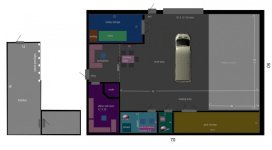
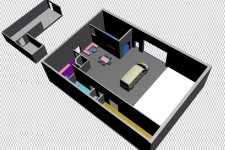
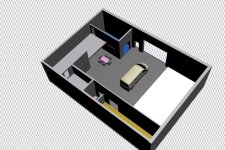
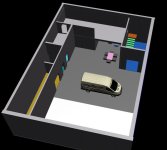
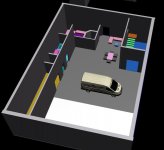
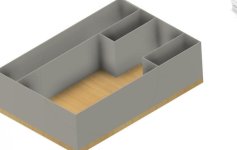
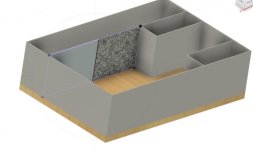
I'm asking because I had worked up an alternative cheaper design in a smaller building that shared space too. I'll go ahead and share it. I had it at 65' long but realized I probably needed 2 bathrooms so I expanded it to 70' long
Things I like:
Should be cheaper to build than previous idea
Still has large studio/stage area

Things I do not like:
pulling van into studio to load and having to clean floors
less surrounding rooms for noise isolation
meeting table shares space in studio/stage (but can be moved)
green/lounge space shares studio/stage space
utilizes heavy curtains to divide when needed, to save money building walls
less storage

*client viewing space could be moved upstairs
cheap 70 top.jpg
 
i think the shape is kind of good.
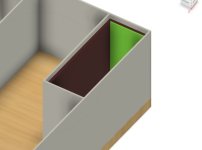
I think the green stairs should be in the main space on the left at picture 2
that left area in pic 2 is kind of dead.

my 'guests' have never 'sofa'd' the producers use desks to get on withimportant work like booking thier next holiday.

if some is your home Im not sure its properly seperated - probably an external staircase would do that.
there are (in the UK) the legal need fore fire excapes from upper floors and maybe in the yellow cupboard

I cant see any WC.. but people want to sneak into that not walk in/out in direct view of the main space!

I guess for practicality all pluming/waste needs to stick to a small zone

the blue room can get the sound treatment, and green rear wall

this is night van storage or unloading not during a shoot .. is there outdoor parking?

I think a little more symetry with be 'feng shui'/balanced
 
Last edited:
Back
Top