Star Wars: The Force Awakens

Just compelled, compelled, myself to re-watch this to see if the film is better on a second viewing. Wrong.

I am still dumbfounded at the warm reception this film received. The best comment on this thread with a link to a concise mini-essay critique is below.

I invite you all to read this article. It outlines the main issues I had with the film.

https://goo.gl/vorTe7
 
You're right, that's a good write-up.

I am still dumbfounded at the warm reception this film received.

I think we're all just thankful it wasn't like the prequels. But no, it didn't resonate with me the way the the original trilogy did. I guess I wrote it off to me growing up. Another part of it is that I was tired of microanalyzing the Star Wars movies to see why one movie worked and another didn't. But now that I've had some time to get away from it, I took the time to read this critique, and it has given me some stuff to think about.

Still, success in storytelling is oh so tricky. Take this criticism, from that essay: "'The Force Awakens' has no story. It is a sequence of tenuously connected events featuring several characters, each of which becomes the 'main character' (or main protagonist) depending on the moment in question." Well, that sounds a lot like A New Hope. We're with C-3PO and R2-D2 at the beginning, and also the princess. Then later we meet Luke, and soon after Obi-Wan, and then Han Solo. Then we're back to the princess on board the Death Star, where she witnesses her planet destroyed. To each of these characters we become emotionally bonded. How did it happen?
 
I am still dumbfounded at the warm reception this film received.

I'm not a giant fan of the franchise but I had seen the originals several times as a kid, and went to this one with a passing interest. To me it's a pretty clear case of sausage-making by committee. The originals were what you get from a small group of passionate artists; this last was what you get from focus groups and C-level executives and a giant budget. More deftly executed than the prequels? Sure.

As for the critics' reception, it's a horse I've been kicking a lot lately. They're all terrified to not like something they're supposed to like.

To find a good politician, find one who voted against the Iraq War (hint: not many!). To find a good critic, find one who said "meh" to Star Wars.
 
I am still dumbfounded at the warm reception this film received.

Buddy, I hate to break the news to you, but you're not the kid wearing out the VCR tapes anymore. Like I probably mentioned many posts back, at the heart of it, these are movies for kids. You're never going to get that magic feeling back.

The Force Awakens sucks? Try telling that to my 5 & 7-year old. (Hey, at least I have somewhat of an excuse to buy the toys!)
 
Buddy, I hate to break the news to you, but you're not the kid wearing out the VCR tapes anymore. Like I probably mentioned many posts back, at the heart of it, these are movies for kids. You're never going to get that magic feeling back.

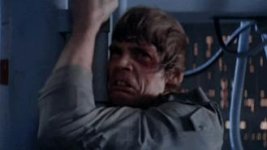
nooooooo_luke_skywalker.jpg

Noooooooo. ;)

I very much doubt Rogue One will be a movie for kids. We'll see. I was mostly just amazed that for once, I'm in the minority of people looking at a visually lush film with fun action scenes and noting, this lacks substance where it could have existed.

Usually I consume mainstream films without being able to dissemble plots or characters. It's an odd feeling to finally recognize stuff that seems so obviously bad, yet not only did the film enjoy wild box office success, but wide critical success as well.

And yes, I do hold Star Wars to a higher bar in my mind because its special to me, the same way Lord of the Rings was. I don't care if DC messes up Batman vs Superman, I'm not invested in that story. I am with Star Wars and I'm still waiting for a film that exists in that Galaxy far far away I guess. There were already 3 films made over 30 years ago that accomplished it. They stand the test of time today. Hopefully someone helming one of these future projects manages to go back there instead of reinventing the "Star Wars wheel" with a side of contemporary exasperation comedy.
 
hahahahaha.

Rougue One seems to be flying way under the radar. I'm aware of it, but it doesn't seem to be getting any hype whatsover for a Star Wars movie. So yes, that would be cool if it was a bit darker and not for the kiddies.

Back to the original topic: Don't get me wrong, I read that PDF and he makes valid plot & story points, but at the end of the day, it just doesn't matter to me.

Regarding weak plotlines, I maintain that the original could have been a 10 minute movie if those two idiots just blew up the jettisoned escape pod. "Hold your fire, there's no life forms" But why not just blow it up for protocol? (or fun?)
 
Regarding weak plotlines, I maintain that the original could have been a 10 minute movie if those two idiots just blew up the jettisoned escape pod. "Hold your fire, there's no life forms" But why not just blow it up for protocol? (or fun?)

This is clearly explained in the dialog. It must have short circuited.

:laugh:
 
You're never going to get that magic feeling back.

I don't know that it's impossible.

I still feel giddy after watching Return of the Jedi.

I felt a rush watching Jurassic World, the sequel I had been waiting for for 22 years.

I even felt the magic during the first 10 minutes of Phantom Menace, before it all went to crap.

It can be done.
 
So we know who Leia is, we know what she wants, and we know what the obstacles are towards her obtaining it. That's main character setup, right there. Any student of screenwriting would likely come to the same conclusion: Leia is the main character, based on the first 10 minutes of the film. Luke shows up 10 minutes later, and whines for the next 20 minutes. He doesn't establish any sort of actual wish or desire or motive until he tells Ben he wants to learn the ways of the Force and become a Jedi. Even then, what does he do? Continue to whine. Whines about how much Han will charge them, gets himself nearly killed in a barfight (where Luke was the damsel in distress and Ben had to save him), then whines about the blast shield being down ("How am I supposed to fight?"). Luke doesn't do anything noteworthy, or heroic, at all, until he makes the decision to rescue the princess. And that's halfway through the film. He's an unlikeable whiny snot for literally the first half the film, with no clear purpose, no direction, no goal, and no definition of obstacles towards obtaining that goal, until that moment.

So all I'm getting at is -- calling Luke the "hero" of the first film, is -- well, it's technically correct (in context of the original trilogy) but not nearly so clear when viewed as a standalone film. It is far from a classic hero's journey structure, and as I remember it, Campbell fought with Lucas over not having Luke even on screen in the beginning. Campbell thought it was a mistake, and (for sake of clarity in the story) I think he was right. Doesn't stop Star Wars from being my favorite film of all time, just saying that it doesn't fit the classic mold nearly as well as it might have.

Actually, I'll go further than this. It's not just the first ten minutes. Everything that happens in Ep IV does so because Leia drives it. Everyone else on the good-guy side serves her plans, and nothing they do is anything other than that. From beginning to end, the main conflict of the story and its resolution iare hers. Leia has a goal -- deliver the plans for the Death Star and then destroy it. That's Leia's goal. That is the main accomplishment of the film. Everyone else works for her.

Leia IS the main protagonist of Ep IV.
Leia drives the plot, not the story. There is a difference.

You could say that the reporter drives the plot of Citizen Kane, but it is Kane who drives the story.
 
Leia IS the main protagonist of Ep IV.

This is a radical assertion. If your head wanders so far from your heart, it's time to audit your train of thought.

Who feels like the protagonist? Luke. Who would most people say is the protagonist? Luke. Just because we can't explain why he's the protagonist doesn't mean he's not the protagonist. It just means we don't understand protagonism.

Everything that happens in Ep IV does so because Leia drives it.

First of all, that's not true. Second, even if it were, that doesn't mean she is the protagonist.

Leia doesn't drive everything. R2-D2, for instance, is the one who pulls Luke out of his house and into the wilderness. But Leia ordered R2, you might say. Well, maybe Leia's father, the king of Alderaan, ordered her. And if it weren't for the Empire, there would be no Rebellion. So is the Empire the protagonist? Tracing causation is too simple a formula for finding the protagonist. In most stories, the plot is instigated by someone other than the protagonist. Sometimes it's a good guy, but a supporting character, like Gandalf. Very often it's the villain, who's trying to build a moon ray or something, so the protagonist has to get out of bed to stop him. The instigator is not the protagonist.

The protagonist is who we emotionally identify with the most, and that is Luke. In Episode IV, and really all of the original episodes, it is more like an ensemble cast: Luke, Han, and Leia are like three friends on a road trip adventure or something, sort of like George's earlier work, American Graffiti. But still there is one character we indentify with more than the others: Ron Howard, Kermit the Frog, Luke Skywalker.

That's my feeble attempt at explaining why Luke is the protagonist. He is the protagonist. It's just a matter of figuring why, given that he is admittedly passive a bunch of times in the movie. But that's typical in many stories, including those based on the hero's journey. The protagonist continues to try to do the least amount of effort to restore peace. The story escalates as each attempt doesn't work, so he has to step it up a notch afterward, try, fail, and step it up a notch again. One difference is that he is making decisions to go along. The end of the First Act is when he makes the primary decision to go, to get on the train or the Millenium Falcon, or the Dwarven Caravan. He may fall on his face or be embarrassing through most of the second act, but he's learning. But by the Third Act he had better take a leading role in bringing about change, or he's not the protagonist. Luke fits this pattern, I think, as does Bilbo Baggins.
 
Managed to finally catch Episode VII last night.

Felt it was a bit of a rehash of New Hope for a new generation if I'm honest, but got to give credit for the 'feel' of the movie - the colours, sets, animatronics - really felt like I was watching an extended version of one of the originals, it was really well done - hope the 2 sequels follow the same feel. I enjoyed it immensely.

As to Ben Solo - he can go do one.
 
Who feels like the protagonist? Luke. Who would most people say is the protagonist? Luke.

I'm with you, buddy. Luke is the main protagonist, main character, and the hero of the original Star Wars.

It's an unconventional start for sure, but once things get moving, it's Luke's story. (I often wonder how the film would have played out with those deleted scenes where Luke was watching the battle through his binoculars.)

Combat, you lost me on the LOTR references, but otherwise, I back your post 100%. Leia.....phhhhhhfttt. For a main protagonist, she sure spent a lot of screen time locked up and off camera.
 
There's no doubt that Luke was INTENDED to be the protagonist (as has already been said).

But that doesn't mean a literary analysis of what actually happened on screen won't show something different. Intent doesn't always translate to the screen.

If the protagonist is the character who has the goal and drives the action, which is the common literary definition of it, then Leia is that person in Ep IV. Everything Luke does is to serve her, at her beckoning.

The protagonist is who we emotionally identify with the most, and that is Luke.

Actually, I think if you asked 20 people whom they emotionally identified with the most in Ep IV, you'd get a lot of different answers, and there'd be a strong showing for Han Solo.
 
you lost me on the LOTR references, but otherwise, I back your post 100%.

I meant Bilbo Baggins is another protagonist who gets dragged onto an adventure and for most of it is passive and lame.


There's no doubt that Luke was INTENDED to be the protagonist (as has already been said).

But that doesn't mean a literary analysis of what actually happened on screen won't show something different. Intent doesn't always translate to the screen.

If the protagonist is the character who has the goal and drives the action, which is the common literary definition of it, then Leia is that person in Ep IV. Everything Luke does is to serve her, at her beckoning.

I don't think the definition, even literary, of a protagonist is the character who drives the action. For most movies, the person who drives most of the action is the villain.


Actually, I think if you asked 20 people whom they emotionally identified with the most in Ep IV, you'd get a lot of different answers, and there'd be a strong showing for Han Solo.

By emotionally identify, I didn't mean who they like the most, who they say, "Hey, that guy's like me in real life," or about whom they say, "I want to be him." If you asked 20 people who they admired most, you might get 20 different answers, but if you asked 20 who the protagonist is, they would say Luke Skywalker.

Here, from a website called Literary Devices, a top result when I googled "define protagonist."

"A protagonist is the central character or leading figure"

(I've also heard "the main character." Not very technical, is it? More like an overall gut reaction.)

"in William Shakespeare’s play Hamlet, the protagonist experiences terrible events because of his indecisiveness"

(hmm, an indecisive protagonist --- until the end!)

"In the movie Star Wars the character of Luke Skywalker"

"hero, focal character, central character, main character, etc. Regardless of what title you give a protagonist . . . the story revolves around him/her"

(more general "main character")

"the protagonist may undergo some change, which will probably be the climax of the story."

(There are only two people in Star Wars who undergo a change: Luke Skywalker and Han Solo. Princess Leia doesn't go through an inward change. She is brave, strong, and correct from the very beginning.)

"the story revolves around the protagonist; s/he is the one who has to work as an emotional heart of the story, helping the audience connect with it on a basic level. A well-constructed protagonist attracts the audience emotionally and lets them relate to the joys, fears and hopes of the character in the story."

---

1. Typically the story begins with a lethargic protagonist. He is living in a state that is superficially at peace but underneath smells a little funny:

- Star Wars: Luke Skywalker cooped up on a farm
- Back to the Future: Marty McFly with his loser family
- The Matrix: Neo with his dead-end job
- Batman Begins: Bruce Wayne slogging it out in some prison
- The Hobbit: Bilbo Baggins in the totally insignificant Shire
- Casablanca: Rick in his cafe, floating around with the greaseballs
- Raiders of the Lost Ark: Indiana Jones, working as a professor and archaeologist, but foiled again by Belloq

In each case, there's clearly something missing, but if you asked the hero, he'd say, "Hey, it's home." They wish it were a little different, but they're not ready to do something drastic about it yet.

2. The protagonist's loser existence has been going on for a while, maybe since he had been born, but when we join him in the story, it's not long before he catches a glimpse of something bigger. This bigger reality has also been going on for a long time. But it's evil. The hero is just in some mild funk, but this is pure, highly concentrated, big-time evil. In fact, the hero's malaise is often linked to catching just the breeze from this evil going on far, far away.

- Star Wars: The Galactic Empire has become corrupt and is at war with the Rebellion
- Back to the Future: Doc Brown is involved with Lybian terrorists and stolen plutonium. Also, Biff rules over Marty's father.
- The Matrix: Humanity is living in a matrix fabricated by evil robots so they can be used for power
- Batman Begins: The League of Shadows has been manipulating history for centuries
- The Hobbit: Smaug the dragon has kicked the Dwarves out of their mountain and kept all their treasure
- Casablanca: World War II
- Raiders of the Lost Ark: World War II, and the Nazis are about to get the Ark

3. Someone has to go get the protagonist and drag him from his somewhat-peaceful-but-lamentable existence to the outskirts of the Big Bad Kingdom. This person is usually a good guy, some kind of wizard:

- Star Wars: Leia sends R2, who ends up dragging Luke, to Obi-Wan (the wizard), who coaxes him to the starport
- Back to the Future: Doc Brown is the wizard who beckons Marty to help him document his latest invention
- The Matrix: Morpheus is the wizard who beckons Neo to take his magical red pill
- Batman Begins: Raz Al Gul plays the wizard at the beginning and invites Bruce Wayne to his hidden fortress to learn the secrets of the ninja or whatever
- The Hobbit: Gandalf, the wizard, invites Bilbo to tarry along on an adventure to Lonely Mountain
- Casablanca: Rick's former lover, Ilsa Lund, and her new husband Victor Lazlo, a political revolutionary, drop in on Rick in his cafe.
- Raiders of the Lost Ark: Army Intelligence officers invite Indiana Jones to seek out the Ark before the Nazis do

4. Since the hero is here, and the Big Bad Kingdom is over there, the hero usually gets into a vehicle of some kind. The vehicle is almost like a character, is often awe-inspiring, and if you don't know what to title your movie, you could do worse than name it after your vehicle:

- Star Wars: The Millenium Falcon
- Back to the Future: The DeLorean Time Machine
- The Matrix: The Red Pill (or The Nebuchadnezzar)
- Batman Begins: Eh, he just climbs up the mountain, so I don't know. The Batmobile and Batwing figure prominently later, though
- Casablanca: Not much traveling going on here until the very end. Still at that point, the plane scene is iconic.
- Raiders of the Lost Ark: Jones in a plane hovering over a map

5. The hero does not dive immediately into the heart of the Big Evil Kingdom. He lands on the outskirts. He needs to learn some more. He must transform.

(I'm too tired to list examples. But if you think about it, they're easy to remember)

Then there are a series of battles, where the hero is bloodied, has to learn even more, etc., until finally he has been shaped into the perfect weapon to take out the Big Bad Evil.

101. The hero returns home, only it's better, now that the evil is eradicated and the hero is mature. Or, he stays in the new world, which is also better, since the evil is eradicated and the hero has matured into someone who can stand living there. Usually he brings gifts to his fellow inhabitants:

Star Wars: medals!
Back to the Future: Family members are cool, hey I got a truck!
Matrix: Sorry, you're still underneath a scorched earth, but one by one people are getting freed from the matrix
Batman Begins: The people of Gotham are saved
Casablanca: Ilsa and Victor are freed to travel on in their mission
Raiders of the Lost Ark: Jones brings back the Ark --- but it's locked away, oooh, irony
 
Last edited:
OK, then there's also this:

http://thewritepractice.com/protagonist/

[h=2]Definition of Protagonist[/h]The protagonist can also be called the hero or main character, but these terms are imprecise, and for some stories, plainly false. The protagonist of Macbeth, for example, is clearly not a hero. Nick Carraway is the main character of The Great Gatsby but he is not the protagonist.
My favorite definition of the protagonist is from Stephen Koch’s Writer’s Workshop:
The protagonist is the character whose fate matters most to the story.
​
The protagonist centers the story. She defines the plot and moves it forward. Her fate determines whether the story is a tragedy or comedy.
You may not know who your protagonist is until you are halfway through writing your novel. You may think your protagonist is one character, only to find out your villain is actually your protagonist. You do not need to know who your protagonist is before you begin writing, but as you look at your work in progress, ask “Whose future is most important to this story, to the other characters in this story? Whose future is most important to me?” If you can answer these questions, you have found your protagonist.

Sorry about the formatting.

But it's an interesting discussion of the difference between the "main character" and the "protagonist," from a writer's point of view.

It's not like this stuff is a science with a rigorous, tightly-defined answer, of course.
 
OK, then there's also this:

http://thewritepractice.com/protagonist/


Sorry about the formatting.

But it's an interesting discussion of the difference between the "main character" and the "protagonist," from a writer's point of view.

It's not like this stuff is a science with a rigorous, tightly-defined answer, of course.

The 'dramatic quesiton' of all three episodes IV-VI is 'is Luke going to become a Jedi, and will he cross over to the Dark Side'...

As such he is the protagonist in all three. There are subplots... such as getting the Death Star Plans, of which Lea is an integral character... there is the subplot of can Han and Chewie get the Millennium Falcon working well enough to get everyone to their destination... but neither Lea nor Han figures into the basic 'dramatic question' of is Luke for Good or Evil.


There could have been an plot line, where Luke does go to the Dark Side... and then Lea developing her Jedi side, and becoming the Protagonist in that film, with Luke her Antagonist... but that didn't happen... unless it is outside of the Feature Film installments.
 
I agree, if you take the throughline of all three movies into account (the passage I quoted from Barry above also mentions this). But I'm only referring to Ep IV, by itself, which at the time was stand-alone, and could have been forever had it not been enormously successful.

So, I'm going by that as a self-contained story, because at the time, in 1977, it was.

(Also, it should be noted that the 4-6 throughline was changed by 1-3, and the whole thing became about the fall and redemption of Anakin Skywalker. So let's just concentrate on Ep 4. :) )
 

Yes, I like that overall, especially: "Your protagonist must choose." The three-act structure is defined by the protagonist's decisions. The end of Act I is when the protagonist says, "Okay, I'm in" (although he may not know what he's getting into). The end of Act II is when the protagonist says, "Oh, now I get it." He knows what he must do to defeat the villain. (Now it's just a matter of doing it.)

Here's a quick-paced explanation of the three-act structure, including references to the Hero's Journey and Star Wars Episode IV:

 
Back
Top