
Navigation
Install the app
How to install the app on iOS
Follow along with the video below to see how to install our site as a web app on your home screen.
Note: This feature may not be available in some browsers.
More options
You are using an out of date browser. It may not display this or other websites correctly.
You should upgrade or use an alternative browser.
You should upgrade or use an alternative browser.
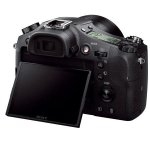
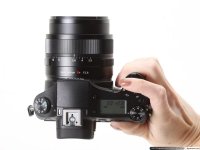
Sony RX10 with 24-200mm constant f2.8 zoom and 1" sensor !
- Thread starter joe1946
- Start date
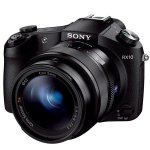
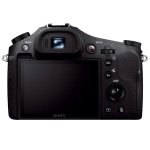
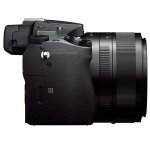
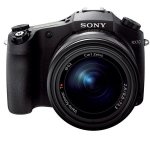
Yes - esp. since the RX100M2 (with the same sensor) produces such BEAUTIFUL video. Let's just hope you can turn off extended digital zoom in video mode, and can use focus assist, peaking and histogram in video mode (I'm tired of switching between video and stills mode for these things on the RX100M2).

Darren Levine
Veteran
now that is pretty much just what i was hoping they would do with the rx line.
that price is a bit much for pro?sumer point and shoot. but if they have a robust video codec in there, allowing it to do GH-ish things, it could be delicious.
i won't hold my breath
that price is a bit much for pro?sumer point and shoot. but if they have a robust video codec in there, allowing it to do GH-ish things, it could be delicious.
i won't hold my breath

joe1946
Veteran
http://www.dpreview.com/previews/sony-cybershot-dsc-rx10/4[h=3]Movie shooting[/h]All of these new processing features will also be applied in real time to the RX10's movie output, and it appears Sony has spent almost as much time working on the camera's movie credentials as on its stills capabilities.
Although the RX10's sensor is large by comparison with compact cameras, it's fairly small when compared with APS-C, Four Thirds and full frame sensors. This makes it easy to read the data off the sensor more quickly, which is a benefit for video shooters, because it means the RX10 is able to produce video that uses all its photosites - meaning less susceptibility to moire.
On top of this, the RX10 offers focus peaking while you're shooting video (something that few cameras currently offer) and 'zebra' overlays that warn of overexposure (with a user-selected threshold). This is supported with a socket for external mics and a headphone socket for monitoring the recorded audio. Not only does the RX10 provide control over mic volume, it also gives the choice of whether this audio monitoring is live or in-sync with the footage being shown on the camera.
Like many recent Sonys, the RX10 can shoot 1080 video at 60p up to 28Mbps or 60i and 24p at up to 24Mbps. In addition, the camera's footage can be output over HDMI, either with settings overlays for monitoring or without, for recording (and, we're told, with the option for uncompressed 4:2:2 video output). When you look at these specs and the switch that enables stepless aperture changes while recording movies, it looks like the RX10 could be a handy documentary camera.
Darren Levine
Veteran
well.... daymn.
again, if this can do GH like things in image quality, i'm in.
was going to get a BM pocket as a walkaround/stock footage camera. but this is far superior for that application. nice work sony
again, if this can do GH like things in image quality, i'm in.
was going to get a BM pocket as a walkaround/stock footage camera. but this is far superior for that application. nice work sony
well.... daymn.
again, if this can do GH like things in image quality, i'm in.
was going to get a BM pocket as a walkaround/stock footage camera. but this is far superior for that application. nice work sony
Keep in mind this camera will be a lot bigger than the BMPC for walking about. It's pretty much a DSLR in size.
Still, that's a lot smaller than most video cameras. And the ND filters along with the constant aperture f2.8 zoom are really, really nice features.
Darren Levine
Veteran
you're forgetting the bulk of the lens, stack this against the bmcp with the 14-140 lens. it may be more svelt, but it's not miles more portable

Samuel H
Major Contributor
WOW, ND filters! Now you have my attention! Not because it is the most important feature, but because it shows they care about my needs, so I can now be optimistic about things like the internal codec, which I had assumed would be the same weak one from my NEX-5N. Or a picture style that can use the full DR from the sensor, that would be the most welcome addition right now! (as I just said on the A7/A7r thread, my NEX-5N crushes one stop on the highlights and nearly two in the shadows, no matter how hard I play against the picture controls)
you're forgetting the bulk of the lens, stack this against the bmcp with the 14-140 lens. it may be more svelt, but it's not miles more portable
True. Plus, not many zooms have a constant aperture throughout the zoom range, especially those that go out to 200mm. Not cheaply, anyway.
Here's another review with a pre-production model:
http://www.imaging-resource.com/camera-reviews/sony/rx10/
They discuss the video capabilities of the camera. Here's a quote:
Sounds good to me!Besides its advantages for still image processing, the new BIONZ X processor in the Sony RX10 has a special LSI front-end processing section ideally suited to processing huge amounts of video data on the fly. For the first time (that we're aware of), the RX10's processor clocks the entire 20-megapixel image off the array up to 60 times/second, and then sub-samples (think of it as a special class of signal averaging) the raw image data digitally, to produce the final 1,920 x 1,080 video image. Doing so effectively performs a low-pass filtering operation on the video data, thus greatly reducing the propensity for moiré and false color artifacts.
Wesley Byram
Well-known member
Very intriguing. If they're really sampling the whole sensor, then that should make for some very sharp and clean video indeed. The supposed clean HDMI signal with 4:2:2 color would make it even more robust. On the other hand, reading out the whole sensor might take longer than something like line-skipping, so I wonder if this interesting cam will have some jello issues.
Could be a good choice for a lot of other things too.
For instance if they implement their 24mbs codec as well Canon did with the C100, they may have completely jumped the shark with this in a good way.
Another for instance - we've been holding off on adding more to our MFT kits (specifically the 12-35mm and 35-100mm Lumix zooms for our doc and run and gun work.)
And if you're in this business - producing commercial, promotional and doc work full time - then all the things this has that the BMPC doesn't touch and neither does the GH3 or C100, are a lot more important than a more "organic look" and certainly RAW.
Think about it vs the C100. A better processor with 60fps 24p, ND filter, same basic codec.
Compared to the GH3, ND filter, Zebras, Peaking.
And compared to both of them, a 24-200 2.8 Zeiss lens.
We were looking at getting a lot more glass for the GH3s and a BMPC for our kits and this is the first time I can remember instantly saying, "no way, decision made".
Of course IQ will determine everything, but what this delivers technically vs anything else right now seems just amazing to me.
And I'm heavily invested in Canon and Panasonic systems and glass.
I haven't even considered fixed lens before but seriously, the entire system costs the same as a single Lumix zoom.
For producers like us, on unpredictable locations all the time, this is just a crazy good development.
Could be a good choice for a lot of other things too.
For instance if they implement their 24mbs codec as well Canon did with the C100, they may have completely jumped the shark with this in a good way.
Another for instance - we've been holding off on adding more to our MFT kits (specifically the 12-35mm and 35-100mm Lumix zooms for our doc and run and gun work.)
And if you're in this business - producing commercial, promotional and doc work full time - then all the things this has that the BMPC doesn't touch and neither does the GH3 or C100, are a lot more important than a more "organic look" and certainly RAW.
Think about it vs the C100. A better processor with 60fps 24p, ND filter, same basic codec.
Compared to the GH3, ND filter, Zebras, Peaking.
And compared to both of them, a 24-200 2.8 Zeiss lens.
We were looking at getting a lot more glass for the GH3s and a BMPC for our kits and this is the first time I can remember instantly saying, "no way, decision made".
Of course IQ will determine everything, but what this delivers technically vs anything else right now seems just amazing to me.
And I'm heavily invested in Canon and Panasonic systems and glass.
I haven't even considered fixed lens before but seriously, the entire system costs the same as a single Lumix zoom.
For producers like us, on unpredictable locations all the time, this is just a crazy good development.
For casual low end work you may be right. But for anything where image flexibility and quality really matter AVC is a lousy camera acquisition codec, especially at less than 50mbps bit rates. It was designed as an end point streaming delivery codec, not an acquisition codec. If you can't get it out of the camera looking 95% exactly like you want it, there isn't much room to do anything with it before it falls apart. On any kind of action footage where the camera or the subject are moving at more than leisurely pace it falls apart anyway. The backgrounds degrade to mush and moving objects often take on an ephemeral sort of smeared transparent quality not remotely like the motion blur of a coherent frame. This applies to all AVC H.264 cameras as far as I'm concerned, not just this latest version.
Last edited:
Casual, low end work?
That's pretty unnecessary.
I'm guessing I make more than most here for my production.
I know exactly what these bit rates can do but seemingly you don't in practical terms.
We were doing Olympic documentary work just a few years ago on DV tape.
All your comments about mush etc. make no sense to me from a professional stand point.
I've got work all over the air and web and some theaters shot on 5Ds and GH3s...lot's of work.
There's the real world and there's the world of forum opinions, I guess.
I understand there's a community of folks that want to make Hollywood films and live for RAW and new startup cameras, but as I said, I'm talking about working film makers and commercial producers for whom things like RAW and bare bones camera systems are absolutely useless.
Most of us turn out well paid, award winning work in challenging places and circumstances, with daily real world deadlines.
Which is how I framed my original opinion.
Darren Levine
Veteran
For casual low end work you may be right. But for anything where image flexibility and quality really matter AVC is a lousy camera acquisition codec, especially at less than 50mbps bit rates.
Sorry, but are you completely blind to the happenings of the last idunno, 5 years?
the af100 comes out, 24mb avc belittled and ridiculed. verdict after numerous people tested it against external recorders? IT'S GOOD.
the c100. people again complain about the same thing, another variant of 24mb avc. verdict after the same scrutiny? IT'S DAMN GOOD
i know you've got RAW tattoo'ed on your forehead, but avc only good for "casual low end work"? you really want to make such a statement with all the casual, prosumer, professsional, TV, Hollywood, etc... getting use out of AVC low bitrate cameras?

joe 1008
Veteran
While this is not the best codec existing, with the actual processing power and especially the processing power of this camera - that is able to render the whole sensor output - the codec should be good enough for many jobs.
Plus the constant f2,8 almost superzoom-like lens.
Plus an additional XLR-adapter.
Plus the internal ND.
This could become the legitimate 2013-heir of the DVX.
All this said - I never trusted SONY - but maybe times they are a changing?
Plus the constant f2,8 almost superzoom-like lens.
Plus an additional XLR-adapter.
Plus the internal ND.
This could become the legitimate 2013-heir of the DVX.
All this said - I never trusted SONY - but maybe times they are a changing?

dustylense
Veteran
Look, some people NEED Raw because they have no clue on how to operate or tune a camera. It's their crutch they depend on to compete against those that understand camera basics. Rewind 10-15 years ago and they wouldn't even be commenting here because film would have just baffled them. RAW RAW RAW RAW! Try working with 8x10 sheet film that had at best 7 stops laditude.
Treat avchd like transparency film, get it right in camera and watch (unsderstand) you exposure, and these cameras can do spectacular things. Pro implementations of avchd like the c100s, fs700, gh3 are quite robust. I'm gonna guess that this rx10 will be just as good.
Treat avchd like transparency film, get it right in camera and watch (unsderstand) you exposure, and these cameras can do spectacular things. Pro implementations of avchd like the c100s, fs700, gh3 are quite robust. I'm gonna guess that this rx10 will be just as good.
Sorry, but are you completely blind to the happenings of the last idunno, 5 years?
the af100 comes out, 24mb avc belittled and ridiculed. verdict after numerous people tested it against external recorders? IT'S GOOD.
the c100. people again complain about the same thing, another variant of 24mb avc. verdict after the same scrutiny? IT'S DAMN GOOD
i know you've got RAW tattoo'ed on your forehead, but avc only good for "casual low end work"? you really want to make such a statement with all the casual, prosumer, professsional, TV, Hollywood, etc... getting use out of AVC low bitrate cameras?
I've worked with H.26X codecs in all of their forms for years. It is the backbone of corporate video conferencing networks. As a finished product delivery codec it shines. But as a camera original codec it leaves much to be desired. It is not implemented in low end cameras as an i-frame only codec which IMO is essential for any kind of creative post work at the very least, even simple clean dissolves. Looks fine for web and day to day industrial/commercial work as long as you don't mess with it much and the camera spits it out looking exactly like you want your finished product to look. Just don't look too close and don't try to manipulate it very much in post ( or conversely have gobs of money and time to throw at it in post to try to make it look better than it really is).