Sony FX6 - Handheld Shooting Techniques

Joshua Milligan

Well-known member
We usually talk about gear, settings and camera comparisons on this forum, but this time I thought we could talk about technique.

I've had a Sony FX6 since February and love most everything about it. It’s a great tool.

In that timespan, I’ve been working to better my handheld shooting skills. What made me want to do this is because I really enjoy shooting with 24-70 2.8 lenses, and specifically right now the 24-70 2.8 GM. It’s a nice lens that has an image I prefer more than say a 24-105 with image stabilization.

I also have the Sony 28-135 f/4 cine servo zoom which is a great tool that I also enjoy, but I prefer to use it for events and things like that. When shooting creative pieces, I reach for the 24-70.

The challenge with the FX6 is it’s weight. It doesn’t have IBIS and the 24-70 doesn’t have image stabilization, so it’s all up to your technique to achieve stable shots. And with the FX6, it’s so light that I feel like I get more movement than I did on my old FS7. But at the same time I do enjoy the freedom of working with a lighter camera, thus the conundrum.

A couple months back I picked up an Easyrig Minimax which has helped me save my back on shoots. I love that thing. It also gives me the ability to let the Easyrig do the heavy lifting while I hold on and control the camera. This has helped me stable the camera some which has been an added bonus.

What I want to know is what other techniques some of you utilize to get smooth handheld shots. I feel like this could be a great topic for those who enjoy the FX6, but who don’t want to rely on image stabilized lenses to use it handheld. So, let’s chat.
 
Last edited:
Personally, I don't buy into the whole low-weigh = less-steady argument. I've done a lot of handheld operating with fairly heavy camera builds (40-55lbs) and the weight has never been an advantage for smooth/controlled handheld work - any inertial benefits they might offer, are more than compensated for by the little muscle spasms the added weight brings to the mix.

In my experience, the key thing (first and foremost) is having a handheld rig that FITS you. That puts your hands and biceps where your body wants them to be, and puts the centre of gravity of your camera rig, as centred over the shoulder as possible.

For me, that involves LONG, and offset handles, that keeps the angle between my biceps and forearms, as close to 90 degrees as possible (taking as much excess strain off the biceps as possible, so that they can stay fresh as long as possible).

This results in a handheld rig that's MUCH larger and more spread out than most people ever see on-set (I'll frequently hear giggles from ACs). But it keeps my elbows tight to my torso (which improves rigidity) and allows me to operate effectively for much longer periods of time.

The other big one, is treading lightly. Wherever possible, I try to avoid locking my knees, and keep more to the balls of my feet (trying to stay off the heels). This way my legs act more like springs, and there's fewer hard impacts as I walk around (because the knees and ankles provide two levels of suspension).

Here's a recent example of an all-day handheld build (you can see just how far out the handles come, allowing for much more relaxed arm positioning):

dxbiMXq.jpg
 
Last edited:
Saw this on youtube a few years back, picked up quite a few tips from it.

ARRI WORKSHOP - A Guide to Handheld Camera Operating with Sean Bobbitt
 
I've never shot on the fx6 (mine should be coming soon) but with the FS5 I would usually operate it handheld against my upper chest (above the sternum) with the lcd towards the front of the body. It offered a great point of contact and stability, but may not work if you're shorter (I'm 6'2") as the POV may be a little low...
 
Thanks for posting that Arri workshop. Picked up a couple of tips. Long ago I bought a combination back brace and shoulder pad that connected to it from a defunct company called "jib jobs" .The pad is angled so that it straightens the slope on your shoulder , thus the camera sits horizontally without any effort . I find it enormously helpful for cameras that sit on my shoulder since most of the effort I've found comes from lifting my shoulder to stay level. No doubt this varies with people's build - some shoulder's slump more than others. Unfortunately I've never found any handheld shoulder pads that come with the camera to give me enough slant so I continue to use the "jib jobs" version. Someone else should make one IMHO.

Re lighter cameras that float in front of you , again long ago I started using a simple monopod with a manfrotto tilt head. It attaches to the camera with some kind of quick release either at the base or with a larger camera to a bracket jerry rigged to the rails .If yo0u have the same quick release on the tripod it's a fast change. On the bottom it simply sits in a fanny pack which can also carry batts etc. It triangulates the weight and help me a alot . Much less footprint than an easy rig and basically a similar idea. If you are shooting a long interview you can drop the monopod to the ground and if you need flexibility and movement just lift it out of the fanny pack and it gets out of your way or helps stabilize a low shot because you can turn it to the side. The tilt head is essential otherwise the monopod limits your shooting angle terribly. If you add something like a saxophone strap to the head than you can completely let go it in between shots.

I've also rigged up a Ronin S with an extra 6" handle so that it can also tuck into the fanny pack and connected it with a sax strap so I can let go of the damn thing in between shots . That's what can get realllllly tiring.

I tested out shooting with an easy rig on a B4 camera compared to my rig and though I thought the easy rig made me steadier, the video told the exact opposite. My weird little rig was considerably steadier for almost every kind of shot except tucking the camera under my shoulder. Surprised me so I sent the easy rig back.
 
For me, that involves LONG, and offset handles, that keeps the angle between my biceps and forearms, as close to 90 degrees as possible (taking as much excess strain off the biceps as possible, so that they can stay fresh as long as possible).

This results in a handheld rig that's MUCH larger and more spread out than most people ever see on-set (I'll frequently hear giggles from ACs). But it keeps my elbows tight to my torso (which improves rigidity) and allows me to operate effectively for much longer periods of time.
dxbiMXq.jpg

It's always interesting to see these hyper long handle setups that have become popular in recent years. I do such a tiny amount of handheld operating now that I have never had the opportunity to try that, but it seems a little curious to me in that it would magnify hand movement (acting as a lever), and I also have a hard time understanding how you pivot a camera forward if you have to tilt down radically without the handles preventing.

Another thing that came up after my time was discarding the viewfinder for the onboard monitor. Heads-up viewing makes sense in that you can look out for obstacles or keep an eye on elements outside the frame, but for me personally that would be mitigated by my need to wear reading glasses rendering the distance viewing blurry. Either way, I am dubious about the loss of that point of contact (head against camera) as a stabilizing element.
 
It's always interesting to see these hyper long handle setups that have become popular in recent years. I do such a tiny amount of handheld operating now that I have never had the opportunity to try that, but it seems a little curious to me in that it would magnify hand movement (acting as a lever), and I also have a hard time understanding how you pivot a camera forward if you have to tilt down radically without the handles preventing.

For me personally, the added leverage of the longer handles has always seemed to help smooth motion (rather than increase it). The relaxed arm position (and comfortable bracing against the torso) seems to reduce jitters rather than increase them.

Like using a longer pan bar on a fluid head, or a longer steadicam sled.

And you can tilt down with both your arms and from your hips, so I’ve never noticed any infringement on my range of motion either.

Another thing that came up after my time was discarding the viewfinder for the onboard monitor. Heads-up viewing makes sense in that you can look out for obstacles or keep an eye on elements outside the frame, but for me personally that would be mitigated by my need to wear reading glasses rendering the distance viewing blurry. Either way, I am dubious about the loss of that point of contact (head against camera) as a stabilizing element.

I’m not personally a fan of the onboard monitor for handheld operating. I like my eye to the viewfinder, and my other free (and unobstructed) to check my surroundings.


You can’t readily check the space around you with a monitor blocking everything.


The only reason I had the monitor for this setup was because of COVID protocols. I had to have my mask on at all times. And the EVF would fog up instantly with the mask in front of my face, so we had to swap in the monitor so that I could reliably see a picture.
 
Last edited:
Yeah, my operators had some real shenanigans to manage with PPE especially with the more stringent requirements last winter...double masks plus faceshield makes it pretty tough to operate handheld! Fortunately I was able to bring in one of the ZeeGee prototypes and we got some good stuff with that.
 
Yeah, my operators had some real shenanigans to manage with PPE especially with the more stringent requirements last winter...double masks plus faceshield makes it pretty tough to operate handheld! Fortunately I was able to bring in one of the ZeeGee prototypes and we got some good stuff with that.

The ZeeGee looks really interesting, how do you approach the onboard monitoring with that rig?
 
a little curious to me in that it would magnify hand movement (acting as a lever),

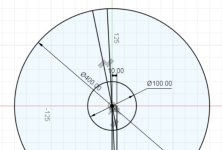
if your hand is shaking +/- 5mm then 10mm of movement on a 400mm bar is way less as a percentage than 10mm of movement on a 100mm bar

imo long handles are good. for operating in a controlled set. but often impractical for reality.
 
if your hand is shaking +/- 5mm then 10mm of movement on a 400mm bar is way less as a percentage than 10mm of movement on a 100mm bar

imo long handles are good. for operating in a controlled set. but often impractical for reality.

does that analysis make sense? either way, wouldn't you be moving the rails beneath the camera and thus the front of the camera itself 10mm? so, the same amount of shake either way? and the only percentage you care about is the degrees of rotation/tilt of the camera relative to the degrees of FOV?
 
certainly Im mathematically correct that a 10mm devation on a 400mm diameter creates a smaller angular deviation (dutch angle) than a 10mm deviation on a 100mm diameter

in a broader sensce having ones hold point near the cofm (grip steaidcam at post by cofm, have a short tripod pan par) grip a jib at the pivot) gives one less leverage on moving the mass.. so for an accidental application of newtons a hold at the cofm is less interfering.

in 'english' we know grabbing a steadicam by the battery sled (far from the cofm) is usually very poor practice, I debate with myself to use the pan bar or grip the head centrally when trying for a subtle tripod pan and I like to swing my jib from the centre point (others dont) when going for subtle jib moves

in each case an accidental input of newtons at varied distance from the cofmwill destabilise the rig differently (destabilisationg being in newton meters?)

How the two phenomena trade off is a thought that passes my mind on too regular an occasion. One thing is for certain that long rigs have inertia and are harder to unsettle, so a dslr alone is a nightmare, a naked fx6 better and a long rig like my c200 the best even though it is not that massive (heavy) https://www.instagram.com/p/CP0DgxMh..._web_copy_link
 

Attachments

  • dutch.jpg
    dutch.jpg
    37.6 KB · Views: 0
ah wait are you talking about rails that come out very far forward from the camera? I thought we were talking about handles that come very far down from camera. it wouldn't seem to matter to me how far down your handles come. if they're connected right below camera, than 10mm movement moves the front of camera 10mm. but yes, if they're connected to rails at a point far in front of camera, then the movement of the front of the camera is reduced
 
im talinking about handles that come down.

if we considert the shoulder as the pivot point to roll a dutch angle then longer handles are further from that pivot and a 10mm rotation will translate into fewer degrees of dutch than shorter handles
 
Ah, for roll that makes sense. I think that for tilt the relationship between hand and camera will be linear and not angular in that arrangement. But to be sure, roll shake is generally less preferable than tilt shake

actually, isn't that only true for force applied tangentially to the handles? If you push in or pull out directly on the handle, then that movement is directly transferred linearly to the side of the camera
 
Last edited:
Of course there are many forces flying in many directions. I think this is a simplistic reason that long handles feel good. Probably the main reason is not having to bend the elbows or lift the arms so much.
 
at any rate, I think you're right that it's not going to MAGNIFY the movement of the hand, as was the original contention. (you'd need a pivot point for the bar close to the hand for that to happen?) and I think you're right that some of the rotational movement may be reduced
 
It's always interesting to see these hyper long handle setups that have become popular in recent years. I do such a tiny amount of handheld operating now that I have never had the opportunity to try that, but it seems a little curious to me in that it would magnify hand movement (acting as a lever), and I also have a hard time understanding how you pivot a camera forward if you have to tilt down radically without the handles preventing.

Another thing that came up after my time was discarding the viewfinder for the onboard monitor. Heads-up viewing makes sense in that you can look out for obstacles or keep an eye on elements outside the frame, but for me personally that would be mitigated by my need to wear reading glasses rendering the distance viewing blurry. Either way, I am dubious about the loss of that point of contact (head against camera) as a stabilizing element.

Every time I try a compact rig arms setup I find it less stable. If the handles were closer to the lens mount there'd be the same amount of hand movement but its effect would be magnified when compared to the same amount a few inches further away from the same point, no? 1mm of wiggle at the lens mount equates to a lot more at the lens front element compared to 1mm of wiggle out past that front element. With regard tilting I tend to take the whole weight on the wrists/handles for those brief periods. Not perfect but works. Kind of.

As a left-eye dominant person onboard EVFs tend to be be a pain for me to use. As you say though the perfect distance for a monitor for us wonky-visioned shooters is a delicate balancing act.
 
Yes Ben, Sam's points above were correct, I did indeed have the maths backwards. I'd never used long handles (have largely been out of operating since they came into vogue) so I was basing it on experiences using long pan handles etc., which are a different type of leverage because they incorporate a fulcrum. We often used to operate Panaflexes handheld by holding onto the sides of the mattebox, so you can imagine how radical these two foot long handles appear!

I do still have questions about limitations with forward tilt with long handles though.
 
Back
Top