Nate Weaver
Veteran
I can't play this off as some sort of "oh, I found these pics on Facebook, hope Carlos doesn't mind I posted"
I've been bugging him for a few weeks to share with me what he's got in mind for the F5/55, and finally yesterday he relented and sent me what he's got cooking.
There are plenty of other companies making AKS for cameras, but more often than not I'm underwhelmed with real, thought out functionality. I could name some names, but I'd rather not. It's true there are a couple companies that have a clue, but I can count them on maybe 2 fingers.
Anyway, I'm kinda stoked to post what he sent me yesterday. I see a TON of possibilities with the framework he's come up with, and it's all without turning the camera into a huge erector-set boat anchor.
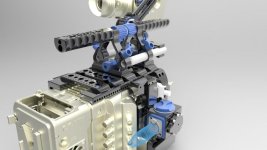
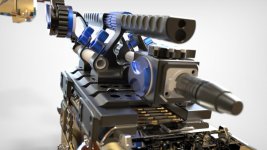
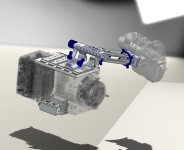
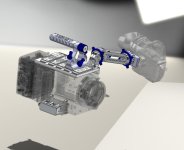
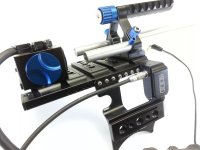
The renders don't, unfortunately speak for themselves, so I'll give an overview. He's created a dovetail system that covers the top, and allows solid, secure mounting of pieces on most parts of the camera, quickly, and without tools, and without a network of rods. Rods can be added too if you specifically need them, but they're not necessary.
Below is a set of notes from Solid:
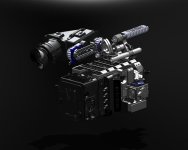
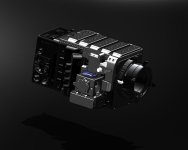
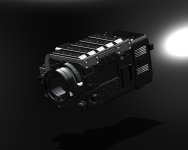
I've been bugging him for a few weeks to share with me what he's got in mind for the F5/55, and finally yesterday he relented and sent me what he's got cooking.
There are plenty of other companies making AKS for cameras, but more often than not I'm underwhelmed with real, thought out functionality. I could name some names, but I'd rather not. It's true there are a couple companies that have a clue, but I can count them on maybe 2 fingers.
Anyway, I'm kinda stoked to post what he sent me yesterday. I see a TON of possibilities with the framework he's come up with, and it's all without turning the camera into a huge erector-set boat anchor.
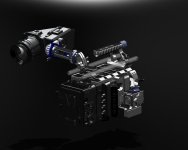
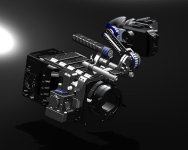
The renders don't, unfortunately speak for themselves, so I'll give an overview. He's created a dovetail system that covers the top, and allows solid, secure mounting of pieces on most parts of the camera, quickly, and without tools, and without a network of rods. Rods can be added too if you specifically need them, but they're not necessary.
Below is a set of notes from Solid:
Top Dove Plate:
This is essentially a cheesplate made out of standard dovetails. The reason for this is that nothing needs to be screwed to the plate, the various pieces slide on/off and can be repositioned as needed. For example the handle can slide on five different positions without any tools and can also be turned around backward. The dovetails also accept iris rod brackets, on-board mic mount, in addition to the typical 3/8 and 1/4 threads for whatever. The side of the plate has pins and threads that support side dovetails, our side doveplate, EVF connector armor, etc.
Dovetail Handle:
This is the quick release tool-free handle with built-in iris rod support. It slides onto any of our dovetails so it can slide left or right of center if needed for handheld lateral balance. There are safety pins that automatically engage to prevent the handle from separating from the plate even if you completely loosen the clamps. The grip on the handle also quick releases so it can be turned around without disturbing iris rods. The front of the grip allows the stock Sony EVF mount to attach if you choose to use the Sony EVF support. There are, of course threaded holes on top and front of the handle.
Dovetail Iris rod clamp:
This is a utility dovetail clamp that provides 15mm iris rod clamps and vertical dovetails for other accessories like our audio distro, power distro, of EVF support arm.
Side Dove Plate:
This is an F5/F55 specific device that is used to mount accessories and protect the very vulnerable EVF connector and cable. It has two dovetails with 3/8 and 1/4 threads and access to ASSIGN 4 button. The EVF connector protector also has the tape measure hook.
EVF Support:
We made some new parts for our already popular EVF support system to work better with the F55. The new 15mm snap-on dovetail bracket allows huge range of motion for the EVF - Left/Right and Front/Back. Unlike any other solution, it will slide far enough to the right to press your cheek against the side of the camera.
Audio:
There is a breakout box that provides all connections to sound dept with either 5pin XLR + headphone, or 7-pin Engh style that has all connections including monitor return. We have made a flat plate that fits over the XLR inputs that also ties in the headphones using a very low profile right angle headphone jack routed under the lens mount with a machined cable clip. The XLR plate is attached via a Mogami cable to a dovetail mounted box with standard 5pin/headphone jack and a Peter Engh style 7-pin. This really cleans up the operator and the dumb side of the camera while giving you the choice of where the XLR's will go and the orientation of the connectors. The cable input on the remote box enters on a machined swivel so that you can position the cable exit where it works best. This product is totally standalone and can be removed as easily as an XLR connector.
Not shown are some other pieces that will provide power and signal possibilities.
Last edited: