SLR zoom lenses for F3

binba

Active member
Ok, so it looks like my company is moving ahead with an F3 acquisition, which would be quite an improvement from our DVX-100 :Drogar-BigGrin(DBG). My boss grew up on ENG lenses, and so we're looking for a couple of fast zooms to cover run-and-gun and everyday needs. There's no way we can afford cine zooms for now, so I'm researching the best SLR options. When the job (and budget) calls for serious glass, we'll rent.

I What matters, in order of importance:

  1. 1-2 lenses to cover the 28~150mm range
  2. Fast, f/2.8 is pretty much everything I've been looking at
  3. Mechanical focus ring - as an AC, I can barely stand the slipping servo lenses. (That unfortunately includes the revered Canon USM's.) I'm looking for repeatable focus, useful with a FF unit.
  4. Focus ring travel - how tight or spread out the range is on the barrel
  5. Focus markings - the ability to easily read where the focus sits (damn those teeny focus windows)
  6. Iris ring - I want to know what f-stop I'm at
  7. Little to no breathing
  8. Internal focus + zoom, so there's no barrel extension
  9. No lens creep
What doesn't matter? For this thread, optical quality comes last. There's a ton of data on that online, what's hard to find is clear info on the manual focus workings. Still photographers' needs are obviously vastly different than ours.
Also, price is no object. Well of course it is, but next to a $40k Optimo, $1,200 seems really affordable.


II I compiled this list of relevant lenses. Have you had any experience with them?

  • Tamron SP 28-75mm f/2.8
  • Tamron SP 28-105mm f/2.8
  • Nikon #2164 24-70mm f/2.8
  • Nikon #1929 24-85mm f/2.8
  • Minolta AF 28-70mm f/2.8 G
  • Sigma DG 70-200mm f/2.8 HSM Macro
  • Tamron SP AF 70-200mm f/2.8 Macro
  • Nikon #1986 80-200mm f/2.8

III Even more questions:

  1. Zooming during a shot... how possible or impossible is it with those lenses?
  2. Will focus markings keep their accuracy with a proper adapter (like the MTF)?
  3. Does image stabilization (VR etc.) work at all in our adapted video use?

If you've read through all this, I salute you. If you have insights or experience to share, I'm all the more thankful.
 
Only lens I know well there is the Nikon 80-200 f2.8 though I don't know what #1986 refers. There are 2 versions of this with identical names so be careful. The cheaper one has one ring for focus and zoom with zoom being effected by a push pull mechanism. I have the 2 ring model which I prefer. It is excellent optically. Will hold focus if you have your camera backfocus is set correctly, and the focus ring is not continuously turning It has a hard stop on each end. Some breathing which I expect they all do. None of the lenses have a long focus throw and image stabilization won't work on any. A lot of the rest of your questions could be answered by simply doing research on the web though.
 
The Nikon af-s 70-200 f/2.8 VRI is parfocal which makes it handy for zooms. The newer version with VRII is not parfocal.
 
Well, my friend, in beginning of your post you described a cine zoom. So if you are not willing to shell out the money for it, you're in for a great disappointment.
 
The qualities you want are only consistently found in cine lenses. Particularly if you need it as a zoom, and not as a set of primes.

If you're willing to go with primes the Ziess ZF/ZE lenses meet most of your expectations, particularly if cine-modded, although they do breathe just a bit.

The Zeiss ZF lenses have excellent manual focus control with long throws (by SLR standards... many 35mm cine primes are better....)

But as Pedro says... you're asking for professional features, that you aren't inclined to pay the price tag for.
 
#1986 is the Nikon part number, I admit I get confused by SLR naming conventions ("Nikon SP AF28-75mm F/2.8 XR Di LD Aspherical (IF)") and this seemed easier and specific.

I've done hours upon hours of web research, the language of the reviews remains unclear mostly with the ring operation. When Ken Rockwell writes "Manual focus is great but you do have to move a switch... you may not touch the focus ring until after you've moved the switch on the lens to MF" this sounds promising but does the ring have a hard stop or not and is it permanently calibrated or the markings slip every time you switch to AF?

And yes there are 3 iterations of that Nikon tele zoom, all highly regarded. Sounds like the 1st gen 80-200 and 2nd gen 70-200 VR are the ones to look for.
 
you're asking for professional features, that you aren't inclined to pay the price tag for.
Completely :-)

I operated and AC'd on RED, film, AF100, M2, ENG, with Zeiss PL superspeeds, ZF primes, Canon USM, Nikkors, cheap Vivitars... I believe I have a good understanding of what to expect and what not to expect. I intend to push for the Duclos 70-200 when it comes out, maybe the revised RED zooms. Maybe this camera will teach my boss why primes are a great bang for the buck. But we've gotta start somewhere.

Let me rephrase, which of the mentioned lenses will get me closer to what I'm seeking? Some oughta be better than others.
 
Last edited:
When Ken Rockwell writes "Manual focus is great but you do have to move a switch... you may not touch the focus ring until after you've moved the switch on the lens to MF" this sounds promising but does the ring have a hard stop or not and is it permanently calibrated or the markings slip every time you switch to AF?

On my Nikon Nikkor 80-200mm AD AF f2.8 lens, it's a hard ring, not a servo ring - and there are markings, although they're not witness marks by any means. When auto focus is engaged (by switch), the ring only moves by electronic motor operation - attempting to turn it by hand with autofocus selected will almost certainly damage the internal operation.

It's a great lens, for the money. And with follow focus gears attached it's possible to get smooth zooms out of it.
 
To the original poster:

The key is the IS. Focus on still lenses will always have some sort of heavy breathing, but I'm sure you're aware of that. If you are planning to go for a future IS aware adapter like the promising Birger, go for VR Nikon Lenses. You can still use them on non IS aware adapters since they have manual aperture rings. Make sure you're getting the lenses with manual aperture rings-that's the 2nd key.

I would suggest you go for a set of same brand lenses. Buy a Nikon set, for example, avoid mix and matching. WHy? Color tint and look between different brands. Its true, different lenses from the same manufacturer can have a different look themselves, but they are much closer with each other comparing with mixing with different brands. You can correct in post, but will be much work.

EDIT-As for zooming manually with these lenses during recording, you can at most do crash zooms. controlled slow zooms... not so much
 
Last edited:
Any off the shelf still zoom lens is going to be a compromise. Some breath, some don't really hold focus when zooming, many have very short focus throws, and most of them are impossible to do a smooth controlled zoom with. I have no idea of your shooting scenarios and thus which focal lengths you would use most of the time. But if your employer is against a set of fast primes, I would think a Duclos 11-16mm, and a Cooke 18-100mm zoom pair would cover the majority of production shoots with a S35 sensor camera.
I know you want off the shelf SLR zooms that do what a cine zoom does, but in all honesty you are not going to find it.
Good Luck with your very tough choice!

Dave
 
Last edited:
As everyone has kinda mentioned, still lenses are a compromise for video/cinema, but MANY (most actually) of us have some in our arsenal. The other day, I was able to score a Nikkor macro lens for $100 locally and shot some tests the other day. I was thrilled with the results...is it as good as a more expensive lens, probably not. Is it worth $100...probably twice as much! A wise man once said, "Better is the enemy of good."

If I use this for one paying gig, it will owe me nothing. GET OUT AND SHOOT AND STOP READING FORUMS!! ;-)

flowers.jpg

ants.jpg
 
The Nikon af-s 70-200 f/2.8 VRI is parfocal which makes it handy for zooms. The newer version with VRII is not parfocal.

I love it when guys make such authoritative statement with very little actual knowledge. Are you a Nikon engineer? Do you have the lens prescription? I guarantee you that every design is parfocal - the execution varies from one example to another. I just cinevised two brand new 70-200 latest versions and they are holding focus perfectly.
 
If you are for SLR zoom lenses, I would also suggest you -as Sergio Perez says,

"...go for a set of same brand lenses. Buy a Nikon set, for example, avoid mix and matching. WHy? Color tint and look between different brands. Its true, different lenses from the same manufacturer can have a different look themselves, but they are much closer with each other comparing with mixing with different brands. You can correct in post, but will be much work."

One set of Nikon zooms really amazing are the:

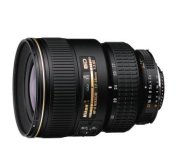
#1960 AF-S-Zoom-NIKKOR-17-35mm-f-2.8D-IF-ED (still available new)
http://www.kenrockwell.com/nikon/1735.htm
http://www.nikonusa.com/Nikon-Produ.../AF-S-Zoom-NIKKOR-17-35mm-f%2F2.8D-IF-ED.html

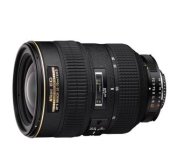
#1961 AF-S-Zoom-NIKKOR-28-70mm-f-2.8-IF-ED (available used @KEH, ebay, etc)
http://www.kenrockwell.com/nikon/2870afs.htm
http://www.nikonusa.com/Nikon-Produ.../AF-S-Zoom-NIKKOR-28-70mm-f%2F2.8D-IF-ED.html

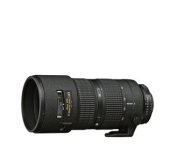
#1986 AF-Zoom-NIKKOR-80-200mm-f-2.8-ED (still asvailable new)
http://www.kenrockwell.com/nikon/80200.htm
http://www.nikonusa.com/Nikon-Produ...1986/AF-Zoom-NIKKOR-80-200mm-f%2F2.8D-ED.html

I have used this set many times. All color matched, fast f2.8 ED glass, all 9 blades, manual focus rings, external iris rings, almost no breathing, all of them ultra sharp! They're heavy though...

Cover full range from 17mm to 200mm!

Either for F3 users or FS100's...

Cheers!

Henry Epstein
 

Attachments

  • 1960_AF-S-Zoom-NIKKOR-17-35mm-f-2.8D-IF-ED_front.jpg
    1960_AF-S-Zoom-NIKKOR-17-35mm-f-2.8D-IF-ED_front.jpg
    12.2 KB · Views: 0
  • 1961_AF-S-Zoom-NIKKOR-28-70mm-f-2.8-IF-ED_front.jpg
    1961_AF-S-Zoom-NIKKOR-28-70mm-f-2.8-IF-ED_front.jpg
    12 KB · Views: 0
  • 1986_AF-Zoom-NIKKOR-80-200mm-f-2.8-ED_front.jpg
    1986_AF-Zoom-NIKKOR-80-200mm-f-2.8-ED_front.jpg
    7.5 KB · Views: 0
Last edited:
Many of us using cameras like an F3 or AF100, are living somewhere between full blown production budgets and the world of kids running around with DSLR's. I'm tapped out to $30K already on this camera and can't afford to go the PL route for lenses, but while you can rival any lens with sharpness on a still lens you'll never cut it for the other features so just make your compromises as best you can.

I can vouch for the same 3 lenses that Henry just mentioned. Very sharp ( better than most primes and probably as good or better than many Red zooms though I'm guessing) and all 3 of mine hold focus through the zoom range (largely - see below). Also they are very small and lightweight which for all the negatives vs cine zooms offer countervaling advantages - not to mention price of course. However they are just not built to the same tolerances that cine lenses are . I've tried 2 28 - 70's and one held focus while the other didn't. Why? Who knows - were they different versions or just different examples of the same lens?

I had all of them on an optical bench the other day and discovered that my 17-35 drifts back focus very briefly at about 30mm then goes right back in. Gotta live with that now. We had one Nikon F3 with us to double check and neither of the wider lenses held focus on that body. My guess was that body was off, but as Optitek will no doubt chime in here - without the proper tools to to measure your lenses you are wandering around in the dark a bit. We couldn't check the nikon body. Whatever you may read about lenses being parfocal - it may or may not be accurate for your lens.

I adjusted the back focus on my F3 until my 28-70 held focus on a 4x4 chart at various distances at f2.8 and the others seemed to work at that setting, making me assume I had hit the Nikon back focus distance - but I may have just gotten lucky as well. Fortunately it was confirmed on the bench but we couldn't measure the flange focal distance. I still recommend that method if you have no other options, but Optitek (who kicked my ass on this forum a few weeks ago) will no doubt tell you that you should get yourself to a real optical tech and have everything checked out properly. He's right of course, and his prodding got me to a bench yesterday though we only had a collimater and not a full tool bench. That's what i've got available in San Francisco though.

For the poor man - it may be half assed, but even if you never check back focus though you can use the zooms as primes and always focus by eye each shot. Just be certain you can at least reach infinity with them and don't trust your barrel markings.

By the way Birger will only work for Canon , not Nikon VR so for now the best option for AF100 or F3 is Nikon. Canon may be better once the Birger comes out, but those may not be as parfocal as the Nikons.
 
Last edited:
Dyi camera/lens verification

Dyi camera/lens verification

There is nothing awfully wrong (only a little:evil:) With using a lens to verify flange on camera BUT:
1. You have to know what you are doing- know your camera
2. Use the widest (preferably zoom)lens in the package wide open close to minimum focus.
3. Use focus chart
4. You ought to be ABSOLUTELY SURE that lens is spot on back focused ( we call it "golden" or "hero" lens)
If you do it correctly you'll be as close as they get for all practical purposes.....
All other longer lenses should be fine for back focus - if they are out THEY need to be adjusted...
 
Last edited:
I have used this set many times. All color matched, fast f2.8 ED glass, all 9 blades, manual focus rings, external iris rings, almost no breathing, all of them ultra sharp! They're heavy though... Cover full range from 17mm to 200mm!


How is the barrel distortion at the wide end of the 17-35mm?
 
Should be no issues at the wide end (17mm) due to the S35 sensor...

On FF sensor cameras like the Canon 5D2, very little...

Lens falloff is better than my Canon 17-40 F4L

I have used this lens with the HPX370 + Letus Ultimate + Letus Relay Pro lens... and my Canon 5D2...
Both cameras are full frames.

No distortions with the 7D with APS-C sensor. Should work fine on both F3 & FS100

Haven't moved yet to the F3... Hopefully soon.

Must read Ken Rockwell's review.

H
 
Back
Top