Shooting Stock Footage

7DDude

Well-known member
Hey Guys,

I'm seriously looking into shooting stock footage, and marketing it. I know there are a lot of posts about stock footage, but, a lot of it is old, and not much info for newbies, I have also researched a few SF cites to learn of there wants, a little bit of everything from what I can see, both technical and content. One of the ways I will be selling SF is Mass Internet Marketing, to targeted groups. and of course SF websites. It is one of the reasons I purchased the DVX200. I'm hoping to see lots of input here, to help others as well as my self. I think the best way to categorize this input is in 5-areas. What I'm trying to do is create a formula consisting of parameters, that allows one to shoot very consistent, simplifying the process of shooting SF, if possible. LOL! If you could, rather than just simple one/two word answers, if you could elaborate a little, your reason why, I think it would help everyone. Barry Greene, feel free to chime in, especially in regards to using the DVX200 for SF!

1- Technical/Specs/Equipment/Post-Production
2- Content/Subjects
3- Legalize
4- Business/Marketing
5- Target/Internet/Broadcast/Commercial/DVD


So, let me kick this off by asking a few questions.

I have made the decision to shoot in 4K, question, UHD, or Cinema-UHD?
Then always in 60-FPS? Highest bit rate possible?
What File Format/Raw?
What Codec?
What aspect ratio?

Then there is the big question, Should you shoot in Log, Yes or No?

I think that should be a good start! I hope this works for everyone!
 
Consumers like options.

Shoot both UHD and DCI 4K. (I don't know what you mean by Cinema UHD since there's no such thing. I think you're saying DCI 4K.)
Yes, always shoot 60fps for 60fps. You can telecine down to 24, 25, 30fps, but you can't add frames without changing the cadence. And most likely you'll want to shoot with a 360º shutter (1/60 at 60fps).
If you can shoot raw, do it, but DVX200 doesn't shoot raw. Shoot with the highest bit rate possible with the file format your workstation prefers. You can export/transcode to other formats later. Don't give up the raw.
Aspect ratio is also a part of the UHD vs DCI 4K subject; the former being 16:9, the latter being 17:9. Ergo, shoot both, shoot in logarithmic, process the footage so there's no slates or whatever, and make them deliverable in either a lightly-graded version or a flat/log version, each in various frame rates and aspect ratios. You could, of course, only shoot 17:9 and the client could simply crop the edges, but I say shoot it in-camera the way you want so you don't give the end user the ability to reframe. But, they're going to do that, anyway, so....
 
I shoot a lot of specialized SF. Check the online sites (pond5, shutterstock etc.) for their submittal standards. 4K and 60fps is the way to go. SF sites are building their 4K libraries. 1080 is going the way of SD footage. I am shooting with the GH4 so I just submit the raw footage after trimming it in mpeg streamclip which does not re-encode if you select "save as". Of course doing it this way you have to nail exposure and white balance in camera. It took me about 2 years to build a decent portfolio with monthly sales.
https://www.pond5.com/artist/mark29#2/2063
 
Last edited:
I've been into SF for a little bit now, and i'm still not sure there's much of a consensus you could get on what is most marketable in terms of technical aspects of a file.

My feeling has been to deliver a good baseline, something graded just enough to pop, but not too much as to leave no playroom for another editor. Framerate i feel is a complete toss up, most still stick to 24, but 60p leaves room for motion options.

In the end, my feeling is that if a producer sees the content s/he wants, they will take it regardless if it meets their exact technical needs. It seems to me most of stock footage is used for anything but cinema relations, and thus isn't held to such standards (except on specialized sites)

Again, these are my feelings, i have never found concrete data to suggest any particular way is the best.

Mark, is SF your full time? your library heavily outweighs mine, and looks like you focus on nature. I only see a handful of sales on certain clips (lava, hurricane sandy are my best sellers), it seems you've targeted $25/HD 50/SD, is that because of any testing/research you've done? Curious since my gut tells me to charge more for a nicer clip, but on the flip side wonder if there's many more sales to be had vs an occasional sale on a particular clip

cheers
D
 
Darren, my stuff is priced a little low for the site. But I seem to make up for it with repeat clip sales. I have some clips that have sold over 20 times. I price clips like I buy them by looking for quality at a bargain. Folks that have over 5,000 clips in their portfolio are considered serious about it.
 
I have just started submitting to Videoblocks. I have read that they are the up and coming site for SF submissions. I have had about 20 clips accepted, mostly landscape, and some drone shots. Since I live in a very rural area, I wonder how marketable my footage is. Does one deliberately go out for a day driving around looking for SF? How do you determine what might sell?
 
I have just started submitting to Videoblocks. I have read that they are the up and coming site for SF submissions. I have had about 20 clips accepted, mostly landscape, and some drone shots. Since I live in a very rural area, I wonder how marketable my footage is. Does one deliberately go out for a day driving around looking for SF? How do you determine what might sell?

I tend to look at what documentaries and news outlets are using and look to do something similar. I can't imagine anyone is looking around stock sites without some intention, e.g., a random pretty shot of 'something' isn't what shoppers are out for. So, try to look for what people are buying and try to create such content.
 
So, now its winter, should I be shooting something like someone scrapping ice off their car's windscreen? When I look at the stuff on line, some of it is very simple, stuff that we take for granted. How about border crossings! :)
 
So, let me kick this off by asking a few questions.

I have made the decision to shoot in 4K, question, UHD, or Cinema-UHD?
Then always in 60-FPS? Highest bit rate possible?
What File Format/Raw?
What Codec?
What aspect ratio?

Then there is the big question, Should you shoot in Log, Yes or No?

I think that should be a good start! I hope this works for everyone!

1) UHD is good enough.

2) 29.97 is the defacto frame-rate for stock.

3) ProRes for delivery but what you shoot is up to you. The better the codec, the better the output. I wouldn't waste my time with anything less than 10-bit.

4) 16x9

5) LOG or not is a question you have to decide for yourself. You're never going to upload LOG, but depending on your camera, workflow, and grading skills you may choose to shoot in LOG. I do about 80% LOG and 20% non-LOG depending on the camera I'm using.

I'm doing about $2700 per month at Shutterstock and Adobe.= in my spare time.

 
Thanks, Tom. I appreciate the support and I hope it really helps you get a boost selling stock footage. I sold $315 just at Shutterstock alone today. $1869 for the month so far and we still have 12 days to go. I just uploaded a 124 new clips this afternoon to keep priming the pump!

BTW, if you pay close attention during the training video I think I actually wear 3 different pairs of glasses. :)
 
I'm sure it will give me a boost, it's very helpful. I got a kick out of the table of contents that scrolled precisely as the altitude of the tiny Space-X rocket to its right. That was a nice touch!
 
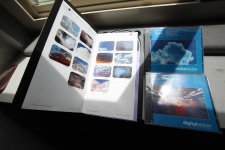
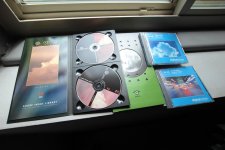
So 21 years ago I saw the need for sky time-lapse for my own projects and spent a summer & fall shooting 35mm with my old Wall camera... I shot every sunrise, thunder storm and sunset I could manage. I soon realized it was fairly unique and perhaps useful to others, so I burned .jpg sequences (film to D1 transfers) and had a CD mastered, duplicated, and art made and self-sold a stock footage album called "Colorado Altitudes". Side note... at the time After Effects could not actually USE .jpg image sequences native without a plugin! I took out ads in the popular videography mags at the time, sold a couple hundred copies in total and had a blast. "Customers, not Clients" was my motto for a while. Spring comes and I get a cold call from Adobe... they'd like to buy the footage. Holy Cr#p! Got a good deal arranged, lots of cash, re-encoded to QT PhotoJPG and they sold them under their Image Club Graphics label. That cloud footage of mine was EVERYWHERE: TNT promos, NBC promos, concerts and tons of awards shows and event broadcasts. Eyewire was the re-brand of Adobe Image Club Graphics and handled a new title I produced. Later did the same approach with more clouds, time-lapse traffic and a storm title for a UK company called Digital Vision. Ultimately that footage wound up at Getty and I got royalties for years until SD footage was no longer viable. I was too busy with animation at the time to pursue this any further, though I did shoot a big NYC time-lapse title just before 9-11.

JimA_stock_collections_02.jpg JimA_stock_collections_01.jpg

I'm sure it's a vastly different experience now. At the time, royalty-free footage was rather novel and rare with very limited markets who were EXTREMELY selective and picky. I used to joke to people that it was a very easy process as long as you had a fully loaded 35mm camera in the car and was at the right place at the right time. Now that IMAX rez time-lapse with a 600 dollar Canon DSLR is super easy, I no longer care that much about shooting it. I would often shoot for two or three weeks before getting a 200' can processed and transferred to tape and then again to digital files. You had to be spot on with your exposures. Sometimes the time-lapse motor on the camera would misfire and take two pictures, or stall out and over-expose a frame. Then in post you'd have to dust-bust every single frame of every shot, because every darn frame would have some dust hit or other issue.

There are two types of stock producers; those people who have a history of footage from jobs going back years or decades, and those who produce just for a title or theme. I have a younger friend who keeps expressing the desire to sell stock time-lapse. Yet even with every moco slider on the market in his possession he hasn't actually shot more than a small handful of shots ever, even though his base tool-set is light years more comprehensive than what I had at the time. So part of it is just having a burning desire to shoot, and the wash/rise/repeat tenacity of doing it over and over. The other part is finding a theme or concept and deep diving into that one subject more than anyone else has.

Regards,
 
There are two types of stock producers; those people who have a history of footage from jobs going back years or decades, and those who produce just for a title or theme.

Very cool Jim. Doug prefaces every chapter with a quote such as yours. Must be something to it!
 
I So part of it is just having a burning desire to shoot, and the wash/rise/repeat tenacity of doing it over and over. The other part is finding a theme or concept and deep diving into that one subject more than anyone else has.
Regards,

You are absolutely right on both points. I am like a farmer planting seeds. Does anyone pay me to plant my seeds? No. Is it work? Yes. And that is enough to keep a lot of people on the couch or working for a safe reliable paycheck. I've learned that some people simply aren't self-starters and can't do stock footage -- and that's okay. Different types of personalities. That's why there are freelancers and staff shooters, and some people will only succeed at one or the other. Stock footage is like that. You have to think of yourself as a freelancer shooting for clients that you will never meet.

In my training video I talk about "finding your niche". Yes, it will help your success to dive into subject matter that interests you or that you have special access to or knowledge of that others don't. Everyone has those things around them if they stop and think about it.

Great story on the Adobe Image Library. That is amazing packaging, can you imagine anyone producing something like that today? Times have sure changed. I remember buying CDs loaded with background graphics and clip art from Art Beats.
 
I'm sure it will give me a boost, it's very helpful. I got a kick out of the table of contents that scrolled precisely as the altitude of the tiny Space-X rocket to its right. That was a nice touch!

I'm glad you liked that. A perfect example of making lemonade from lemons. I was shooting a rocket launch with three cameras and that one was just locked down on a wide shot. I'd never shot from that location before and somehow I miscalculated where the rocket was going to rise over the trees. But you know what, if the rocket had risen through the middle of the frame, what would anyone do with it? But framed to the side like that I think it will make a cool background image for text or graphics in a science or technology video. Hasn't sold yet, but it's only been online for a few weeks. So I decided to use it myself.
 
That is amazing packaging, can you imagine anyone producing something like that today? Times have sure changed. I remember buying CDs loaded with background graphics and clip art from Art Beats.

Funny story about the packaging... just after I had finished the Adobe re-encoding and it was for sale from them, one of the "trendy & hip" local production houses I had a relationship with was interested in some time-lapse cloud footage. I offered to GIVE them the EXACT SAME CLIPS that I had just prepared for Adobe, just hand burned onto blank ugly CD's when one of their producers called me to say rather smugly they had just bought a collection that they "Liked a whole lot better" than mine. Of course they had just spend $499.00 on the very same clouds, but in a pretty box from Adobe.

At the time there was only Art Beats by Phil Bates and that Prairie Stock company offering "moving" stock and companies like Getty and Adobe wanted in on that. There was also a small VFX library of smoke and pyro you could buy on CD. Not long after I started self-publishing (I had a credit card reader before I actually had a personal credit card!) I got contacted by Art Beats about adding my footage to their growing library. Who knows what would have happened if I had, but I would have missed the approaching cash rocket that was Adobe and the relationships that developed from that.

Today my young friend sees the current stock footage market as "easy money" without any research into the work required. He actually thinks that a valid approach would be to shoot stock while on vacation trips with his wife, catching odd moments to grab footage. Of course I tried to explain that shooting in mid-day sun at chest level pointing at something everyone had shot a million times before would not distinguish him in the market, and that he'd actually have to think of the process as a job that required planning and some sort of serious time commitment with early mornings and late evenings, all in addition to polishing his framing and story-telling skills. The next time he brings this up, I'll send him the link to buy your course.
 
Thanks. At least you can rest assured he will basically get the same lecture from me that you have already given him.

BTW, I still get the occassional royalty payment from Art Beats for stuff I provided to them maybe 10 years ago.
 
Back
Top