Shooting For the Big Screen

Part of the reason for this post is pondering the question: is what is being put up on the screen today (I'm talking Sundance or Maui Film Festival -- these two are totally different I know) coming from the latest and greatest or is it still a mix? I have no problem using old gear, but I can say (as I did earlier) that the newer stuff is cheaper and better, and so penny wise pound foolish is what is nagging me. I need 2-3x units, in spite of the wisdom against multicam, and matching footage, lens investments, e.g., MFT for the Micro CC, or three AF100s, or FS100s, etc., is a consideration I am trying to weigh.

http://www.theverge.com/2015/1/28/7925023/sundance-film-festival-2015-tangerine-iphone-5s

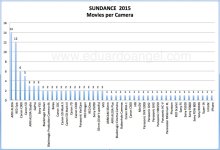
http://nofilmschool.com/2015/01/cameras-filmmakers-2015-sundance-film-festival
023-Sundance-Image-001_blgpst.jpg
 
Very enlightening ugafan.... Canon gets high marks indeed. Tangerine on the iPhone is pretty clever. I just upgraded to a 6+ so now I won't even be able to copy the 5S :-)

I'd say Sean Baker is a better filmmaker than me by miles. If he'd able to do this with that, it only proves my point that Coke bottles and pinhole cameras are still viable options, in the gifted hands of a Baker.

If only I was him.

The lesson I am gaining from this, and I have known it for years, but still resist reality, it is isn't the camera or the lens. Some of us will never learn.
 
Don't sell yourself short. Anyhow, there are practical and psychological reasons why people carefully pick their tools. The practical is of course obvious - you want the "best" tool for the job, so you can work to your best potential. That's so obvious, it's trivial. But there is another reason, and that's psychological, and this reason never really gets mentioned on these boards. That reason is the following: getting the tool (camera, sound gear etc.) puts a stop to distraction and allows you to work. If you constantly have to wonder about your tool, you will never be able to relax and create, because you'll always be distracted by the inability to tell to what degree your success/failure is dependent on the tool and to what degree other factors. Once you pick the "best" tool, you can now stop thinking about that and devote 100% of your psychological effort to actual creation. That's invaluable. Which is why I never make fun of people who earnestly ask "which camera" type questions - because it's not really just a question about the camera or tool, it's a psychological quest and reaching a resolution to that quest frees you to concentrate on what really matters: creating the content. At some point, technology reaches a "good enough" moment - when there's such an elevation of quality that almost any of the models on the market are good enough for the purpose. We're there with cameras, we're there with sound, we're getting there with light (still not there yet, though). Then it really becomes a question about your exact project and your budget. A GH4 would be great, as would be the FS7 - the advantage of the GH4 is size of course, and so on - different situations, so you need to ask "what project" - and there are several equally good alternatives to the GH4 and the FS7 - the cameras are good enough, and you can choose almost any of them and put an end to your psychological block. Same with sound gear - the Tascam DR-70D is "good enough" and can be had for $300 or less - that's insane. Lights - sadly were not there as yet, but I'm hopeful we'll soon be there - LED lights that are powerful enough, both hard and soft, excellent color rendition, battery operated, cool in operation, durable and cheap... still a ways off. Best of luck!
 
Don't sell yourself short. ...I never make fun of people who earnestly ask "which camera" type questions - because it's not really just a question about the camera or tool, it's a psychological quest and reaching a resolution to that quest frees you to concentrate on what really matters: creating the content. Best of luck!

That is about one of the most decent and supportive posts I have read in ages. Thanks OldCorpse. I have, in the past, put my money where my mouth was. When I say I invested in audio, I invested in the best. Pro monitors, best pics, killer recorder, best cables, whatever. But I then found myself upside down with gear that was over my head. As I needed to deliver completed work I had to cut to the chase and abort the higher end gear.

When it came to the camera I was able to competently shoot with just about anything. I started with an older small chip Sony, then tried a large sensor Sony, then went DSLR, with a camcorder as a second 'unit'.

I have purposely used the cheapest camera gear allowing for the steep learning curve, and am (as you so clearly point out)at a point where I know I can do better and don't want the tool to be impeding my growth, although I also feel that the story itself, and the casting are what people are there for and so I still wonder 'just how much camera or lens do we really NEED'?

Trying to shoot in a way that the camera gear is not 'in the way', meaning file quality is so lacking it irritates, or different cams or glass or codecs make cuts an annoyance rather than transition, these are my only real concerns. That, and not being a complete idiot in buying stupidly.

Maybe the older BMs are worth getting. At least they are useable and early-adopting the URSA Mini or the Micro CC is, as I have learned from buying my D800E, always an adventure.
 
Exactly, the main takeout of that graph is that the camera is irrelevant. Alexa and iphone are both represented. What you need is a camera that has the features you need and a good story to tell.

The next thing you need to know about these forums is you don't need to stress. There might be a few who are going to be mean or have had a bad day but that is the internet. These are about the friendliest forums around. Keep asking your questions and someone will answer them. We have some astoundingly good industry professionals around here, all willing to share their knowledge. Most of us are patient and we are here to learn and pass the knowledge on. If you've had your hand bit once or twice keep asking, there are no dumb questions.

Finally the questions you are asking here are many and broad in scope. That's okay but be aware when confronted with such a wall of text many younger people in particular will just move onto the next thread. Don't worry about it now but for future you will probably get a better response when you break it up into a few threads by topic. In smaller chunks it makes it easier for people to digest.
 
Now you've elaborated a bit more on your situation, my advice would be to try not to fall into the trap we all do when we're starting out and buy gear to compensate for our inexperience. As you say: it's the man, not the arrow. For lenses, I would certainly not drop $5K plus on Veydra lenses. You will not see the value. The optics are really nice but it is the time they save in a professional environment with their ergonomic features that make them valuable to me. If I was shooting by myself they would be merely nice to have. As you ponder further down in your post - the answer is the audience has NO idea what lens it was shot on. Choices today are an embarrassment of riches.

I'll try again to cut to the chase through the long responses and get right to what I think you are looking for - a shopping list suitable for an amateur that doesn't limit you from screening / entering a film into a festival.

For camera, the new blackmagic ursa mini is a very exciting camera. But I don't know if it is the best camera for you. I think you may end up spending more time trying to figure it out than shooting on it. It will also need to be accessorised so while a lot of the prices aren't out yet I would conservatively estimate to get it working you'd need to spend $6-10K depending on the version. The blackmagic 4K is $3K and the rest. You will need SSDs, storage hard drives, probably a cage and other rigging as well. Likely an external battery solution. I'm just concerned you might not get the value out of these cameras. If you are familiar with DSLRs then the Panasonic GH4 might be an option to consider. Another alternate option to consider is the Sony AX100 which is a very nice consumer camcorder and very budget friendly. It is 4K and you will be able to use it straight out of the box.

http://http://epfilms.tv/sony-releases-fdr-ax100-first-4k-palm-sized-camcorder/

However I think your best bet will be the BMD pocket or the micro with the video assist external monitor. They are 1080p but fantastic little cameras. These cameras teach the operator. They are simple, bare bones with no bells and whistles to distract you from your goal. They produce gorgeous images, have high DR which is forgiving as you get to grips with exposure and makes for better images once you have, shoot raw, is optimised for 1080p and are cheap to buy and sort of cheap to accessorise. If you've already played with raw the learning curve won't be so steep and once the penny drops, the images you were already happy with become stunning. And since you didn't spend an arm and a leg you can afford to upgrade to something like an ursa mini in a year or two if you feel the need, get mature technology and firmware at a better price and will be ready for the extra power. Or you may still be happy with what you have. My only reason to use anything else is that I'm trying to go pro. You can't be a DP if tied to one camera.

If you choose to go with the pocket or micro my suggested lens would be a Nikon-BMPCC metabones speed booster paired with a Sigma 18-35mm 1.8 ART zoom lens with Nikon mount. This will give you a wide to normal range and an S35 look, same as the movies. The bokeh is nice and you will have excellent performance in poor light. This combination is tried and tested and produces gorgeous images. Or simply use your existing lenses with the metabones (24-70mm becomes equivalent of 42-122mm with the 1.75x crop factor).

With the camera and the audio gear you already have you're basically ready to shoot for under $2500 including shipping. Less if you buy second hand. You will get great images and you won't be fighting your gear. The places I'm spending ridiculous sums of money on overpriced products at the moment are all items that streamline technical distractions like adjusting my rig. The Sigma lens will be easily adaptable to any other camera you own or buy in the future with a Nikon mount. You might want to add a longer fast constant aperture zoom at a later date or upgrade to a set of primes. In that instance at the moment I would hands down recommend Rokinon/Samyang cine primes. But I would advise getting this zoom set up and shoot a couple of things first. Find out where the set up is letting you down, features you're missing, shots you can't do with your existing gear and use that to guide the direction of your next purchases. If you can't make a film with this combination then gear is not the problem. Don't worry, you CAN spend more if you want. My $500 pocket is bolted to almost $10K of other gear not including lenses. Ludicrous, no?

As a side note, something that may or may not appeal to you. One thing I have come to love about the pocket is one of it's limitations. If you use SD cards and internal batteries, you get about an hour of battery and 18 minutes of actual filming per SD card. In practice they both run out around the same time and approximates the limitations and process of shooting on film. Your SD cards are reels, change your batteries every time you change your card. This limitation has had a profound effect on my process and has altered my approach so that I now intuitively plan my shoots better and less wastefully. And then I go home and pull the footage into resolve and 'process' it...it's like having the best of both worlds.

Rather than buy new you could keep an eye on ebay, the marketplace here or a bmcuser and pick up someone else's complete set up. Just make sure that most of the included accessories are useful to you and not just padding out the price for things you don't need. With a pocket you'll at least want a cage with cable clamps if you are going to use an external monitor. The little HDMI slot is very fragile.

Coming back to multicam. If you want to do it, then do it. And if you want to do it then having cheap cameras is the way to go. Otherwise you have two expensive bodies depreciating. Just be aware of the points I made in the previous post. In my experience, counter intuitively it is not the time saver it ought to be. On a low budget short earlier this year the producer insisted on multicam to save time. It was slow going and when he left set I reverted to single cam and the day sped up. I wouldn't have delivered on time and on budget his way. In post production the multicam was often harder to cut together than the single cam footage and more likely to to have boom, crew or the lens of another camera poking into the shot. And I had assistants. What you might think is a good shot in the can may in fact need a reshoot. That doesn't save time or money. If you're doing everything you don't want to make your job harder than it has to be. By all means multi cam a difficult to acquire scene, an action scene or something you can only do once.

With regard to 5D and Canon, the yellow/red cast is something I see to and a big part of what I don't like about Canon and their lenses. It is also what others love about them (warming skin tones slightly) so it's all subjective. The a7s does need an external recorder to take advantage of 4K. If you are making movies for yourself I wouldn't recommend it. Like all DSLRs the menus are deep and full of things you don't need, the buttons are small and fiddly. The main reasons to get one are lowlight, if you subjectively like the image or because you work professionally since this is almost certainly going to be the camera that replaces the 5D as the camera clients are likely to request by name.

I understand your situation with pros, limited resources and limited places to purchase. There is pretty much nowhere to buy things in Perth, I usually have to import from the mainland US like yourself, ebay or buy privately. If you can get a buddy interested in being your regular sound guy that will help a lot but I understand sometimes you just have to work with what you've got. You will need to go into the sound forum for more advice on this but the nutshell audio guide is to get the microphone as close as you can, preferably within 18in. And record with the highest SNR you can - signal-to-noise ratio. This means you want to use gain to keep the signal (dialogue) as loud as possible (without clipping) above the noise floor (hiss of the gear and unwanted ambient sound) at all times. By doing this when you turn down the volume in post to desired levels you also turn down the noise, resulting in cleaner audio.

Riding levels will be difficult to impossible as a OMB. A feature in a recorder that can help here is dual recording where the recorder records 2 tracks for each input, one usually 6dB lower than the other. This lets you record louder in confidence knowing you have a copy 6dB lower for safety. One recorder that has this feature is the Tascam DR60D. It also has relatively clean pre-amps, another important consideration. And you can record direct to camera through the line out jack and end up with triple redundancy on your audio including a synced in camera track. If you set up your signal chain well, the in camera audio will be perfectly ok. If not you can sync tracks as required from your recorder. Your riggy should also be up to this task if you set your gain structure correctly but you won't have the additional redundancy.

The only way to get better is experience. No piece of gear is going to fix your problems. No amount of knowledge unless it is put into practice. Focus on getting a solid set up and then start shooting. If you do it regularly you'll be surprised how far you get in a year or two. And keep coming here for advice. dvxuser and it's members taught me everything I needed to know to get started and it remains my first port of call.

So the promised shopping list:

Blackmagic pocket or micro
Cage (Tilta/Movcam/ViewFactor are good brands) for protection with HDMI clamp
Batteries (same as Nikon EN-EL20) probably want at least six and a couple of chargers
Sandisk Extreme SDXC 64GB cards (just come down in price - half what I paid) at least 2 - they take a good 15-30 minutes to offload depending on reader
Sigma 18-35mm 1.8 ART nikon mount
Metabones Nikon-BMPCC speed booster (works with both pocket and micro, not supposed to work with 2.5K or 4K)

All that will be around $3000

Other things you might want are:

An IR/UV cut filter and variable ND filter (research before purchase, many brands including good ones don't play nice with BM sensor, check the extensive thread on bmcuser)
An external monitor or EVF (alternatively an optical loupe for the BM LCD if handheld is more your thing, Kinotehnik make a very nice one)
An external recorder like the Tascam DR60D mkII (much cleaner pre-amp than the Zoom H-series) if you want the extra redundancy and safety track
An external battery solution (Lanparte makes a battery and pinch that will power your whole setup for around 5-8 hours on a single charge)
Set of Rokinon/Samyang cine primes in Nikon mount

Of these the filters and external monitor are probably the most important. If you choose to get this camera the bmcuser forums are a very useful resource. It is not quite as friendly as dvxuser and there's a few users spreading bad information. Some users on there whose advice you can rely on there are Captain Hook, Kholi, Frank Glencairn and vicharris. A lot of extensive testing has been done on a lot of gear combinations of the last few years so the best combinations are a known quantity. Just search the threads first because I can guarantee vicharris will be rude to you if you start a new thread on a commonly asked question!
 
Don't sell yourself short. Anyhow, there are practical and psychological reasons why people carefully pick their tools. The practical is of course obvious - you want the "best" tool for the job, so you can work to your best potential. That's so obvious, it's trivial. But there is another reason, and that's psychological, and this reason never really gets mentioned on these boards. That reason is the following: getting the tool (camera, sound gear etc.) puts a stop to distraction and allows you to work. If you constantly have to wonder about your tool, you will never be able to relax and create, because you'll always be distracted by the inability to tell to what degree your success/failure is dependent on the tool and to what degree other factors. Once you pick the "best" tool, you can now stop thinking about that and devote 100% of your psychological effort to actual creation. That's invaluable. Which is why I never make fun of people who earnestly ask "which camera" type questions - because it's not really just a question about the camera or tool, it's a psychological quest and reaching a resolution to that quest frees you to concentrate on what really matters: creating the content. At some point, technology reaches a "good enough" moment - when there's such an elevation of quality that almost any of the models on the market are good enough for the purpose. We're there with cameras, we're there with sound, we're getting there with light (still not there yet, though). Then it really becomes a question about your exact project and your budget. A GH4 would be great, as would be the FS7 - the advantage of the GH4 is size of course, and so on - different situations, so you need to ask "what project" - and there are several equally good alternatives to the GH4 and the FS7 - the cameras are good enough, and you can choose almost any of them and put an end to your psychological block. Same with sound gear - the Tascam DR-70D is "good enough" and can be had for $300 or less - that's insane. Lights - sadly were not there as yet, but I'm hopeful we'll soon be there - LED lights that are powerful enough, both hard and soft, excellent color rendition, battery operated, cool in operation, durable and cheap... still a ways off. Best of luck!

Sage advice here.
 
Choices today are an embarrassment of riches.

You are an excellent writer Egg Born Son. Totally agree with you 110%!

You will need SSDs, storage hard drives, probably a cage and other rigging as well. Likely an external battery solution. I'm just concerned you might not get the value out of these cameras. If you are familiar with DSLRs then the Panasonic GH4 might be an option to consider. Another alternate option to consider is the Sony AX100 which is a very nice consumer camcorder and very budget friendly. It is 4K and you will be able to use it straight out of the box.

I was very excited when the AX100 was announced. Then I saw it getting trashed and thrashed to no end here. I have owned three Sonys and have always found them to be good, but have also seen them leave members here high and dry. It is a mixed bag buying from Sony now. I think they are spinning off this end of the business and hopefully they will be more responsive. If I buy one AX100, I'll likely want another. Like you said below, that's two depreciating.... I have rig, a Lamparte and AB Hydron 100s. In fact, I am selling it all as I imagine there are better portable power solutions out there for me. If I were to buy an URSA major or mini, then the power would be there for sure.

However I think your best bet will be the BMD pocket or the micro with the video assist external monitor. They are 1080p but fantastic little cameras. These cameras teach the operator. They are simple, bare bones with no bells and whistles to distract you from your goal. They produce gorgeous images, have high DR which is forgiving as you get to grips with exposure and makes for better images once you have, shoot raw, is optimised for 1080p and are cheap to buy and sort of cheap to accessorise. If you've already played with raw the learning curve won't be so steep and once the penny drops, the images you were already happy with become stunning. And since you didn't spend an arm and a leg you can afford to upgrade to something like an ursa mini in a year or two if you feel the need, get mature technology and firmware at a better price and will be ready for the extra power.

Talk about sage advice. You really do cut to the chase and I must confess I have been very close to buying into BM for over a year. Form factor complains and the fact that I wasn't shooting anything important had me holding off, a I wondered if an AF100 or F3 might be better, but their image is not BM's.

If you choose to go with the pocket or micro my suggested lens would be a Nikon-BMPCC metabones speed booster paired with a Sigma 18-35mm 1.8 ART zoom lens with Nikon mount. This will give you a wide to normal range and an S35 look, same as the movies. The bokeh is nice and you will have excellent performance in poor light. This combination is tried and tested and produces gorgeous images. Or simply use your existing lenses with the metabones (24-70mm becomes equivalent of 42-122mm with the 1.75x crop factor).

Funny. I remember when Sigma was up and coming. I have read nothing but good things about the art lens.

Your SD cards are reels, change your batteries every time you change your card. This limitation has had a profound effect on my process and has altered my approach so that I now intuitively plan my shoots better and less wastefully. And then I go home and pull the footage into resolve and 'process' it...it's like having the best of both worlds.

You are talking to someone who shot 8x10 view cameras for decades. Each shot cost me $40! ($10x2 for each side of the holder, $10x2 to push/pull the 2nd exposure to nail it). I totally 'get' this MO and actually love the idea of it.

Rather than buy new you could keep an eye on ebay, the marketplace here or a bmcuser and pick up someone else's complete set up.

I couldn't agree more and have bought much here.

In my experience, counter intuitively it is not the time saver it ought to be.

In situations like OTS conversations, or if I want a long and close shot in a public and can block effectively, I see value.

And record with the highest SNR you can - signal-to-noise ratio. This means you want to use gain to keep the signal (dialogue) as loud as possible (without clipping) above the noise floor (hiss of the gear and unwanted ambient sound) at all times. By doing this when you turn down the volume in post to desired levels you also turn down the noise, resulting in cleaner audio.

Do you realize you just explained what no one seems to want to do exceptionally well? I hope every newbie reads just this one thing from you. Bravo!

Riding levels will be difficult to impossible as a OMB. A feature in a recorder that can help here is dual recording where the recorder records 2 tracks for each input, one usually 6dB lower than the other. This lets you record louder in confidence knowing you have a copy 6dB lower for safety. One recorder that has this feature is the Tascam DR60D. It also has relatively clean pre-amps, another important consideration. And you can record direct to camera through the line out jack and end up with triple redundancy on your audio including a synced in camera track. If you set up your signal chain well, the in camera audio will be perfectly ok. If not you can sync tracks as required from your recorder. Your riggy should also be up to this task if you set your gain structure correctly but you won't have the additional redundancy.

When yo start talking about 'gain structure', I realize just how limited y poor old brain really is....

The only way to get better is experience. No piece of gear is going to fix your problems. No amount of knowledge unless it is put into practice. Focus on getting a solid set up and then start shooting. If you do it regularly you'll be surprised how far you get in a year or two. And keep coming here for advice. dvxuser and it's members taught me everything I needed to know to get started and it remains my first port of call.

I love this forum. Not a king or a great talent and have nothing to brag about. All of my experiences have been rewarding, even the nasties to them. Life is a never-ending learning process. What you are helping me to do is learn more and I thank you from the bottom my heart.

So the promised shopping list:

Blackmagic pocket or micro
Cage (Tilta/Movcam/ViewFactor are good brands) for protection with HDMI clamp
Batteries (same as Nikon EN-EL20) probably want at least six and a couple of chargers
Sandisk Extreme SDXC 64GB cards (just come down in price - half what I paid) at least 2 - they take a good 15-30 minutes to offload depending on reader
Sigma 18-35mm 1.8 ART nikon mount
Metabones Nikon-BMPCC speed booster (works with both pocket and micro, not supposed to work with 2.5K or 4K)

All that will be around $3000

Other things you might want are:

An IR/UV cut filter and variable ND filter (research before purchase, many brands including good ones don't play nice with BM sensor, check the extensive thread on bmcuser)
An external monitor or EVF (alternatively an optical loupe for the BM LCD if handheld is more your thing, Kinotehnik make a very nice one)
An external recorder like the Tascam DR60D mkII (much cleaner pre-amp than the Zoom H-series) if you want the extra redundancy and safety track
An external battery solution (Lanparte makes a battery and pinch that will power your whole setup for around 5-8 hours on a single charge)
Set of Rokinon/Samyang cine primes in Nikon mount

Of these the filters and external monitor are probably the most important. If you choose to get this camera the bmcuser forums are a very useful resource. It is not quite as friendly as dvxuser and there's a few users spreading bad information. Some users on there whose advice you can rely on there are Captain Hook, Kholi, Frank Glencairn and vicharris. A lot of extensive testing has been done on a lot of gear combinations of the last few years so the best combinations are a known quantity. Just search the threads first because I can guarantee vicharris will be rude to you if you start a new thread on a commonly asked question!

I have a lot of what is on your list, but not the IR cut filter, Tascam, art lens, or BM cams. I have heard about the IR cut filter, but don't understand it. I know there is a newer Tascam, 70 I think, is it a waste to go with that?

You really should do a sticky, or perhaps we can cut and paste some of what you've written here into one. The basic movie kit, as you spell it out, is something I'd wager a good number of indies would love to know. Good on ya, Mate!
 
thanks for all the great info, egg born son. but i do have a quick question. why do you prefer getting the sigma in the nikon mount instead of the canon ef mount?
 
I have rig, a Lamparte and AB Hydron 100s. In fact, I am selling it all as I imagine there are better portable power solutions out there for me. If I were to buy an URSA major or mini, then the power would be there for sure.

I don't know that there is. If there is I'd like to know! I've used two external battery solutions. A Lanparte AB pinch and battery which is very convenient and runs all my gear for the better part of a shooting day on one charge. I also have 2x Anker Astro Pro 20,000mah batteries which will keep me going for a 10 hour day with charge to spare. The Anker batteries do just as good a job and are slightly lighter but are really awkward to mount and sometimes stop working when they get too hot. I just cable tie them to the rig but its not ideal. The AB plate keeps it all neat and streamlined and helps to balance mattebox and follow focus. The Anker batteries I now mostly use to keep my laptop running off-grid, charge phones and other electronics.


Talk about sage advice. You really do cut to the chase and I must confess I have been very close to buying into BM for over a year. Form factor complains and the fact that I wasn't shooting anything important had me holding off, a I wondered if an AF100 or F3 might be better, but their image is not BM's.

I held off BMD for a long time. My HVX was long in the tooth with less than stellar 1080p but I still liked the images and colour. 4:2:2 was still ahead of the game until quite recently. I tried but just couldn't get into the DSLR craze with my GH2. Encrusted with tiny buttons I kept accidently pressing, a thousand features I don't use, want or understand (I'm not a photographer - is that weird?). If it wasn't for the $500 sale I never would have bought one. I saw it as a low cost entry into this 'raw' I kept seeing threads about and I'm so glad I did. The DR, the colour space, the workflow. Everything I had intuitively felt I was missing but too ignorant to define was now at my fingertips. It forced me to learn some things I has been too lazy or too scared to learn. It took me a while to adjust but it made me a better camera operator. I still have much to learn but now resolve is finally starting to open up to me, this gift keeps on giving.


Funny. I remember when Sigma was up and coming. I have read nothing but good things about the art lens.

I don't know if it plays as well with other cameras but it was made for the metabones/bmpcc combo. I've tried one in the shop (about the only product I've ever been able to try out locally) and the footage guys post with this combo looks great. I would have got one if my Angenieux hadn't come along on ebay. At which point I had to swear off buying glass. And then Veydra announced a week later. Bastards!


In situations like OTS conversations, or if I want a long and close shot in a public and can block effectively, I see value.

Don't let me stop you. It can work quite effectively. Not all the footage I shot was problematic and some takes did cut together very nicely. Several of the problems I faced would be minimised with only two characters on screen. I only made a big deal of it because the issues I faced are counter-intuitive and by and large were the very things multicam was supposed to fix. Just be aware of the potential issues and you can make it work. And there is no lesson better learned than finding out for yourself.


I love this forum. Not a king or a great talent and have nothing to brag about. All of my experiences have been rewarding, even the nasties to them. Life is a never-ending learning process. What you are helping me to do is learn more and I thank you from the bottom my heart.

Don't be afraid to share your experiences. They will help someone. Or help people to help you.

The posts on this forum that have had the most direct impact on getting me through tough situations have been people reporting on their first day on a big set, what they did right, what they did wrong, their misconceptions, when they got yelled at or praised. Living vicariously through these stories made me better prepared such that I have never felt nervous on set. It meant I knew how to behave, understood who had the difficult jobs, gave me a feel for when to offer assistance or stay out of the way. When I haven't been able to come up with my own innovative solutions I've always had the stories and solutions from the experiences of others to fall back on. Sometimes what to do, sometimes what not to do.


I have a lot of what is on your list, but not the IR cut filter, Tascam, art lens, or BM cams. I have heard about the IR cut filter, but don't understand it. I know there is a newer Tascam, 70 I think, is it a waste to go with that?

I don't have personal experience with the Tascam 70, I'm sure there is a comparison thread somewhere or ask in the audio subforum. The guys in there are probably the most passionate, knowledgeable, patient and friendly on this site. The only thing that can upset them is spelling Foley without the capital. :)

I assume bigger number means better but then that's how companies make their money. The 60D has a stepped rather than continuously variable gain which a lot of people will complain about because it's bad on paper. But in practice, if you're recording conversation you won't notice even if you ride the levels. I've had a job with whispering and shouting in the same take and really had to ride the levels. It sounded fine. However if you record an unwavering tone it will stand out like dogs balls. The 60D preamps are nowhere near as nice as my studio gear but are a lot better than Zoom Hx. And plenty of people have produced professional work with a zoom. If you've still got your Beachtek I would try it out with your camera before shelling out. I wouldn't be surprised if the micro has better audio than the pocket since it was much complained about. And I'm not convinced the pocket has bad audio, I suspect people just don't understand their signal chain. Although I haven't actually had to do it myself yet since all my jobs with this camera have had a soundie so far. Was hoping to do so this week but picked up some paid work over the weekend so busy busy.

The IR cut filter is essential. The BMD cameras do not have a built in IR filter so red can, no, WILL bleed into your blacks. Especially under tungsten lighting or outdoors. It's not the end of the world but it will bug the hell out of you once you notice it. It gets dramatically worse once you add ND filters which cuts the near red frequencies less than the visible spectrum. Some work better with BMD than others and it is not a case of you get what you pay for. Some perfectly good filters that work well with other cameras don't perform well with BMD. Extensive testing has been done on BMCuser, the best UV/IR cut is the Hoya unless they have found a better one recently. There are a few choices with the variable ND, I got the Genustech Eclipse but a few others have been given the tick of approval since then and may be better.
 
thanks for all the great info, egg born son. but i do have a quick question. why do you prefer getting the sigma in the nikon mount instead of the canon ef mount?

The short answer is because you can adapt Nikon lenses to Canon but not vice versa. Bodies are flings but glass is forever(tm). :)

In this past year I've gone from a largely untested but studious amateur to a solid amateur peeking over the fence of the pros, hoping to get invited over for a swim. As I've been exposed to new and different people, unfamiliar workflows and varied levels of professionalism, one thing I've noticed in particular is how often the whole house of cards nearly comes down because of incompatibility or for lack of a $5 part. Cable missing in the rental package, didn't charge the batteries, can;t find a bolt, something fails or breaks etc. I now spend a great deal of time making sure I can be compatible with as much other gear as possible not just my own. It is a sure fire way to be remembered and hired again when you are the hero of the set.

For example I'm investing in a full set of hdmi adapters and sdi connectors and barrels in every single combination because every second set I walk onto someone forgot an adapter, or the main production monitor goes down and the cable doesn't fit the back up. Sure, the shoot goes on. But if you can give the producer their vision back...they remember your name.

With an inexpensive set of dumb adapters your Nikon glass will mate with almost every camera known to man. Canon not so much, MFT even less (my only regret in investing in my beautiful Veydras - when I bought them I never expected to be in the position I am now).

Even if you work in isolation from the industry, you never know what next year might bring. Even a fanboy like me (first Panny, now BMD) can't be sure that next year Canon won't release something I can't ignore or perhaps after being forced to use the a7s a number of times I'll become a Sony convert. Either way with an adapter you get to keep your Nikon glass. You get to really learn your favourite lens set after a while and it's expensive. I want to hold onto mine for a long time. And when I do want to sell I have a bigger pool of potential buyers.
 
I shot three features in the last 5 years, one on the AF100, one on the FS700, and am currently shooting one on the FS7. I bought it primarily for the 4K, but not necessarily just for the resolution. I bought it for the ability to reframe/ rescale a shot, and it's already coming in handy.

DP Shane Hurlburt (Need for Speed and many others) generally shoots 2K when he could shoot 4K or greater if he wanted. The excessive sharpness of 4K just isn't the look he wants. Myself, I've found that turning down the sharpness level of the FS7 while shooting 4K gets closer to the look I want. I find the 4K sharpness of my B (gimbal mounted) camera, the LX100, intolerable on certain shots due to the aliasing and moire. So i'm using it only when necessary.

Glass wise, don't discount Nikon glass. Certain Nikon glass has lensed some of the best photos in still photography so they are certainly capable of great video images, with certain annoying limitations. And as far as sound goes- well, I now make exclusively silent films, but one reason I went that route was because of the difficulty of getting great production sound at a low budget level. I succeeded with sound somewhat with my two "talkie" features , but they still don't have that thick Hollywood sound. My advice would be to forget buying equipment and hire a sound pro- it will be money well spent.
 
I shot three features in the last 5 years, one on the AF100, one on the FS700, and am currently shooting one on the FS7. I bought it primarily for the 4K, but not necessarily just for the resolution. I bought it for the ability to reframe/ rescale a shot, and it's already coming in handy.

That's why I bought the D800, but not for video alone, primarily for stills. The ability to use digital reach/res has saved me a princely sums as I didn't need to haul about a $9k piece of 500mm glass during events, and for landscapes I get the benefit of 4-5 compositions out of every shot. But the Nikon FF cameras don't do 4K or if they do, I haven't gotten anything from them. So, that ability to pull different shots out of the same 'take' isn't possible. That is where I think the 4K is of immediate use to possibly many. I think we are very lucky as we don't have to cope with the film when you had to print what you shot that size, or scan and reoutput at a loss. Try shooting two sides of each 8x10 tranny film holder, same exposure, push/pull the 2nd to 'nail' the exposure, at $40 a crack for film and processing! You learn real quick how to compose for keeps, or at least you try :-)

I find the 4K sharpness of my B (gimbal mounted) camera, the LX100, intolerable on certain shots due to the aliasing and moire. So i'm using it only when necessary.

I guess that's some over sharpening thing eh? I guess losing the AA filter is helping and hindering not sure.

Glass wise, don't discount Nikon glass. Certain Nikon glass has lensed some of the best photos in still photography so they are certainly capable of great video images, with certain annoying limitations.

I hear you there. Looking at all of my options Nikon is still very appealing. I wish BM wasn't so Canon-centric with their mounts on the new camera (Mini). That's my goal, after I've paid my dues with a Pocket.

And as far as sound goes- well, I now make exclusively silent films, but one reason I went that route was because of the difficulty of getting great production sound at a low budget level. I succeeded with sound somewhat with my two "talkie" features , but they still don't have that thick Hollywood sound. My advice would be to forget buying equipment and hire a sound pro- it will be money well spent.

If I was good enough that my audio mattered, and was able to potentially sell the cookies I baked with my camera, I would most-definitely pay for an army for audio engineers! As it stands right now, I am barely even a hobbist so that option needs to come at some point down the pike, if ever.
 
So Egg Born Son has provided a good basic shopping list for a non-DSLR big screen solution. I have been on the BMCuser forum, eBay, etc. trying to get a sense of what is involved, beyond just buying the cameras, in order rot deliver an image to the screen. mainstreetprod (and many on this site) have shown that most any camera will work. So, knowing this is a big help in terms of appeasing any concerns about whether or not the latest or greatest really matters, right? Well, I took that reasoning to various levels and was trying to sort out the cost-benefits of various systems in addition to the MBCC/BMPCC option that the very super Egg Born Son suggested.

I still need to shoot stills, but not as often and not hugely enlarged as in the past, but raw. So, I sold off the Nikon D800E knowing it didn't do video even as well as a D5300, and was really migrating away from Nikon in general, as I feel they are probably the slowest of the big companies to deliver the video-centric products others are.

The notion of using older used cameras is a good one and a practice I have done for most of my life. Having never put anything on any type of 'big screen' had me nervous that a baked in image off a D5300 might be a big mistake. I know how much attitude a raw file gives me in print, and compared to a jpeg, it is night and day. I also know how much the 36MP sensor on the D800E helped in terms of being able to add reach in scenarios where physically reframing by moving loser or further away, or zooming, were not options, like when a 70-200mm lens is just not long enough, or there is a gulch in front of you, or you are shooting building-to-building....

When I bought the VG10 some time ago I thought I was getting myself a cheap convergence camera like a poor man's Red. I don't know why, but the codec was not very nice to work with in Premiere back when I first got that camera and I had the worst time of it. Folders with various files in them, Premiere sometimes seeing and sometimes not seeing the clips. I eventually sold the camera, not because of its image quality, which was fine, but because of the wonky rigging to get two mins into it, the codec, and the overall ergonomics that felt somehow hard to manage, esp the menu system.

That was a good learning experience in that I realized I had better separate church and state (video from stills) or suffer these issues.

At the time the F3 was my dream camera. The FS100 was the one I knew I could buy, but saw the huge rigs people were putting together in order to use it. The AF100 seemed better suited to lessor rigging but not escaping that nightmare and the image seemed very flat and lifeless, although I have seen all of the great work done with it and know it is all about the operator and the talent and the sets and the lighting etc.

Which brings one full-circle back to the wisdom we read all the timer: it is the operator not the camera.

I agree I can probably shoot a movie with my iPhone but not easily, and there are better options of course.

But the used market is risky in that you pay say $800 for a Pocket camera and $2k more for associated rigging snd $4k for an updated work station and then another $3-4K for storage and all of a sudden the raw workflow and the Davinchi learning curve kick in and you neglect your script, your talent, your lighting, storyboarding, make-up, etc.

What's funny is that the cinematography portion of the movie is obviously vital, but what I find most difficult is how best to here against a broken used system, a system that will take inordinate amounts of time making up for garbage in during acquisition, etc. When I shot 8x10 sheet film, I would haul myself out of bed in the dark and pray the visibility was good. I had no idea until the sun rose, and even then cane burning, smog, etc. could ruin the day. Now add to that cast and crew and you are really screwed trying to justify not shooting a scene because there is a billowing smog puff in the background. You want but then the sun is too high and make up is melting off a demoralized casts face and your going to have to relight and compose all over again to save the day.

Does the low light king A7s solve lighting issues? I suppose some might think it does but I almost worry it makes for trouble in trying to cut corners.

After days of trying to justify buying Sigma glass for a BMPCC, a Speedbooster, a cage that will protect the HDMI cable, a mixer/preamp/dual audio set-up that I can send a decent scratch track to the camera with an attenuating cable as in the 70D, a machine that isn't going to die on me a week after I guy it, and then looking at how the newer (Ursa mini for example) cameras are so cheap and offer so much, I must confess that it is bloody overwhelming!

"Just start shooting", "just get out there and start recording", are the mantras, and good ones too, for those who do nothing. But we are all so mind-f---ed by the amount of data we need to absorb, the enormity of trying to be storytellers in some artistic way that will make us stand out, to make us stars in our own rights or minds. It's a wonderful dream, and what may be the best part of the pursuit could be our interaction with people like Egg Born Sun, and Noiz, and Richard Crowley (although he is usually pretty nasty to me I know he's a good fellow), or Alex, or mainstreetprod, or Samuel, or David Jones, or Mr. Green, or so many.

I have to say that the goal of trying to put something up on a screen, anything with watching, is a big one and that just anyone here in this forum must have much the same stressors, concerns, anxieties, and financial nightmares as the next. It is a consuming process but a productive one, even if all one puts up in the screening room is a really bad video of their cat.

I thought I was done with eh DSLR. I wish the BMPCC or BMCC workflow, the IRNDs, the audio, the rig and ergonomics were the solution, or the used URSA, or the new URSA mini, or the A7s.... I think ugafan had it right when he posted the chart showing virtually every camera represented at the festival.

Shooting for the big screen is definitely an image acquisition issue, from a sensor, workflow, storage, color science, lens, FOV, lighting, talent, script, location, set, and distribution reality POV.... It is all of that but we do need a box of some kind and for the life of me, maybe it is as simple as I wish Egg Born Son's advice seems to be. His advice is sage, but it is overwhelming for the wannabe indy.
 
What a lot of small fries like me discover is that the big shots, who roll into a town and buy out the hotel and have millions in their budgets and the mayor and police chief as their best friends, can tale over city blocks with their trucks and 100s of staffers. But the weasel like me and so many others get booted to the curb by the cops if we try to shoot a scene in public. I try to get releases and boy do I wish I cold do a cattle call and hire extras at union rates, and have lots of bodies around and lock down a location and have my carpenters rebuild the place so I can shoot a dinner scene with my million dollar guaranteed audience draw talent.

I actually think shooting for the big screen, for the wannabe indy, is far harder than anything any one pro has to endure, although I'll also wager most of the pros paid their dues was indies before they became pros! What a conundrum.
 
As someone who works at a movie theater. Sound. Sound is the #1 most important thing you need to get right. Its the thing the audience does not notice if it's done perfectly, but will notice instantly if it goes wrong. I've shown DVD's and the video quality on them is fine for most people that are not filmmakers/videofiles. I've made it a policy for my own narrative work that the one thing I can never do without is a professional sound recording.

Also, unless your shooting a film that is being displayed on an IMAX screen, a finalized good 2K file is all you need. 4K's best asset is the ability to get perfect Down scaled/cropped 2K.
 
Last edited:
I hear you geffyb. I plan on trying to get my local theatre to let me try a few tests, or as many as possible, in trade for some PR work so I can learn how to get that part of it going well. I wish I had the money to pay a sound pro as these guys, like us all, are watching work disappear and it is devastating. I actually consider the sound to be a part of the cinematography equation, and home some others gain from how you cited its importance.
 
What a lot of small fries like me discover is that the big shots, who roll into a town and buy out the hotel and have millions in their budgets and the mayor and police chief as their best friends, can tale over city blocks with their trucks and 100s of staffers. But the weasel like me and so many others get booted to the curb by the cops if we try to shoot a scene in public. I try to get releases and boy do I wish I cold do a cattle call and hire extras at union rates, and have lots of bodies around and lock down a location and have my carpenters rebuild the place so I can shoot a dinner scene with my million dollar guaranteed audience draw talent.

I actually think shooting for the big screen, for the wannabe indy, is far harder than anything any one pro has to endure, although I'll also wager most of the pros paid their dues was indies before they became pros! What a conundrum.


As a fellow small fry, I can certainly identify. I feel very fortunate that I live in a small town (only moved here 5 years ago) where I was able to arrange not only to use the police station for a scene, but one call to the local fire department and they were in front of my house with several guys and a truck, ready to hose my house down while it "burned" on film (nothing more than a fog machine pouring smoke out the windows). We once had to use local actors, but slowly got a reputation for treating our actors well and for the current film had them travel from all over the US and one from Germany to work for low pay or free. They are the top level in non union (or SAG eligible) actors.

As far as sound goes, while I would advise hiring a pro, didn't mean to discourage you from doing it yourself. I've gotten perfectly respectable sound with no more than a boom guy on 3 films, and you can too. Just get the DVX "Sound for film and TV" videos and follow them to the letter. And lots of moving blankets.
 
Back
Top