
Navigation
Install the app
How to install the app on iOS
Follow along with the video below to see how to install our site as a web app on your home screen.
Note: This feature may not be available in some browsers.
More options
You are using an out of date browser. It may not display this or other websites correctly.
You should upgrade or use an alternative browser.
You should upgrade or use an alternative browser.
Share Your Lighting
- Thread starter combatentropy
- Start date

CharlesPapert
Director of Photography
Not by definition, really....generally that refers to the bouncing the light off the floor, which becomes the source. Here, the actors are moving through the light on its way down to the floor, so depending how far they are from the window they will be "seeing" different sources of light. Part of why this sort of setup appears natural is that it replicates the tendency for sunlight to play off many surfaces around a room.
CharlesPapert
Director of Photography
To answer that question a little further--often we will drive a hot light at an actor but add a soft topper, i.e. a frame of diffusion that takes the actor's face out of the hot light but lets it play open on their body. It's different from a floor skip in that the unit is aimed at the actor instead of the floor. In this example I had solid toppers to keep the direct light from hitting the actor's faces, and the sheers acted as diffusion.

hscully
Veteran
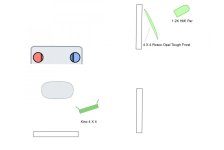
Here's a setup from a recent shoot that makes use of the natural light in the room which I augmented with lighting elements. It's a comedy, daylight interior lit once for all the action. It's small but it works, I think. I have a 1.2K Par HMI coming in the window through a 4 X 4 of Tough Opal Frost and a Kino 4 X 4 to get exposure (F5.6 at 800). That's it. I cheated a little back light into his close up (not shown)
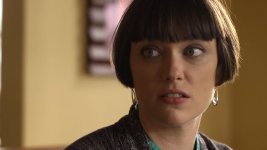
This is the best part for me is that the HMI provides a really nice backlight for her CU and of course that the light didn't move throughout the day.
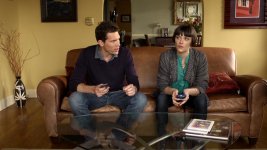
Here's the wide 2 shot. It's actually part of another shot that is a push in.
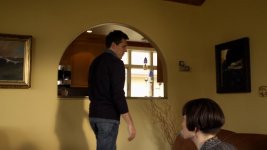
Here you can see the HMI still has a little pop but is diffuse. I like the Opal for that. This is actually a counter on the dolly. I just wanted to show that we were able to cover all the action with just the one setup.
This is the best part for me is that the HMI provides a really nice backlight for her CU and of course that the light didn't move throughout the day.
Here's the wide 2 shot. It's actually part of another shot that is a push in.
Here you can see the HMI still has a little pop but is diffuse. I like the Opal for that. This is actually a counter on the dolly. I just wanted to show that we were able to cover all the action with just the one setup.
Last edited:
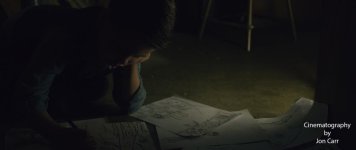
Looks gorgeous. Any details on the setup and which camera was used? Also would love the link to the piece.
Don't be afraid to under light a scene also. You do not need fill for every scene or need to see the face every time. Hardest thing for people to learn when lighting.
View attachment 87465

Joncarr
Well-known member
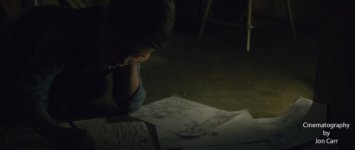
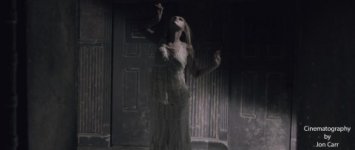
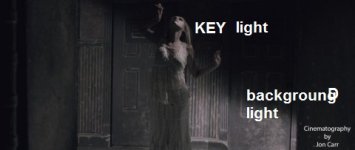
The setup was very simple. I was in Utah and I asked for Kinos and they gave me some weird daylight only knock off. So I hid this thing behind the door and use the door to cut the light since I couldn't do 2ft or 4ft. I also had to control the spill for the background so we used a blade and some black wrap. Some times the best setups require 1 light. Plus using a little kick to wake up the background helps a lot when you want your character in total darkness.Looks gorgeous. Any details on the setup and which camera was used? Also would love the link to the piece.
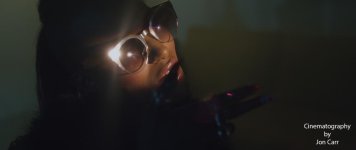
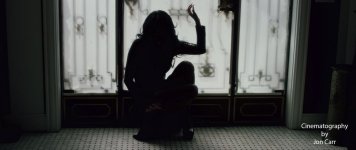
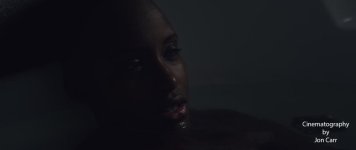
Camera was my RED EPIC MX with my Schneider Xenon's we used the 35mm for the whole shoot. No Color correction in any of these stills, just had my kodak 5219 LUT I made in camera for the kid and old man. For the singer and girl, I just desaturated in the 5219 LUT in camera.
This is for a music video for a metal band. We shot 2 music videos in 2 days. Its being edited now. will be released in july.
Here are a few more stills though.
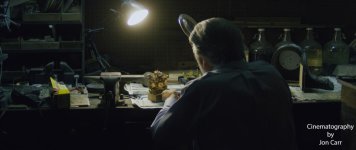
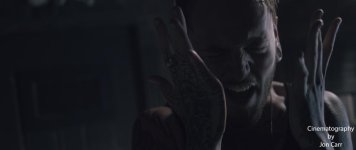
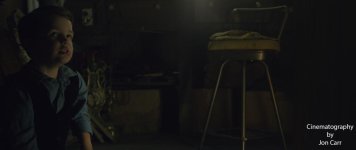
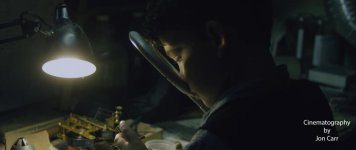
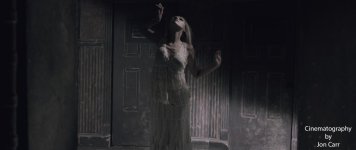
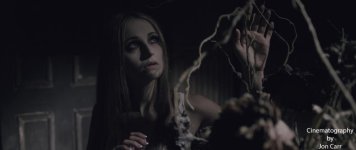
sonofaresiii
Well-known member
groovy, good stuff
Some great tips guys. Thanks for starting this thread OP.
One of best piece of advice about lighting people I got was "always light the short side of the face first." This is not always applicable, but I prefer lighting actors this way whenever I can. I really like having the shadowed/darker side of the face on the camera's side.
One of best piece of advice about lighting people I got was "always light the short side of the face first." This is not always applicable, but I prefer lighting actors this way whenever I can. I really like having the shadowed/darker side of the face on the camera's side.
combatentropy
Veteran
always light the short side of the face
Yes, I've always thought the same thing.
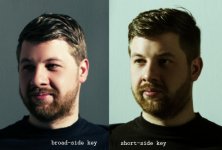
Don't be afraid to under light a scene
. . .
it's not about the light you add but what you take away
You sound like Gordon Willis. He and I share the same sensibility, minimalism, which may be why traditional television lighting turns me off and may be why I've had Lighter's Block. The freedom to break from traditional three-point lighting, or at least to turn it way down, and in particular the advice of some to subtract heavily, until you're down to the least possible lighting --- that may be the key I need to unlock my lighting style. Thank you, all!
Last edited:

nycineaste
Well-known member
yeah, but dont confuse yourself with that:
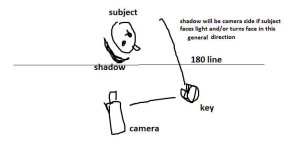
if you have the key 45 degrees to the scene and the actor faces the light (lighting down the nose) the shadow will be camera side.
you dont have to get the key light on the far side of the 180 line or anything.
45 degree key does magical things, you can rely on it more often than not.
hate to make it so simple, yes of course add creativity and thought to the equation
Attachments
combatentropy
Veteran
Yes, you're right.
nycineaste
Well-known member
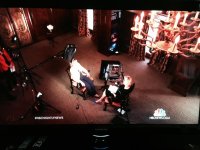
on most of my projects I've used only a (soft)key light and a (hard) background light, no fill or backlight. "Four point lighting" doesnt mean you always use four lights. It's just a way of understanding the different functions that lights perform.
and no offense but alot of the arty-farts who talk about dispensing with the supposed formula of four-point lighting are using a soft key light from the side, and a low contrast look (even in night scenes), like 99.9 percent of the time ( itself the formula for a naturalistic look since the days of nestor almendros). Its not like these guys are taking risks with hard light or making wildly new expressionist patterns in the frame like john alton or anything.
I mean yes this is gorgeous stuff bu t every art style has its tropes
just sayin'.
Attachments
Joncarr
Well-known member
You sound like Gordon Willis. He and I share the same sensibility, minimalism, which may be why traditional television lighting turns me off and may be why I've had Lighter's Block. The freedom to break from traditional three-point lighting, or at least to turn it way down, and in particular the advice of some to subtract heavily, until you're down to the least possible lighting --- that may be the key I need to unlock my lighting style. Thank you, all!
Well I'm a huge fan of Gordon Willis, and if there's one thing I'm known for I guess you can say is being "dark" I'm also known to get angry on set if someone mentions adding "fill" I guess I need to work on my temper when the F word comes up on set. But there's something magical in the shadows when you push them. You can get some crazy stuff with under lighting film, and in this day and age even digital is showing some magic in the shadows. Gordon Willis would love how far we came with digital. RED and ARRI for me, allows me to light dark, like I would with film. But traditional 3 point lighting is mostly only for interview/broadcast. Cinema, doesn't need 3 point lighting unless you want to motivate it. But then again, you don't need to motivate your light either. Thats the beauty with lighting a film. No rules. I remember early days of RED, and days of film. Most people were lighting for exposure, as if exposure was the most important thing about the image. Pulling out their light meter for EVERY SINGLE light in the shot, cause they can't trust their eye after deciding their stop they want to live at. Yea, lighting for film can be scary if you haven't tested the limits of that stock your using. And digital noise is ugly. But if you don't take chances, how are you gonna learn?
hscully
Veteran
It kind of depends on the scene, no? Even Gordon Willis worked a florescent flooded news room in All the President's Men. Not every scene was lit like the garage. Maybe in a music video you can choose to light more poetically but in narratives you are responsible to tell the story and each story and scene require light that's right for it.
Joncarr
Well-known member
It kind of depends on the scene, no? Even Gordon Willis worked a florescent flooded news room in All the President's Men. Not every scene was lit like the garage. Maybe in a music video you can choose to light more poetically but in narratives you are responsible to tell the story and each story and scene require light that's right for it.
Correct, it depends on the scene. And yea Gordon willis wasn't always dark in every scene. But he was known for being dark, that was his trademark. Not everything I shoot is dark, cause it depends on the scene and film. But I prefer to light dark and moody.
combatentropy
Veteran
"Everything should be as simple as possible, but not simpler." --- Albert Einstein.
No, I don't think Joncarr means everything should be dark. I'm sure he has some work lit brightly. (EDIT: Joncarr replied as I was writing, above.)
And although Gordon Willis was nicknamed The Prince of Darkness, his mantra wasn't to be dark but to be simple.
"We're in a world now and in a business where people perceive complexity as good. People don't understand the elegance of simplicity. . . . And don't get Simple mixed up with Simplistic. . . . You know, you hit somebody in the face with a pie. . . . Simple is your choices. One light coming through a window might be quite beautiful. That's all you need. You don't need six other lights, because why are you doing all of this, by habit or by need?" --- Gordon Willis
But yes, when the scene required 16 lights, Gordon Willis used 16.
hscully
Veteran
I watched the Godfather again last week. I guess that was the genesis of a lot of what that style. I think it's wonderful. As a comparison I also watched "The Yards" which is a really great movie with wonderful, understated performances. Harris Savides is the cinematographer and is on some of my favorites including Zodicac, the Game which I LOVE! The Yards is a beautiful, underexposed looking film but I noticed a difference in the way it was lit as compared to the Godfather. There was more soft top light only setups. In some scenes you didn't even get an eyelight in one eye. Their eyes were completely dark. I wondered if at that point the light, or rather lack thereof, was calling attention to itself. As the viewer I felt in some way I was being left out. I never get that feeling with the Godfather even in the darkest scenes.
Last edited: