Scorpiolenses Anamorphics Yeah!

At a 2x squeeze it's absolutely an ultrawide. The vertical won't feel quite as pronounced as it would on a 12.5mm spherical lens, but you're certainly getting that same crazy-wide FoV (and extreme perspective distortion anytime you get close to anything).

Indeed I'd almost argue it's more useful for an extremely wide perspective, as you can get up close to a subject with ultrawide scope lens, and the perspective distortion on your subject's face won't be quite as extreme (giving you a more usable shot) whilst still having the extreme perspective of the wide FoV.

You're getting 12.5mm FOV horizontally, but you'll never get sub-25mm perspective/compression with that lens line.

What you and Postmaster and I are all agreeing on is that - since we shoot portraits - it's great to have a more telephoto rendering of the face to go with a wider FOV.

But by virtue of trading up to a higher focal length perspective all the time, you lose the ability to access that heavy perspectival distortion of the sub-25mm focal lengths - in the (probably) rare situations where you'd want it.
 
But by virtue of trading up to a higher focal length perspective all the time, you lose the ability to access that heavy perspectival distortion of the sub-25mm focal lengths - in the (probably) rare situations where you'd want it.

A ultra-wide anamorphic feels ULTRA wide. Just head to a local rental house and test some out for yourself, you'll see it straight away. It's not in any way a compromise you have to worry about when shooting scope.

Remember too, that the 25mm Scorpiolens is a full-frame lens. Plonk it on a MILF or a Venice, and you're getting a 12.5mm horizontal FoV on full-frame - which is a crazy look.
 
Taking the example of 50mm 2x anamorphic lens. Try to completely ignore the notion of a 25mm lens, it isn't a 25mm lens (and never will be), it's a 50mm lens.

It is a 25mm lens, though - at least horizontally.

With a 2x rear anamorphic, there is a teleconverter in the optical path that is expanding the image 2x but only vertically. In order to do that, you have to start with a base 25mm lens and then expand it vertically to get 50mm.

If you put a normal 2x teleconverter on a 200mm lens, would you not call it a 400mm lens?

It's the same for a front anamorphic.

If you put a 0.5x wide angle adapter on a 50mm lens, would you not call it a 25mm lens after you did that?

A 2x front anamorphic is just a 0.5x wide angle adapter, but only horizontally.
 
Last edited:
A ultra-wide anamorphic feels ULTRA wide. Just head to a local rental house and test some out for yourself, you'll see it straight away. It's not in any way a compromise you have to worry about when shooting scope.

Remember too, that the 25mm Scorpiolens is a full-frame lens. Plonk it on a MILF or a Venice, and you're getting a 12.5mm horizontal FoV on full-frame - which is a crazy look.

You can't have your cake and eat it, too.

You said: "Taking the example of 50mm 2x anamorphic lens. Try to completely ignore the notion of a 25mm lens, it isn't a 25mm lens (and never will be), it's a 50mm lens. So the magnification is always going to be that of a 50mm lens."

Likewise, a 25mm FF lens will always have the magnification of a 25mm FF lens. Whereas I own the great Laowa 12mm and i believe Arri makes a 12mm LF lens.

Of course - most movies would never use a 12mm lens anyway.

25mm FF is about 16mm S35 which is usually the widest lens in a cinema set anyway (if not an 18mm or 21mm S35).

So, I'm being a bit pedantic. Of course you can get a crazy wide shot with a FF 25mm 2x anamorphic. But you'll never get the look of a 12.5mm - which, again, would rarely be needed. I'm not trying to diss scope, just making a point.
 
With anamorphic, I think it helps to understand the horizontal angle of view a bit better when you realize that the capture ratio is much narrower than what you would otherwise be using.

There are videos out there where people will use a 2x anamorphic on a HD 1.78 frame ratio and get an extremely wide 3.56 ratio. Those videos are a good example of how wide an anamorphic will see the world. Most people are not going to do that, though.

So, because you are using a narrower capture ratio, like 1.2, you aren't seeing the full angle of view horizontally that you otherwise would see on a wider capture ratio.

On a 2x anamorphic, the lens is indeed seeing twice as wide as it is seeing vertically - that's just the optics of it. But, using a narrower capture ratio is going to negate some of that wideness.
 
Last edited:
There is no magic here and you don't get something for nothing. Frankly I feel the only reason for anamorphics these days is to get the artifacts. If you don't have them then you are not getting any special perspective advantage over a cropped spherical lens. And the loss of resolving power and other factors makes for real limitations with anamorphics.
 
Frankly I feel the only reason for anamorphics these days is to get the artifacts. If you don't have them then you are not getting any special perspective advantage over a cropped spherical lens. And the loss of resolving power and other factors makes for real limitations with anamorphics.

As an example, if you look at the examples here between similar spherical and anamorphic lenses, the perspectives are virtually the same: https://ascmag.com/blog/the-film-book/practical-optics-3-introduction-to-anamorphic . (There are some explanations I have issue with in the article, but the pictures are certainly great examples.)

I totally agree that really the only reason for anamorphics nowadays is to get the artifacts, which you only do with front anamorphics. Even without the flares, the texture it creates has this visual dissonance that is so pleasing in the way it makes the image feel alive.

Yes, unless you're working with a tall sensor, you often lose a lot of resolution by going the anamorphic route. (Which is ironic since it is the opposite for what they were originally intended to do - preserve all the resolution in a 4:3 negative while still having a wide aspect ratio.)
 
As an example, if you look at the examples here between similar spherical and anamorphic lenses, the perspectives are virtually the same: https://ascmag.com/blog/the-film-book/practical-optics-3-introduction-to-anamorphic . (There are some explanations I have issue with in the article, but the pictures are certainly great examples.)

That's a terrific test, and does a great job of showing the differences - thanks for sharing.

I totally agree that really the only reason for anamorphics nowadays is to get the artifacts, which you only do with front anamorphics. Even without the flares, the texture it creates has this visual dissonance that is so pleasing in the way it makes the image feel alive.

Yes, unless you're working with a tall sensor, you often lose a lot of resolution by going the anamorphic route. (Which is ironic since it is the opposite for what they were originally intended to do - preserve all the resolution in a 4:3 negative while still having a wide aspect ratio.)

It's certainly pretty silly shooting scope on 3-perf S35mm sensors. You end up cutting off so much of the corners on the glass, that you lose a lot of the lovely, weird fall-off and distortions that scope would normally give you. Getting wide-angles also becomes a real pain (as does trying to sort out matteboxes/filters for those widest lenses).
 
Last edited:
There is no magic here and you don't get something for nothing. Frankly I feel the only reason for anamorphics these days is to get the artifacts. If you don't have them then you are not getting any special perspective advantage over a cropped spherical lens. And the loss of resolving power and other factors makes for real limitations with anamorphics.

Looking at all the discussion here, this is what I agree with the most. I'll get some cheap Sirui anamorphics, but it's basically for the elongated bokeh and the flares.

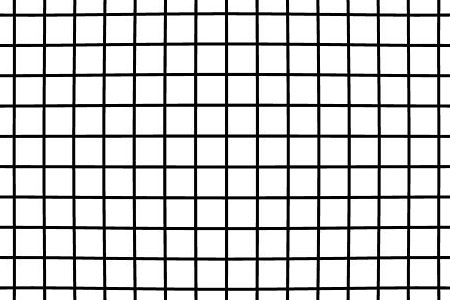
Any effects on distortion of faces on the edges, representation of perspective, etc, would have to show when you shoot one of these charts, because the lens bends the light as it passes through its glass, not as it travels through the air between the subject and the lens.

b_Illustration_distortion_grid.jpg
 
Back
Top