Reflector = Need help how to properly use outdoors

J.F.R.

Carbonite Member
So I was doing a scene today on the beach and for the life of me couldn't find a way to catch the sun to reflect it on a model. I know the sun has to be behind the talent and you basically use a reflector to light, but man it's a lot harder to do as I found out today.

Any tips or tricks?

Thanks
 
it doesn't matter where the sun is. it can be in front of behind, depends on what you want. but you access the suns light to reflect it. A basic thing you can do is hold out your hand, and see where your hand's shadow lies. put the reflector where the shadow is, now the sun is hitting the reflector. Now you can angle it and point it at whatever you want.
 
Light travels in a straight line.

If you are struggling to find the correct angle from the sun to your talent my tip is, don't play pool, you'll get hustled.
 
Light travels in a straight line.

If you are struggling to find the correct angle from the sun to your talent my tip is, don't play pool, you'll get hustled.


Thanks for the tip, don;t understand what don't play pool means? Would that be no games?

But yeah thanks for the help and any other tips are greatly appreciated
thanks
 
I doubt that you're struggling to find the right angle, because it's just a simple reflection like using your watch to shine a reflection in someone's eyes - there is nothing fancy or difficult about it, you just jiggle it around until you can see where the light is reflecting to. I think the issue is probably that the reflection is not as strong as you are expecting, and so you're not really seeing the result you anticipated. Try moving your reflector closer.
 
I shot a scene on a beach for one of my music videos, sun high angle behind the talent, and I was shooting straight towards the sun with the beach in the background.

My tips are: prepare for wind and don't even think about using a fabric based reflector. They will waver around and change the lighting on your subject during your shoot. Instead go to home depot and purchase a 8x10 foot sheet of foam that is silver lined on one side. You can buy them in different thicknesses but I tend to like 1/2". Afterwards just cut the sheet into whatever sizes you want. I like 3x3 and 4x4. These are powerful and underestimated ways to add fill to your scene. You can also use bungi cords to put them on the ground and secure to a sturdy tripod or light stand. (whatever won't fly way).

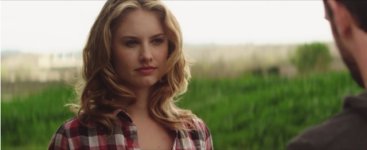
Here's a frame grab from the scene. This is obviously a close-up shot, but I also shot extremely wide masters and the reflector was bouncing light at over 50 feet away off camera.

DM-Beach-Edit.jpg

For me this is a bit 'hard'. The shadow of the girl's nose, gives me the 'this is a studio shot, with greenscreend background'... could be that 'impression' would be destroyed a few seconds later if you pulled back (or a few seconds before) to a wide shot showing this is not in a studio.

I probably would have used a more matte, or pulled the bounce back to the point were the shadow fades.
 
As it stands the background was still brighter than the subjects skin exposure, something I don't like to do. Had it been pulled back more contrast would have been introduced, on-set there are always compromises and decisions to be made. We ended up lighting from underneath as you can kind of tell by the direction of the shadow (in fact it is going up). Because of where I wanted the beach and water in the background of the frame there was no way possible to raise the reflector as high as it would have had to have been to get nose shadow in proper place. The camera was already 7-8 feet up. The wind was ridiculous that day so reflector braced very strong and firm by my gaffer down low.

I can see how the shot might look fake but it was in fact real and for the actual scene it starts with master wides and moves in and is mainly focused on the artist who is singing to her.

Anyway the point of my post was to show how you can expose for your background (f45- f65 @ 800ISO that day) and still use reflectors to key your subject which otherwise would have been a complete silhouette.

Reflectors have amazing power! The sun!
 
Last edited:
Thanks for the tip, don;t understand what don't play pool means? Would that be no games?

But yeah thanks for the help and any other tips are greatly appreciated
thanks
Sorry, that was my poor attempt at humour. It's all about angles, distance and strength, just like pool.

Maybe the issue you had was the type of a reflector you were using or the distance you were from the subject. Give us a little more detail about what you were using and how you were using it and I'm sure we can steer you in the right direction.
 
I shot a scene on a beach for one of my music videos, sun high angle behind the talent, and I was shooting straight towards the sun with the beach in the background.

My tips are: prepare for wind and don't even think about using a fabric based reflector. They will waver around and change the lighting on your subject during your shoot. Instead go to home depot and purchase a 8x10 foot sheet of foam that is silver lined on one side. You can buy them in different thicknesses but I tend to like 1/2". Afterwards just cut the sheet into whatever sizes you want. I like 3x3 and 4x4. These are powerful and underestimated ways to add fill to your scene. You can also use bungi cords to put them on the ground and secure to a sturdy tripod or light stand. (whatever won't fly way).

Here's a frame grab from the scene. This is obviously a close-up shot, but I also shot extremely wide masters and the reflector was bouncing light at over 50 feet away off camera.

DM-Beach-Edit.jpg


I love that shot, Looks great. Also this is video not photo so a moving shot with that bounce on the face imo is definitely what I'm looking for. Would love to see any behind the scenes videos , pictures or maybe even the possible video?

Also here is the reflector I was using
http://www.amazon.com/Neewer-110CM-...UTF8&qid=1349488383&sr=8-1&keywords=reflector
 

With a bounce that large you should walk around the subject and just watch the lighting change as you move the bounce. Move the bounce up, down, angling it different ways. The Wife and I have demonstrated this with not only the size your URL points to but, also car windshield screens that have a metalic side or a 'white' side.

Even for overcast days, depending on the heaviness, one can use these to bounce light into 'sunken eye sockets', and lighten them up.

If the talent is facing at least 90 deg. from the sun, one should be opposite the sun and move around until the bounce softens the shadows.

The other problem with shooting on bright beaches is the tendency for the subject to squint. sometimes having a large 'black' card/shade in the direction they are looking may help that for 'brief' periods of shooting. This would depend on where the person was looking what is 'bouncing' the light (like specular highlights on the water... big white bright beach sand... etc.).
 
That reflector is pretty good. I guess you got your angles wrong, or maybe there wasn't enough sun to reflect in the first place? Find where your shadow is and pure the reflector there, makes it tons easier to control and angle the light you're trying to reflect. Also, try to get your reflector closer to your subject. Oh, and bring sunblock.
 
I love that shot, Looks great. Also this is video not photo so a moving shot with that bounce on the face imo is definitely what I'm looking for. Would love to see any behind the scenes videos , pictures or maybe even the possible video?

Also here is the reflector I was using
http://www.amazon.com/Neewer-110CM-...UTF8&qid=1349488383&sr=8-1&keywords=reflector

That is a great reflector for still photography, but I would not recommend it for outdoor beach shoots. As I mentioned earlier on a windy day the fabric will flutter around and the lighting will change on your subjects skin. You may not notice it on set with everything going on that day, but when you watch your footage later on you will be struggling to find a good take that doesn't have any lighting moving around effects on it. As if there isn't going to be enough for you to worry that day, you might miss seeing this in camera.

For $12 you can buy a huge 8 x 10 foot sheet of 1/2" foam lined with silver on one side from most home building stores and cut it into what sizes you want. There is no fabric so it will not flutter in wind. Again I suggest foam core or board based reflectors. Fabric is great for still photography outdoors, or indoors, but I rarely use them anymore outside for the reason I mentioned.

***Note the problems I'm talking about are mainly with silver based reflectors. For just some bounce light off white surface the fabric stuff will do. Sorry if that was not clear.
 
Last edited:
I think using fabric outside is very standard.
The problem is when people use very reflective fabrics that are very small. Once you get to a 8x8 ultrabounce its generally soft enough that any variation isnt a problem.
bounce.jpg
Here is a grab from a shoot. Sun is 3/4 backlight on her with a 8x8 ultrabounce 3/4 key with some floppies for negative fill on her right side.
Put the bounce on the same side as the actual sun to make it feel more natural.

The larger frames can be a pain on the beach as they are hard to move and wind can be a huge problem with them as they are essentially giant sails.
One thing I like to do on low budget beach shots is to use the 4x4 silver reflectors:
http://www.filmandvideolighting.com/masirest4211.html
and put them through a 4x4 frame of diffusion. i'll gang a couple of them together in an arc and use different strengths of diffusion to help wrap that key around the face.
It keeps everything s maller and a lot easier to handle in windy situations.
 
I wasn't very clear in my previous post and have updated it, but I only meant the issue you can have is when using silver reflectors outdoors. Bouncing using white fabric is definitely less problematic.

Matty_g as for the frame you posted, I think that flatter-like looking image you achieved is either due to a giant overhead cloud or overhead diffusion you didn't mention. Am I correct?
 
Put the sun behind your talent and move the reflector around until you see it hitting the talent in the face. Silver for bright light, white fabric for softer light. I always tell my reflector holders to try and blind the actors. If the actors are not squinting a little, the reflector is probably missing ;) Here's a pic from a shoot I did this weekend with a couple reflectors.

2cpxc90.jpg
 
Last edited:
Put the sun behind your talent and move the reflector around until you see it hitting the talent in the face. Silver for bright light, white fabric for softer light. I always tell my reflector holders to try and blind the actors. If the actors are not squinting a litte, the reflector is probably missing ;) Here's a pic from a shoot I did this weekend with a couple reflectors.

2cpxc90.jpg

I don't know... but I don't think those reflectors will do much for the shadows in the trees back there...
 
Here is a good tip to find the angle your reflector needs to be at in order to bounce the light back at your subject.

If you have an iphone, or a phone with a reflective screen, take it and point it towards the sun. Watch where the light bounces off the phone and hits your scene. Then position your phone so that it bounces the light from the sun back onto the subject. Then take your larger bounce, maybe an 8x ultra or something, and place it at the same angle and same position as where the phone is. You can also just use a small hand mirror as well to do this, as long as it's small and a very reflective object it'll work just fine.
 
I don't know... but I don't think those reflectors will do much for the shadows in the trees back there...

No no, they just need a bigger reflector, obviously.

ANYWAY, if you're asking the question, I'd suggest that you probably don't have a very good eye for lighting... which is nothing to be ashamed of, but it means you might want to fill out your crew a little bit more with someone who does. For whatever reason, I've never had a problem eyeballing light on a subject from a reflector and knowing when I've got it and when I don't-- though rarely can anyone else on set do it as well. Go figure.
But if you're really in a jam and can't figure anything out, and you really can't tell if the light is on the actor or not (in which case, why are you even using a reflector?) then you can 1) Ask the actor to tell you when they see the glare or 2) look for the specular highlight in their eye. Whichever works better under a given circumstance.
 
Back
Top