acrochordon
Well-known member
RED camera should have a mode that uses Adaptive Sensitivity (trademark.)
go to http://visl.technion.ac.il/research/isight/AS/
Sony XDCAM-HD has a feature called frame accumulation. RED needs to have similar technology.
The following is from the website listed above. There is much more info on the website. It is worth reading.
"Adaptive Sensitivity is a visual information processing feature that mimics the human eye's ability to compensate for uneven illumination in high-contrast scenes, delivering an optimally contrasted image without distortion or loss of quality.
How it works
Input to the camera’s DSP are two simultaneous mosaic format digital video signals. The two input signals are referred to as "Long" and "Short".
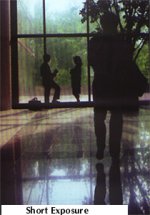
The "Short" video input should contain data from the input image as acquired by a CCD with a short exposure time. The bright regions should register faithfully, while the dark regions may be close to or at cut-off, and hence meaningless.
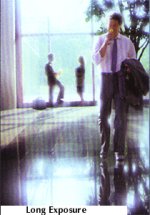
The "Long" video input should contain image data as acquired by a CCD with a long exposure time. The bright regions may be at saturation, but the darker regions should register faithfully.
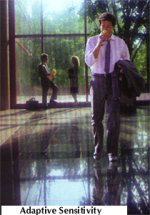
The Adaptive Sensitivity algorithm for wide dynamic range video imaging combines the meaningful information from both “Short” and “Long” inputs, and generates a single output image in which the luminance range is compressed to video standards (48 dB or 8 bits), without loss of image detail or color fidelity.
More informtion
The sensor's output signal is separated to Long and Short signals, pre- amplified, sampled by a correlated double sampler and then digitized and fed into an iSP2000 DSP. The input image data from each exposure is separated into the luminance ("luma") and chrominance ("chroma") information. The "Long" and "Short" luma and chroma data are pre-processed and combined by a weighted summing operation.
Internal look-up tables adjust the summing weights and control the picture contrast and brightness.
Finally, the processed components are transformed into digital Y/Cr/Cb, Y/I/Q, R/G/B, NTSC/YC and 601/4:2:2 formats (software selectable) or to analog signals.
In the monochrome configuration, only the luminance channel and the Y output are used.
In addition to its processing functions, the iSP2000 also provides centralized digital control over camera functions.
It internally collects luminance, edge and color statistics for auto-exposure, auto-focus and white-balance functions.
It is possible to assign different statistical weights to different regions within the frame.
For example, an auto-exposure application which accumulates the average luma of a given frame, might weigh the center of the picture at 1, the bottom at ½ and the top at ¼.
Demo Images
The figures below provide an example of Adaptive Sensitivity™ principles. The 'Long Exposure' and 'Short Exposure' Figures show images of a scene requiring imaging with wide dynamic range. Each image lacks the details which may be seen in its counterpart. The central image, which is an image produced by the Adaptive Sensitivity™ algorithm, clearly illustrates the benefits offered by both exposures."