Real Talk: Why is filmmaking so expensive (e.g. $40k lenses, $30k+-$100k+ cameras?)

I've bought used cars that cost less. And those have complex parts and machinery, an engine, it can take you around the country, you could sleep in your car, one of the greatest inventions of all time. Yet a camera lens made of a metal tube with glass costs more than some used or even new cars. :Drogar-SunGlass(DBG

Sometimes I think about how much more money I'd have in life if I had a hobby of just video games, drinking and watching sports like my non-filmmaker friends. But I got to be like, no I want to try that too. It's an addiction that drains your finances. :cheesy:

From lenses...

Canon Cinema Zoom CN-E30-300mm T2.95-3.7 L S (EF Mount) Lens ($44,650)
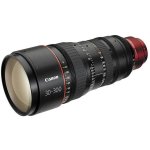
cae30300ef.jpg
http://www.adorama.com/cae30300ef.html

To recording devices...

Sound Devices 688 12-Input Field Production Mixer and 16-Track Recorder ($5,998)
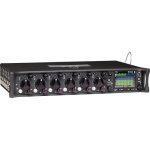
sound_devices_688_12_input_field_production_1425497742000_1128302.jpg
https://www.bhphotovideo.com/bnh/co...&m=Y&c3api=1876,92051677802,&is=REG&A=details

To cameras...

RED EPIC-W BRAIN ONLY WITH HELIUM 8K S35 SENSOR ($29,500)
http://www.red.com/store/products/red-epic-w-brain-with-helium-8k-s35-sensor

And that's just what I can't afford to ever buy. Let alone what I can afford to buy accumulated together that collects dust because I don't use it hardly enough. :Drogar-BlackEye(DBG

Why do some cameras cost more than a house? Just doesn't make sense compared to all that goes into making a house and how important a house is. I know it's because they can and people pay for it, but seriously.
 
R&D, manufacturing costs, precision engineering etc. etc. Sure it's just "glass and metal", but how that glass and metal is shaped is a huge deal. Plus niche market so not going to sell many hence higher cost to make it worthwhile to produce at all.

But "filmmaking" doesn't have to be expensive. If you're doing client work and they demand this or that camera or lens that's one thing (though they should be able to pay costs to rent all that stuff so you don't need to own but that's another discussion), but if you're just doing your own stuff, you can use whatever old ass cheap cam you can get ahold of. Even your damn phone. Once you have some kind of acquisition tool and some way to edit it, boom, you can be a filmmaker. Everything else is just creatively working around your limitations. Write stories around what you have, not try to make stories way beyond your capabilities feasible. If you want it bad enough you'll find a way, etc. etc. etc. cliche cliche cliche tired platitude tired platitude tired platitude.
 
As best I can tell, it is simply economies of scale. Cooke will never sell as many lenses as Toyota sells cars. 99% of people would not take an anamorphic lens if you offered it to them for free (assuming they couldn't resell it): it isn't autofocus or autoexposure, it doesn't zoom, and it weighs 10 pounds.

I think you see the same thing with other small markets, like musical instruments, electrical engineering test equipment, industrial machine parts, etc.
 
I've already made a firm decision to not buy a single thing in 2017. I don't care what comes out or if all of my equipment fails...I need a break for my own mental health.
 
A Bösendorfer Imperial Grand Piano (290) is worth around a quarter mil. Sound-wise, most people wouldn't be able to tell it from a $30,000 Steinway or Bechstein and a majority from a $10,000 Yamaha or Boston. Similarly, one can make a pretty darn good looking video clip with a $7,000 C500 or a similarly priced URSA Mini 4.6 without having to splurge $250,000 on Alexa65.

But when you want the best, you want the Bösendorfer (and Richter or Gilels tickling its ivory).

And Deakins with Alexa.
 
The piano comparison is an excellent one. It would be interesting to see the same film shot with two packages by the same cinematographer, one being a 10-15K package of an FS7 or C500 level camera and ordinary cinema lenses (such as Rokinon), the other being an Arri with a set of Master Primes. Same script, same actors, same crew. Color graded in post by an expert to match each other. The difference might be far less noticeable than you think.

Shane Hurlbut is an ASC cinematographer who uses everyday cameras as crash cams, etc. and regularly reviews all levels of equipment, comparing it with high end stuff. This review of the Xeen 50mm (essentially the same glass as a $400 Rokinon 50mm repackaged in a more robust housing) shows how close the two looks can be, as he compares the lens to high end glass.
 
I've already made a firm decision to not buy a single thing in 2017. I don't care what comes out or if all of my equipment fails...I need a break for my own mental health.

I hope your constitution is stronger than mine. ; ) I said I was only going to add a few lights before the end of the year, but here we are two weeks before Christmas and I just took delivery of a brand new Canon 17-120 last week. It may be bare under the tree this year... Lol.
 
Money buys you convenience and extra shot options.

If you (and your director) know what you are doing (and or not going to do) there is no need to need this stuff.

Of course there is nothing worse than attempting shots that you dont have the proper kit for.

A bounceboard or two, some tungsten worklights an ursa mini, half decent sticks, a sound devices 302 and 3 or 4 classic stills lenses you can shoot your feature as long as you keep it small enough.

You wont be able to do huge tracking shots,complex zooms and focus pulls, light exteriors in the sun, hold continuity of lighting, mic up 6 people.. but none of that matters if you script to not need to do those things.
 
Bingo - what Morgan said.
If you are smart and can spend lots of time in pre-pro planning & scouting and the script is do-able on that low-budget... then we've all seen pretty good work for a lot less.
 
I hope your constitution is stronger than mine. ; ) I said I was only going to add a few lights before the end of the year, but here we are two weeks before Christmas and I just took delivery of a brand new Canon 17-120 last week. It may be bare under the tree this year... Lol.

haha...that's a sick lens though.
 
The 17-120 is a good example.

I shot a job on it long 'oner takes' loads of zooming.. the shoot would not have happened without this lens.

Id say it is good value because it actually delivers the shots it is designed to deliver unlike the 'bargain' new fuiji which at 20mm is just not wide enough to do the job it is designed to do. So $10k and you get a fail which makes $20k look good value!

But if I were shooting a feature Id unlikely use either of those cine zooms because, well normally you dont need to zoom and one may be better off with a $1000 used stils glass package.

We dont need the shots such a lens can deliver.

We need different shots, like a 50 at 2

S
 
....
Why do some cameras cost more than a house? Just doesn't make sense compared to all that goes into making a house and how important a house is. I know it's because they can and people pay for it, but seriously.

As already said, it's not because they can, but because everything goes up exponentially as the market shrinks and the research cost 2x - 10x more as you go to the edge. The old adage that it costs 10% to get 90% of the way and 90% to get to get the last 10% is true. The other factor is that there is a markup that tends to be consistent regardless of price. All companies I've worked for sought a 50% or more markup on products. If it cost $1, then we sell it for $2. If it cost $100,000, we sell it for $200,000. So there are three things:

1. Volume shrinks in the rarefied air of the top end. So development costs get divided by fewer buyers
2. Cost go up dramatically when trying to achieve perfection at the high end
3. The markup remains the same so while a $1000 lens is sold for $2000, a $10,000 lens is sold for $20,000. Now the lens market may not have that markup, but whatever it is, they will want to achieve a consistent markup regardless of cost. They don't always achieve it, but that's the goal.

Watch Pawn Stars and you will see he does exactly the same thing. He always wants a 50% markup. That's not cast in stone, but that is a starting point.
 
I agree wolehardedly. It is all about knowing the limitations of your gear. As long as you stay within the limitations of your gear, whether that be your camera, support, G&E, etc., things will still look great!

It is when you attempt to go beyond the limitation of your gear that things get tricky.

I generally dislike these comparison videos of GH2 vs. Alexa, or some other cheap thing versus the top of the line product. They are often misleading to say that equipment and price don't matter and to convince newbies that they can have it all. Instead, I much prefer a conversation and test trying to objectively and subjectively trying to understand the sweet-spot and limitations of a piece of gear, while understanding the exponential curve that is the improvement/cost ratio.

I recently had a producer ask me to use a GH2 in a production because they watched that old Zacuto test where they shot a GH2 comparing with an Alexa, and Werner Herzog couldn't tell the difference...so if it was good enough for Herzog, it's good enough for him. And while I don't disagree that many things are possible with a GH2, it would mean less flexibility in locations, light levels and ratios and no time-code, gen-lock, amongst other things that would mean extra crew, extra lights and grip, and extra time setting up and working around its limitations. Plus, reliability on a professional set. The budget for the project was around $3000 for a 1-2 minute branded content with dialogue and actors on location. At this budget I could see why they didn't want to spring for an Amira with a fujinon 19-90. But this was one instance where these types of comparison videos can give people the impression that there is no point in getting expensive equipment.

But I also totally agree that as a hobby, stick to the cheap stuff, learn the limitations and stick within the limitations and great results will follow!
 
I guess my point was more that trying to skimp on one aspect of production can end up to be more expensive in the long run...whether that be sky-replacement, ADR, etc...which will also eat into your margins.

Not a rule, nor something that will happen every time, but definitely something to be considering. I always try to keep in mind efficiency/budget/client expectation.

So as long as cheaper means cheaper...because sometimes cheaper means more expenses in the larger scope of things. But ya'll already knew that :)
 
Back
Top