Post Processing and the Af-100 dynamic range

I posted the observation below in another thread, but I think it merits its own thread because of all the discussion going about the clipping of the Af-100. I hesitated a little bit because there are so many thread that have pop up on subject close to mine, but I think the example below is quite telling.japan-2.jpgjapan-1.jpgjapan-3.jpg
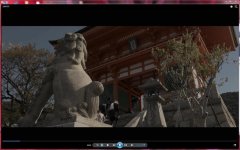
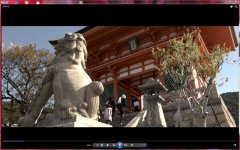
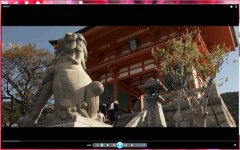
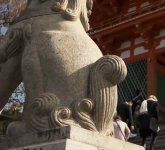
I think everyone should chill out because there are a lot of variable that we don' t know about the camera and the shooting. More so that the shooters them-self did not know much about the camera. I have 2 screen capture of the start of the Filippo shoot. The first one you have the transition coming from a black background a little dark but with the highlight in check!!! and details in most of the high lights. The second is when the transition has finished and see how much of the highlights have clipped (the back of the lion) and a third copy where I just applied a little curve in photoshop on the first shot where I put it more or less at a normal illumination. These were done on vimeo compressed sample (lots of artifacts in the sky for example) and I think that we could get much better result with the orriginal mts. So perhaps the Af-100 would be the type of camera that you can underexpose a bit a use a curve for proper exposed image.


The image capture have been reduced a bit I think by the forum system. If somebody has some place to put the photos (my captures are 1660 1040 screen) there is nearly no difference in details from the 3 images.
 
I just wanted to say that in no way I am criticizing the work of filippo, I am very grateful of him sharing us these footage of a camera he has used very little and what ever his style is (not everyone is obsessed by clipped highlight, I myself hate HDR ) I respect that. I would not like anyone to think that I am pointing at poor technique, etc, etc... I am more concern by a poor eye for composition that seems to be less discussed.
 
(not everyone is obsessed by clipped highlight, I myself hate HDR ) .
When shooting video, CCD, CMOS, EXMOR or whatever they want to rename the sensors, as a rule of thumb, one is exposing for highlights, preserving as much detail possible. I am not obsessed, I have to do it for a living. It is hard to believe today that something shot with a contemporary (next gen) digital camera, on a dull, overcast, low contrast light will produce clipped whites.
 
I don't know if it is there in the actual footage (and of course, this is taken from vimeo, so this critique probably means absolutely nothing) but look at the upper left corner of the third image, in the sky. Bandolicious.

That being said, I'm confident that once people have a chance to get a handle on the camera and how it works with things like highlights under different conditions it will produce very nice looking footage.

I believe Barry when he says that there was very little time for them to learn the cameras and that the highlight rolloff (or lack thereof) that is sometimes evident is due to improper use of camera settings. All good things with time - and I'm feeling pretty sure that Barry and Philip will be among the first to show us the best the AF-100 can bring to the table.
 
I put a disclaimer above that the sky had artifact because it came from vimeo, but also because it is a transition. It is just at the start of the clip and it goes from the white panasonic logo and black background to this image with the people going into the temple. I was a bit stunned that the highlight were not blown during the start of this transition. He did not do that manually so there was a chance that it was more the grading post processing that was at fault. It was perhaps a little too aggressive. Then I just tried to post process the only underexpose (artificially, because it was a transition) image to see if I could get a good image. And I think the image (except from the sky) is ok without blown highlights (the posted sample above are a bit crap). I guess if he had underexposed his image and boost it in post while protecting the highlights we might have seen less of those clipped highlights. But he had the camera just for a day, and surely tried to get it right visually at camera level, which is much more difficult sometimes.
 
I noticed the lion's back hot spot when I first watched his video as well. With that, while it might of clipped in what we watched it's nice to see the information was not totally lost and you were able to bring it back.
 
When shooting video, CCD, CMOS, EXMOR or whatever they want to rename the sensors, as a rule of thumb, one is exposing for highlights, preserving as much detail possible. I am not obsessed, I have to do it for a living. It is hard to believe today that something shot with a contemporary (next gen) digital camera, on a dull, overcast, low contrast light will produce clipped whites.

by a general rule we could say yes but in some circumstances it is not the case. Take for example the Alexa where test have shown that you can get back a full stop in the highlights. In photography my nikon is also the same, you just think it is loss and then you just slide the levels and it comes back, like by magic. Just google Red mx alexa test I think to see the very informative test between the two. In fact the red mx you can get a stop buy raising the shadows. So every camera has there ways.
 
I noticed the lion's back hot spot when I first watched his video as well. With that, while it might of clipped in what we watched it's nice to see the information was not totally lost and you were able to bring it back.

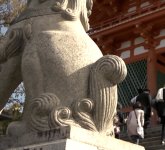
Yes that was the idea. It was the only time where I could get a supposed underexposed version that I could try to boost in post. It is a vimeo compressed version, I think the the original version we could get better result. I try below to put 2 crop version so that the blown part does not come too small a people can see the detail retained. small-japan-2.jpgsmall-japan.jpg
 
much of what you say is correct, but partially the reason you get more detail ( or perceived detail ) is because the black fade acts a bit like a white crusher, so the blown out whites, although we get some detail back, it looks like more detail than is actually there because the whites have gone more gray.

I think we will all have a very fun time figuring out how to maximize the blow outs with the avchd. I know it will be a first for me and we are better off coming together when this thing comes out to find the best solutions for everyone to use.
 
It would seem to me that this highlight clipping should be able to be engineered out before the camera ships. Maybe the Varicam engineers in japan can have a look at this in the factory? :happy:
 
Back
Top