Navigation
Install the app
How to install the app on iOS
Follow along with the video below to see how to install our site as a web app on your home screen.
Note: This feature may not be available in some browsers.
More options
You are using an out of date browser. It may not display this or other websites correctly.
You should upgrade or use an alternative browser.
You should upgrade or use an alternative browser.
Photos from the "old days"
- Thread starter DLD
- Start date
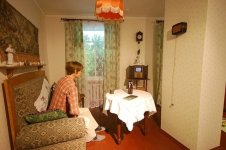
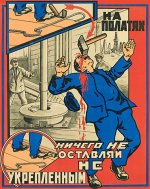
VEF Spidola, a portable AM/SW radio made in Riga, Latvia. Over the short waves, one could pick up what called "voices of the enemies" - Voice of America, BBC, Deutsche Welle, Radio Stockholm, RFE. BBC was more popular in the 60s and early 70s because it was the first to play popular music Cliff Richards, Elvis and so on. VOA joined in at about 1972 and immediately became huge with its 3 hour rock programs on Saturday nights. Foreign broadcasts were jammed but the KGB antennas lacked the power to reach far outside the city centers.



NorBro
Major Contributor
Legend has it that was supposed to be DLD's car.
One day after quitting his sales job at P.C. Richard & Son in West Hollywood, California, he drove across the country to find America's sunshine state and a new job at Circuit City.
Ended up in Tbilisi and met a man who put his car up on his balcony for certain reasons.
DLD - a novice car collector - asked the gentleman if he wanted 280,000 rubles for it but he politely declined.
There's a story behind that car. Apparently, it was purchased in 1991 but, on the first day, someone swiped the windshield wipers and the tires (Tbilisi was once a very high crime area, with a lot of "made men" calling the city home) And so the owner went berserk and decided to hoist it onto his balcony, where it remained for the next 27 years.
PS. I think I posted the photo of our Soviet car. Moskvich 403 - It was 3,300 rub new in 1964 and my dad bought it for 4,400 rub used in 1972.
Ours was identical, sans the plates.
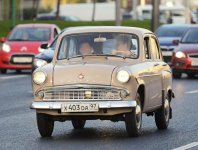
PS. I think I posted the photo of our Soviet car. Moskvich 403 - It was 3,300 rub new in 1964 and my dad bought it for 4,400 rub used in 1972.
Ours was identical, sans the plates.
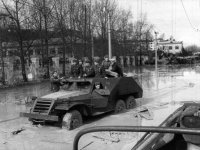
The 1961 Kurenevka (a district in the city of Kiev, now Ukraine) Mud Slide was one of the most mammoth disasters in the USSR. An ill constructed sand dam collapsed, resulting in a flood of the low lying areas. The official Soviet death toll was 150 people. The much later Ukrainian revision placed the number near 1,500.
https://en.wikipedia.org/wiki/1961_Kurenivka_mudslide
https://en.wikipedia.org/wiki/1961_Kurenivka_mudslide
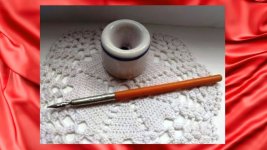
A dip pen and an inkwell were the front line tools in Soviet schools, when I started the first grade in September, 1968. The inkwells were supposed to be leak proof but they were anything but. The official reason given to kids and parents why the ballpoints were allowed was that the dip pens produced better calligraphy. The real reason was that the Soviets only began to manufacture ballpoints, using equipment imported from Switzerland, in 1965 and, by 1968, they were still in short supply. We were finally permitted to use them in 1972, IIRC. The dip pens were such a mess.
Soviet ladies undergarments. Not quite Victoria's Secret, unless there was a hole in them And there often was.
This was at the exhibition in Paris. It was organized by Yves Montand, who purchased the exhibits himself at a Moscow department store. No word if he wore them beforehand.
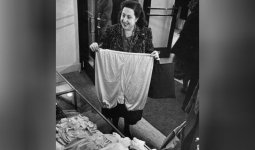
This was at the exhibition in Paris. It was organized by Yves Montand, who purchased the exhibits himself at a Moscow department store. No word if he wore them beforehand.
Last edited:

Yeah, no doubt - but I’d say every day when drinking was involved, and drinking was involved 24/7 because there was no other life to be had.
Actually, in some cities, it was even worse. In Ryazan, Kazan, Sverdlovsk, Moscow suburb Lyubertsy were large youth gangs, up to several hundred people in each gang, with several dominant gangs in the same general area. And they fought each other over territory since the early-mid 1970's, eventually upping their fighting potentials with first and brass knuckles to bike chains and knives. And then forming organized crime groups, with many members returning from the war in Afghanistan and knowing how and where to get real firearms.
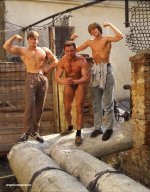
Lyubertsy was notable for having a previously illegal bodybuilding center, where future criminals to be pumped a lot of iron before organizing huge extortion rackets.
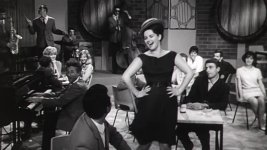
Kabachok, 13 Stulyev (Bar with 13 Chairs) was a popular Soviet TV comedy/musical show that was set at a Polish bar (with only 13 chairs). Every character had a Polish name. The show was a combination of sketches and lip sync'ed musical numbers (often in Polish, sometimes in other languages). It ran for 15 years (1966-1980) until the political events in Poland.