FS7: Overexposing on the FS7 for cleaner shadows

but it's still wrong.

Of course the interview where different subject sit in is the obvious example where skin is not the thing to use.

In terms of rendering pleasant images the final level of the skin tone is much more a philosophical/artistic choice.

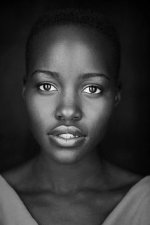
10 seconds on google finds images like this where the 'dark' person does not actually sit low on the WFM..
1c7cb2376bdbdc769950651946d722b1.jpg
 
So not to plunge too deep not this quagmire, but Doug is essentially correct. Exposure is generally based on the light falling onto the subject, not reflected off the subject. Otherwise we're always making everything appear middle grey and flat, and our shots don't match from cut to cut. But with that said, a very light skinned person and a very dark skinned person may need a bit of help to bring them a bit closer to the reflectance level of the other subjects. In my book this should always be done with lighting, not with camera exposure setting. I'll net off a light on a lighter skin subject and pump a bit extra onto a dark skinned one to bring them a bit closer together, especially when they're in the same shot. I once worked with Danny Glover and the man is incredible at always hitting his marks perfectly, and he explained to me that he's used to DPs having to point an extra light just at him to bring his levels up a bit.
 
Mitch is correct. The idea that you don't compensate lighting based on the skin tone of the actor is nonsense. If anyone steps into your interview setup you may need to alter your lighting based on skin tone, hair color and type and even clothing. There is just no "correct" way to determine exposure. Its an "ART" not a set of arbitrary rules. Doug's method is fine as is exposure by incident meter in general, but when I'm running and gunning fast or can't get near the subject and have no clear references for white or grey I often need to rely on zebras on face tones - even my own palm. It works just fine.
 
Last edited:
Otherwise we're always making everything appear middle grey and flat

It seems that there are two ways of thinking.. either you capturing data ready to colour in post, in which case even dark subjects are exposed above the noise floor and pushed down in post for an optimal SN ratio. Your middle grey (in camera) thing may end up dark light or anywhere in between because that is done in post.

For data capture of this nature reflective metering not incidence is the way

..or there is 1985 video thinking where.. yep..you do it in camera

Being an Slog thread I suggest the former is relevant.


and our shots don't match from cut to cut. B

Of course this is the point where one uses skill and common sense to keep a cuttable sequence.
 
Of course the interview where different subject sit in is the obvious example where skin is not the thing to use.

In terms of rendering pleasant images the final level of the skin tone is much more a philosophical/artistic choice.

10 seconds on google finds images like this where the 'dark' person does not actually sit low on the WFM..

View attachment 118908

I assure you that if you used an incident meter which disregards luminance of objects, you would get a negative thick enough to achieve this effect. In fact the skin would look exactly this bright without compensation, that's because at this frontal light angle skin becomes quite specular.

I think there is a misunderstanding. Doug is talking about exposure as a purely technical base which can then of course use further tweaks which are more of a stylistic choice dictated by the specific circumstances (type of a scene, time of the day scene portrays, style of the photography, type of face, how it composes with the rest of the frame, etc. etc. ).

I remember an article in The American Cinematographer about the movie "Panic Room". It talked about how most of the Hollywod's lighting techniques were crafted with an assumption that the actors are white and how often these techniques don't work for black actors. I thought the film did a great job lighting face of Forrest Whitaker in many of the scenes in a unique and conscious way. Personally, I often discover that, for example, a nose shadow is not as noticeable on a dark skinned person simply because it is not as contrasty in relation to the bright part of the skin, or that you can use specular quality of the skin to your advantage where on a lighter skin it may look as a mistake, etc, etc. So in short, I agree with Doug because I don't think he was talking about stylistic choices at all.

I'll shut up now and follow the cinematography rule #1: never argue other DP's method of measuring exposure.
 
It seems that there are two ways of thinking.. either you capturing data ready to colour in post, in which case even dark subjects are exposed above the noise floor and pushed down in post for an optimal SN ratio. Your middle grey (in camera) thing may end up dark light or anywhere in between because that is done in post.

For data capture of this nature reflective metering not incidence is the way

..or there is 1985 video thinking where.. yep..you do it in camera

Being an Slog thread I suggest the former is relevant.


Of course this is the point where one uses skill and common sense to keep a cuttable sequence.

If I have a scene with multiple angles that must cut together, I am going to light it for a consistent exposure level and lock my camera settings in place. For adjustments to different skin tones or other elements in the shot that may be further out on the extremes of the exposure range than I would like, I will adjust for these with lighting, makeup, set design, etc. But to change my camera settings from shot to shot is foolish and detrimental to the finished work. There will be a shift in the overall contrast, dynamic range, noise levels and other aspects of the image from shot to shot. This is true of shooting S-Log, RAW, color, monochrome, IMAX, Pixelvision or reversal film. Unlike in stills where there is no intercutting within a sequence, consistency of exposure is hugely important in motion picture image capture. People who "Expose To The Right" purely by the numbers for each individual shot are doing it wrong.
 
I agree with Doug because I don't think he was talking about stylistic choices at all.

Yes, you are correct.

Someone can do anything they want and chalk it up to stylistic or artistic choices, so what's the point of even talking about that? Everyone is right an no one is wrong when you talk about art. On the other hand, when I talk about exposure, and when I'm teaching a lighting workshops, I'm always talking about "normal" sit-down interviews, product shots, corporate b-roll, stock footage, etc. You know, the stuff that actually pays the bills is what is important to me. And for that type of work, 99.9% of the time there is a correct exposure (or ideal exposure, if you want to call it that) that shouldn't require any guessing.
 
If I have a scene with multiple angles that must cut together, I am going to light it for a consistent exposure level and lock my camera settings in place. For adjustments to different skin tones or other elements in the shot that may be further out on the extremes of the exposure range than I would like, I will adjust for these with lighting, makeup, set design, etc. But to change my camera settings from shot to shot is foolish and detrimental to the finished work. There will be a shift in the overall contrast, dynamic range, noise levels and other aspects of the image from shot to shot. This is true of shooting S-Log, RAW, color, monochrome, IMAX, Pixelvision or reversal film. Unlike in stills where there is no intercutting within a sequence, consistency of exposure is hugely important in motion picture image capture. People who "Expose To The Right" purely by the numbers for each individual shot are doing it wrong.

YES!
I'd never get hired again for the broadcast and corporate clients I work for if I did not follow that philosophy.
 
Doug, I'll go you one further. Even with "artistic choices," once that choice of a look is made, one generally wants consistency from shot to shot. In these cases one is selecting a look, or a "correct exposure" to achieve that desired look. And once that is established, then exposure shouldn't change shot to shot. So your theorem still holds beyond the scope you indicated. Consistency is everything.
 
It all depends on what situation you are talking about. Some situations call for a consistent f stop for shot to shot continuity and some don't. Yesterday I had to shoot a stage event. I had no time to meter the scene and I was 100 feet away from it. I just had to use my judgement and in that situation zebras on caucasian faces are invaluable. A black performer was underlit and I had to compensate. Even in an interview I usually light to a monitor and check waveform or zebras to make sure my overall level is correct. Do I put all flesh tones at 60 - no I use my judgement. Would I shoot a feature that way - of course not . If I'm running around encountering situations that demand instantaneous exposure judgements and there is no white reference, a face or my own palm help enormously. Again its an Art not a Science.
 
I've been shooting for more than 35 years and never even once used a face for exposure. There is almost always something white in the shot that I can use to judge exposure. And for an interview, if I've got time to setup lights I certainly have 10 seconds to have somone hold a white card in front of the face so I can set exposure. It is science first, art second.

One of the things I demonstrate when I'm teaching an interview lighting class is that once I have my exposure set for one person, I can have anyone in the room come swap places and the exposure will still be right on because the exposure is not based on the brightness of anyone's skin. Now, I'm not going to say that other aspects of the lighting should not be changed for each individual, but the exposure will be the same. This is an especially effectove demonstration when we have people of various ethnicities. White, black, asian, latin, it doesn't matter. Everyone gets the same exposure.

I also have a slide I show that has a portrait of three attractive women of different skin colors: white, black, asian. They are standing shoulder to shoulder and they all look great in the same shot. So obviously the same exposure works for all three of them. But if two of them leave, should we change the exposure? Absolutely not. If the shot works for one of them, then it works for all. But if you used zebra on skintone to set exposure, who's skin are you going to use? They all look different. But I don't have to guess on exposure because I'm going to set it based on a white card -- and that is a target of known reflectance.

You could do a similar demonstration with three colored balls on a table top: white, black, green. If you light a shot with all three balls and it looks perfectly exposed (no matter how you personally want to define that), does the shot suddenly fall apart if you take away two of the balls? No. Any shot where all three balls together looks good will still look good if there is only one ball left. This is the fundamental difference between incident metering and reflective metering.
 
Gentlemen.. I think we all agree.

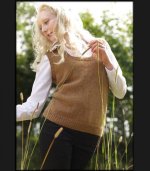
My phrase expose for the face might be illustrated by this image I shot.

One would not expose for the sky. or the forest behind. One exposes for the face

You could place a white card where the face will be or place the skin at a certain level or whatever.. but the frame is exposed for the face.

It happens also that skin tends to be a certain level.. so you could set your zebras at that level and not bother with the card or the meter.

Now if a darker girl was the next shot would I have changed my iris? of course not

k12.jpg
 
. . . .or place the skin at a certain level or whatever.. but the frame is exposed for the face.

It happens also that skin tends to be a certain level.. so you could set your zebras at that level and not bother with the card or the meter.

Now if a darker girl was the next shot would I have changed my iris? of course not

Without intending to, you have just illustrated the problem perfectly

You say you could have exposed for the face by putting it at a certain level -- but that assumes you know how bright the face is. In reality, you are just guessing based on how you perceive this particular face. What if the face WAS darker, you might not have chosen the same exposure even though you say you would have. How do you know you would have? You're basing the exposure on what you guess the face should look like. On the other hand, if you exposed for a white card then the face would be perfect, regardless of the skin color, but you didn't have to make a judgement call to get there. Faces always force you to guess but white cards and gray cards are always the same.
 
Last edited:
Doug , its all very logical but what do you do when you don't have time or freedom to place your white card? Moreover even if there is a white object in the shot what if the light there is different from the real subject of your shot - or if you are on the move and the area your shooting along with its lighting changes while you're rolling? These things happen all the time.
 
Last edited:
Without intending to, you have just illustrated the problem perfectly

You say you could have exposed for the face by putting it at a certain level -- but that assumes you know how bright the face is. In reality, you are just guessing based on how you perceive this particular face. What if the face WAS darker, you might not have chosen the same exposure even though you say you would have. How do you know you would have? You're basing the exposure on what you guess the face should look like. On the other hand, if you exposed for a white card then the face would be perfect, regardless of the skin color, but you didn't have to make a judgement call to get there. Faces always force you to guess but white cards and gray cards are always the same.

Perfectly true..

I just wanted to clarify that
..I would not change exposure if a new character came into the same 'scene'
..I would not have exposed for the sky or the grass or the woodland
 
Without intending to, you have just illustrated the problem perfectly

You say you could have exposed for the face by putting it at a certain level -- but that assumes you know how bright the face is. In reality, you are just guessing based on how you perceive this particular face. What if the face WAS darker, you might not have chosen the same exposure even though you say you would have. How do you know you would have? You're basing the exposure on what you guess the face should look like. On the other hand, if you exposed for a white card then the face would be perfect, regardless of the skin color, but you didn't have to make a judgement call to get there. Faces always force you to guess but white cards and gray cards are always the same.

Well, to defend Sam a bit... Maybe not "guessing" but "projecting", or to use a nicer term, making an artistic choice of what he wants the face to be, regardless of how bright it is in reality. Of course, the implication of that is that since the actual individual reflectance is unknown (and measuring it is an additional step) in a way it disregards what this measurement will do to the rest of the shot (if it is not interpreted). In this particular example had he used a white card as an exposure reference, the highlight and the sky would likely not be overexposed but the face would be darker than what he intended (and let's assume that the clipped highlight are his artistic choice). This example also illustrates that even if he used a white card as a reference, he would still have to make a decision where he wants to place it: in the shadowed area, in the direct sun, at what angle, etc. depending on the desired effect.
 
Back
Top