Open Source Digital Cinema Camera based on Elphel

Hi, very interesting project, the one with the APSC CMOSIS chip would be insane, and here lies my problem. In fact I see two problem, I have seen many insane project that had died because of the complexity etc of the project. I doubt Red would have survived the many delays if they did not have the backing of a billionaire. The second thing is that such a camera would require a whole infrastructure data management etc that would invalidate its use for 90% of circumstances and users.

Would it not be better to get something intermediate, like an aps version of a 2.5 k chip like the one that you have. A 2.5 k raw camera, with good low light quality and (very very important in my view) very good native DR, at least 12.5/13 stop. I think it would cater for a much larger market and perhaps much more feasible in a not too long future. With the advancement of technology lately in the large chip camera, in the space of 1 to 2 years the landscape can change completely.

I would say right on with this approach. As an internet forum member for a long time now it seems there are a lot of projects that come and go. I think the key is to not try to accomplish the impossible. Keep it in the bounds of what you can get to market. Because outisde of casual interest, I would only buy a complete, professional product to use on jobs. A sensor with a science project attached to it will not get my business! A finished camera with proper inputs and outputs, (maybe a couple HDMIs & an HDSDI) a form factor and powered by exisiting available batteries would catch my attention.

I wish you the best of luck in your project and hope you succeed.
I second your words. Unfortunately, these projects are more addressed to geeks than true moviemakers. Nonetheless, it would be very interesting to see it to come out as much more than simple vaporware... like many others so far :-)
 
There was a greek guy I think that participated a lot on this board. He was more or less and expert in sensor etc. He was going to do an s16 ccd camera I think and even collected money and if I am not mistaken disappeared. Perhaps I am wrong, if I am please correct me. I am not saying that the ephel group is the same. But as in the case we had here, I am more than certain that the guy was not a crook but he ran in problems etc that he could not face it.

What I would suggest to the open source camera group (I hope they are still reading this board) is at least to run a poll on what people want. For me (not for everyone) a 2.5 k raw output camera would already be good enough. A camera head with perhaps a special computer/recorder would be very very good. I see so many people complaining about the high bitrate intra codec of the hacked gh2, these same people (geek) would be first to say they want a 4 k camera. But this project has already most of the hardware for the 2k camera as it is the same processing amount of data for a 2k 1/3, 2/3 chip than for an apsc one. Just swap the chip (I am oversimplifying it) than go back on the drawing board. A 2k high DR APSC Raw/hdmi camera head today!!! for $ 2000/3000 would have a huge impact, compared to 4k one in 3/4/5 years. The first one would help to fund the second one. Look at the vibrant community that the hacked gh2 has produces, now imagine the above 2k raw one. In fact an APSC/super 35 camera head with just an uncompressed 10 bit/ 422 hdmi output with low rolling shutter and high DR and good low light would sell like hotcakes in the $ 2000/3000.
 
What I would suggest to the open source camera group (I hope they are still reading this board) is at least to run a poll on what people want. For me (not for everyone) a 2.5 k raw output camera would already be good enough. A camera head with perhaps a special computer/recorder would be very very good. I see so many people complaining about the high bitrate intra codec of the hacked gh2, these same people (geek) would be first to say they want a 4 k camera. But this project has already most of the hardware for the 2k camera as it is the same processing amount of data for a 2k 1/3, 2/3 chip than for an apsc one. Just swap the chip (I am oversimplifying it) than go back on the drawing board. A 2k high DR APSC Raw/hdmi camera head today!!! for $ 2000/3000 would have a huge impact, compared to 4k one in 3/4/5 years. The first one would help to fund the second one. Look at the vibrant community that the hacked gh2 has produces, now imagine the above 2k raw one. In fact an APSC/super 35 camera head with just an uncompressed 10 bit/ 422 hdmi output with low rolling shutter and high DR and good low light would sell like hotcakes in the $ 2000/3000.

I'm confused. You guys are talking about the 2.5k sensor like it's a future thing when apparently you can actually buy it, right now? Or are you talking about making a 2.5k 35mm sensor?

Secondly, you guys want Cmosis to cancel their already being developed 4k 35mm 300fps sensor for some reason?

And instead make a 35mm 2.5k very high dynamic range one?

Why do you think that starting from scratch would lead to getting a sensor sooner?

And why do you think that the 2.5k 35mm sensor would be any cheaper than the 4k 35mm sensor?

AFAIK, the main costs are in sensor size, not number of pixels?

I could very well see the 2.5k one arriving later and being more expensive. Just my 2c.

I think they shouldn't change a thing - let the sensor guys manufacture their 4k 300fps sensor if they want - and just worry about making a good camera that uses that sensor.

Bruce Allen
www.boacinema.com
 
Last edited:
Secondly, you guys want Cmosis to cancel their already being developed 4k 35mm 300fps sensor for some reason?
Bruce, it was being manufactured more than 15 months ago, although I am unaware of any camera that uses it.

I think they shouldn't change a thing - let the sensor guys manufacture their 4k 300fps sensor if they want - and just worry about making a good camera that uses that sensor.
I think there are a few things they could change. First, I would suggest increasing horizontal pixel density to 5-6K to enable oversampling for higher-quality debayer. Second, I would prefer a higher non-HDR-mode dynamic range -- 60 dB equates to about 10 stops, which is at least three stops less than I'd like to see. (I am aware that increasing pixel count might actually reduce dynamic range, but maybe backside illumination could be employed to compensate.) Third, 12-bit sampling is lower than many dSLRs are capable of -- 16-bit would be better.

One thing that I've not seen anyone mention is that CMOSIS's sensor has a global shutter.
 
Last edited:
I think there are a few things they could change. First, I would suggest increasing horizontal pixel density to 5-6K to enable oversampling for higher-quality debayer. Second, I would prefer a higher non-HDR-mode dynamic range -- 60 dB equates to about 10 stops, which is at least three stops less than I'd like to see. (I am aware that increasing pixel count might actually reduce dynamic range, but maybe backside illumination could be employed to compensate.) Third, 12-bit sampling is lower than many dSLRs are capable of -- 16-bit would be better.

One thing that I've not seen anyone mention is that CMOSIS's sensor has a global shutter.

Agree with every suggestion. Sounds great for the version that comes out in late 2014. Or in 2013 but is really expensive.

I'll take the 4K 300fps version that sounds like it's closer to being released :)

Bruce Allen
www.boacinema.com
 

I'm confused. You guys are talking about the 2.5k sensor like it's a future thing when apparently you can actually buy it, right now? Or are you talking about making a 2.5k 35mm sensor?

Secondly, you guys want Cmosis to cancel their already being developed 4k 35mm 300fps sensor for some reason?

And instead make a 35mm 2.5k very high dynamic range one?

Why do you think that starting from scratch would lead to getting a sensor sooner?

And why do you think that the 2.5k 35mm sensor would be any cheaper than the 4k 35mm sensor?

AFAIK, the main costs are in sensor size, not number of pixels?

I could very well see the 2.5k one arriving later and being more expensive. Just my 2c.

I think they shouldn't change a thing - let the sensor guys manufacture their 4k 300fps sensor if they want - and just worry about making a good camera that uses that sensor.

Bruce Allen
www.boacinema.com


Firstly, I was talking about a 2.5K apsc size sensor. Ideally let’s say that with a bayer type of sensor it would need to be at least this level to give a true 2k resolution. This is the principal used in the Alexa and Sony F3 sensors to get very close to true 1080p resolution. I don’t see myself interested in anything smaller than 4/3 size.
Secondly I don’t think CMOSIS is going to stop developing or producing such a chip for an open source camera project. I am sure that 99% of its market is in machine vision and yes I would prefer a 2/2.5K sensor with native 13 stop DR than anything 4k etc. Hollywood block buster films are being produce on the Alexa, so I can accommodate with the resolution. But the Alexa is unique in the film like DR (14+ stop), that is why it considered one of the best, if not the best camera. Image quality is not only about resolution, as the Alexa proves it. Give me a better all-rounder, than something that will excel in one domain like resolution and not good in another like DR. To todays standard 10 stop is quite low. Even the dslr are measured in the 11 stop in the zacuto test.

I am not talking about the sensor but the electronic that drives it. If you already have the electronic to drive a 2k 1/3 inch sensor, it will be about the same data rate and processing required for a 2k s35 chip the data. On the other hand multiply it by 4 times and you have to rebuild everything. As from today in the video they showed, they still don’t have a real monitoring of the raw output. So how much time will be needed to process 4 time the data rate to be able to monitor what you are filming.

It is not about the size but everything that will be needed to process that data. From the camera itself to the storage and computer processing to do editing etc. We are talking about huge amount of data. Uncompressed 4k raw is much higher that red cameras. So it will be impractical for the people that might be users of this camera like indie filmmakers. Because the one that have the budget are not going to get to an open source project when you can invest now in a RED for example.
I can’t understand the logic behind a phrase like you see a 2K camera coming later and more costly with any facts that back it up. The red saga showed us how difficult and time consuming doing such a camera was even backed by a billionaire.

Now perhaps I am too pessimistic but I have followed many of those projects that just died. I think I heard about this project 2005/2007 (can’t be sure) but since then so many things have changed. The latest being the hacked gh2. Look at the community and following that it is gathering because the image is very very good even if is 1080p 4.2.0. and rolling shutter. It is also here now, not just a dream in the next life. In the end you don’t need a 4k camera to make a film. The latest I saw was Hugo Cabret and not once was I distracted by the lowly 2k resolution.
 
There was a greek guy I think that participated a lot on this board. He was more or less and expert in sensor etc. He was going to do an s16 ccd camera I think and even collected money and if I am not mistaken disappeared. Perhaps I am wrong, if I am please correct me.

A big mystery surrounds Otis Grapsas, his whereabouts and his greek camera. I would also like to understand why all the popular cinema related forums banned him/his project.

Thanks for all the feedback and suggestions (yes we are still reading this board :))

I see a lot of fuzz is being made about dynamic range recently, first it was all about everybody hating rolling shutter, then it was about resolution and RAW formats/bit depths, now its all about f-stops of dynamic range. I think its an unjustly oversimplification that complex and very versatile cameras are basically reduced to a few numbers that can be compared to each other..... unlike Arri, Red, Sony, etc. we cannot afford manufacturing our own custom image sensor with specs that we choose. We are at mercy of what image sensor manufacturing companies provide us with, so I am not sure if discussing ideal image sensor specifications (5K-6K resolution or any value of DR) makes any sense for us.

Cmosis still did not release the CMV12000, latest ETAs for sample parts are April 2012.
 
Latest News:

JP4ToolsGUI_05.jpg

As we have announced in February, we are preparing the material for a major crowdfunding campaign, aimed at developing a new Sensor Front End for Apertus. The update to that statement is that we indeed have a solid technical project in our hands but that there are still one or two factors we want to consolidate before opening everything up to the public. Meanwhile, other things have progressed.

The balsamiq service has granted us free unlimited lifetime usage, which we’ll use for collaborative web and software GUI designing (thanks balsamiq!). Also, after almost 9,700 views and 216 replies in our logo creation thread, we've created a forum area for the graphic designers in our community. This section is read-only for everyone else, but the “old” logo creation thread is still open.If you're versed in what our project is aiming for and want to contribute, please continue joining in!

Concerning our plans for a Wireless Open Follow Focus, there is currently a prototype in construction phase, with community member Micheal Green using Arduinos Uno, Pro Mini and Xbee hardware components. The plan is to produce two wireless versions of a Follow Focus, one controlled via a smartphone and the other via a hardware controller (you can check the original discussion here).

Sebastian has begun working on an Android version of the ElphelVision software. It has been simplified from its tablet/pc counterpart and currently functions as a “remote control” for the Elphel camera, with live stream viewing disabled. You could think of this as a software version of what the Dictator hardware will represent.

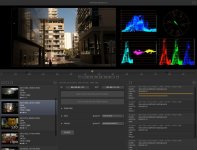
The headlining image at the top of the page is a design mock-up for what we'd like to call “Raw Factory”, or maybe “Open Cine”. To be honest, we're still trying to decide on the best name for it. What we do know is that it's an application designed for working with DNG sequences. At present, this software does not exist, but it is envisioned to allow for a live preview of DNG clips over a timeline. It will offer a great solution for all cinema professionals, not just those working in the Apertus community. Anyone and everyone will be able to use this to convert RAW DNG footage into proxy/digital intermediate files or apply color corrections/manipulations. In March, our efforts will be directed towards getting this project accepted into the next Google Summer of Code. The discussion has just started here.

We're in the running for an award at Prix Ars Electronica 2012: International Competition for CyberArts. Prizes of $10,000 and $5,000 will be given to the first three winners. We'll be entering as a “Digital Community” and all the necessary information for doing so is being gathered in this thread.
 
DP-Banner-01---Apertus2.jpg

This is huge! This is the moment we have all been waiting for! We’re announcing our first giant steps towards a completely new Open Source Camera.You heard us right! We are doing so much more than just developing a Sensor Front End.

Apertus will create an entirely new, complete digital cinema camera!
A High speed Super35 global shutter 4K CMOS sensor camera, powered by free software and open hardware, with a target retail price well below 10K$. How does that sound?

We are currently ironing out details, creating 3D models and animations to illustrate our concept. Wait until you see them, they are just awesome! Once our preparations are complete we will make the entire plan available for review and feedback. We will engage in discussion with the community, as well as the broader public, for 2 weeks of intense consultation. During this time, we will be able to make appropriate, informed revisions to our final plan.The next step is officially launching the crowd funding campaign and turning this project into reality.There is another thing we are very excited about and want to share with everyone.

Apertus is not going to do this alone!
We have established a partnership with Dynamic Perception. Chris ‘Shutterdrone’ Church and Jay ‘Milapse’ Burlage are the pioneers of HDR Motion Control Time-lapse. They are the developers of the Open Source Motion Control System - OpenMoCoand popular open source sliders; The Stage Zero system released in late 2010 and the soon to be released Stage OneSystem.There are many benefits that will come from this cooperation: in addition to contributing with personnel resources,Dynamic Perception has committed to funding part of the development of our new camera project.The Apertus camera will work seamlessly with Dynamic Perception motion control systems and offer freaking brilliant new possibilities. Finally, they will also help us establish a recognizable Apertus legal body in the United States.This legal, non-profitable structure, is something we are discussing in our forums right now: the creation of an Apertus Foundation, based in the United States. The U.S. is the best strategic location for crowd funding our project on the scale we require.We are currently researching the best avenue for creating this foundation, and you can join in the discussion at the specific forum thread.

Here’s the official announcement from the guys over at Dynamic Perception:
Official announcement:
---------------------------------------------------------------------------
The Apertus Project and Dynamic Perception team up
Dynamic Perception and the Apertus Project have teamed up to produce the first fully integrated camera and motion control system. Together we will expand the capabilities and tools available to filmmakers everywhere, while pushing the envelope in creativity and openness through open-source electronics and hardware.


About the Apertus Project
Born by the community in 2006, the Apertus Project seeks to design and build all aspects of a digital cinema camera using open-source technology, to create a truly unencumbered platform for professional production as well as experimentation, education and artistic expression.

The project has not only focused on software and hardware for recording video and interacting with the camera, but also to provide open-source alternatives for several key areas of post-production workflow. In pursuit of this goal, the Apertus Project plans to create a RAW video conversion software suite. Work is also currently under way to develop a Blender based post-production workflow.

MoCoBus
Dynamic Perception is bringing its new MoCoBus technology to market, which will provide an open framework for numerous types of devices to be connected and controlled both in the studio and in the field. Unlike other existing motion control and studio automation technology, all aspects of MoCoBus will be truly open and available for integration by open-source and closed-source products.

As a long-term project, one of the goals of Dynamic Perception and the Apertus Project are to provide product alternatives for all "intelligent" devices in the studio that are both open-source and competitive on pricing, features, and capabilities. We believe that not only does open-source technology work well in the hands of creative individuals, but the rapid pace at which the technology can adapt to new situations helps prove out new capabilities which will impact traditional products as well.

The nanoMoCo controller board will be the first product released by Dynamic Perception using MoCoBus technology -- allowing DIY and OEMs to create stepper-based devices with high performance and capabilities easily and at an extremely low cost.

A New World, a New Camera
The result of this project will be a full-featured cinema camera with complete MoCoBus integration built directly into the camera's user interface, allowing control over all recording, motion, and other studio automation tasks directly from the camera without the need for several other controllers and devices that must be independently configured and started. By reducing the number of devices that need to be interacted with, not only can we reduce the time between concept and execution, but also reduce the overall cost and labor required to create the most expressive shots you can imagine. Ultimately, we believe that a solo filmmaker should be able to produce expressive shots that would normally require an entire team to execute today, and to be able to do it on an independent's budget.Of course, all of the control capabilities in the world wouldn't matter if the camera can't record breath-taking video, and to this end the Apertus team is investing heavily in creating a camera which will be on-par with any production cinema camera at a fraction of the price. Details on the specifications of this camera will be released soon.


The Open-Source Studio
Our goal at Dynamic Perception is to support the creation of open-source alternatives for all tools used in film-making. While our roots are in motion control - our heart is in the entire creative process. Over the next year, we will be creating or supporting projects covering everything from automation to lighting, and on to post-production.

These tools are only as good as the connections between them, and knowing this, we are working to make intelligent, network-able tools that allow you to control each of these devices from the most appropriate interface for your needs -- whether it be in-camera, in a specialized hand-held controller, or on your desktop with your other applications.
 
Sounds great. Please do not make it a box with a sensor. Please make it a working style camera with XLR audio, viewfinder, HD-SDI & HDMI outputs and SSDs for recording media.
 
I'm all in for designing a camera that's all we want, cheap and awesome - but I'd rather get rich in the process, sorry :)
 
I sincerely hope that you succeed, even if I think a less ambitious camera system would have been better like the Blackmagic camera which is more or less what I was asking for and seems the same for many people. But I am all for choices and will follow your progress.
 
What is the ETA for your 4K camera?

I would be happy if you kept everything simple with: adjustable mount, basic audio with a button mic, cinema dng, save to removable ssd, adjustable exposure/shutter speed, removable battery and monitoring output. Most of the other things can be done manually and the others in post.
 
Last edited:
I sincerely hope that you succeed, even if I think a less ambitious camera system would have been better like the Blackmagic camera which is more or less what I was asking for and seems the same for many people. But I am all for choices and will follow your progress.

Thanks! We figured we need to aim high this time :)

I'm all in for designing a camera that's all we want, cheap and awesome - but I'd rather get rich in the process, sorry :)

That's the spirit :thumbsup:

Sounds great. Please do not make it a box with a sensor. Please make it a working style camera with XLR audio, viewfinder, HD-SDI & HDMI outputs and SSDs for recording media.

What is the ETA for your 4K camera?

I would be happy if you kept everything simple with: adjustable mount, basic audio with a button mic, cinema dng, save to removable ssd, adjustable exposure/shutter speed, removable battery and monitoring output. Most of the other things can be done manually and the others in post.

We will publish more details soon, stay tuned, ETA will also be more clear then.
 
Thanks! We figured we need to aim high this time :)


That's the spirit :thumbsup:


We will publish more details soon, stay tuned, ETA will also be more clear then.

This sounds great! Looking forward to hearing more. Will the dynamic range approach the 13 stops of the Black Magic Cinema Camera? If not, it seems to have other great things going for it at least. Keep up the great work! Hope to see more info soon. :)
 
This sounds great! Looking forward to hearing more. Will the dynamic range approach the 13 stops of the Black Magic Cinema Camera? If not, it seems to have other great things going for it at least. Keep up the great work! Hope to see more info soon. :)

Dynamic range as it currently looks will go even higher, but it will be more than just a higher number, it will be fully flexible -> like the open source idea is in general. Stay tuned.... :)
 
the CMV12000 has 10 stops of DR, 15 if you use the HDR mode, which they call "dual readout" or "dual exposure"

I'd like to know if that means:
a) it's like the scmos sensor: it has twin readout logic, and can use both circuits in parallel and combine the results
b) it's like the EPIC HDRx mode: it does a short exposure after the standard one

if it's a), it would be great; if it's b), it's not perfect for every situation, and 10 stops in standard mode is too little
 
Back
Top