
Navigation
Install the app
How to install the app on iOS
Follow along with the video below to see how to install our site as a web app on your home screen.
Note: This feature may not be available in some browsers.
More options
You are using an out of date browser. It may not display this or other websites correctly.
You should upgrade or use an alternative browser.
You should upgrade or use an alternative browser.
now shipping RED Epic-w GEMINI - dual ISO, low light capable camera :0
- Thread starter starcentral
- Start date

starcentral
Veteran
I need this.

NorBro
Major Contributor
Buy it...lol. http://www.red.com/store/products/red-epicw-brain
I wish they made a baby RED that looked like this. Doesn't need the works...just a solid 4K camera with some of RED's best.
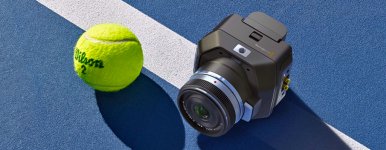
I wish they made a baby RED that looked like this. Doesn't need the works...just a solid 4K camera with some of RED's best.
starcentral
Veteran
Do you remember I was stupid enough to put deposit on the CRAFT camera?
That BMD reminds me of CRAFT.
That BMD reminds me of CRAFT.
Buy it...lol. http://www.red.com/store/products/red-epicw-brain
I wish they made a baby RED that looked like this. Doesn't need the works...just a solid 4K camera with some of RED's best.
View attachment 130121
here you go
not red but 1/10 the price and 120 fps 4k: https://www.43rumors.com/ft4-will-the-z-e2-camera-get-a-4k-120fps/
Colinelves
Well-known member
here you go
not red but 1/10 the price and 120 fps 4k: https://www.43rumors.com/ft4-will-the-z-e2-camera-get-a-4k-120fps/
From my testing the DR on that sensor DR quite restricted though: a couple of stops less than the Raven. So if by ‘some of the best’ you mean the Red sensor, then the Terra 4K doesn’t quite cut it. The specs and ideas are there though.
At the end he says, "That about covers it."
Well, not exactly.
How much is this thing going to set you back ?
$24,500 for the brain alone.
No thanks.
This is RED's answer to the dual dynamic ISO's of Panasonic and coming for the Sony Venice.
All this camera does is shift the dynamic range two stops lower before middle grey with some noise suppression firmware or added circuitry to clean up the shadows.
Clue: He warns, "When it's clipped it's clipped".
Which tell's you all you need to know.
There is probably only about 5 stops of available range above 18% when this mode happens.
You better pray that those city nightscapes don't have any large bright sources in them, because they are going to look like hell.
Especially in the transitions and halos.
If you shoot anamorphic, maybe the extra 300 pixel height might be attractive, but in terms of the lowlight thing this looks like a stopgap solution, not an end to end conception. I think you had really better like the look of RED cameras if you go for it.
I don't. Unless of course it's Monstro. Which looks really clean.
But will also set one back $80,000 for the brain alone.
My opinion:
Don't do it Dennis.
Last edited:
starcentral
Veteran
$33,745 USD and you have everything you need to start shooting. I think its a great option for anyone who might have been holding back from RED because of noise/ISO in the past. It's the reason why I went the Sony route after my F3 because I knew Sony would at least be semi-decent in lower light.
RED has dual ISO shipping now... with Sony its only an announcement and maybe delivery 6-8 months from now. There is no date. Let's not mention that unless you really need vistavision Venice is double in price @ approx $70k.
People may say they don't like RED color, but I doubt they would say they like Sony color more


Steven Abrams
Member
All this camera does is shift the dynamic range two stops lower before middle grey with some noise suppression firmware or added circuitry to clean up the shadows.
Clue: He warns, "When it's clipped it's clipped".
No. It just uses analog gain on the sensor. The same as panasonics dual iso, sony venice, and the same way DSLRs use analog gain for main ISO steps (with digital push/pull inbetween) and even the now gone digital bolex used analog gain for their iso's originally. What happens when you increase analog gain on the sensor is that the image will clip earlier in your exposure range since the sensor will still saturate at the same point, but you get better noise performance. So you can end up with similar dynamic range depending on how you work the trade offs and how much gain you use but in general if you look at DSLRs for example, you lose DR as you increase the ISO.
Arri and BM use a simultaneous dual analog gain readout to combine into high dynamic range. But similar thing where there is a lower analog gain and a higher analog gain.

nyvz
Veteran
No. It just uses analog gain on the sensor. The same as panasonics dual iso, sony venice, and the same way DSLRs use analog gain for main ISO steps (with digital push/pull inbetween) and even the now gone digital bolex used analog gain for their iso's originally. What happens when you increase analog gain on the sensor is that the image will clip earlier in your exposure range since the sensor will still saturate at the same point, but you get better noise performance. So you can end up with similar dynamic range depending on how you work the trade offs and how much gain you use but in general if you look at DSLRs for example, you lose DR as you increase the ISO.
Arri and BM use a simultaneous dual analog gain readout to combine into high dynamic range. But similar thing where there is a lower analog gain and a higher analog gain.
Actually no as well. Here is Panasonic's description of what dual native ISO means relative to traditional analog gain amplifiers:
"In a conventional imager / system, the ISO number is increased by increasing the gain of the
gain amplifier. Therefore, in proportion with ISO number, it is also amplified the noise, the
S/N ratio is deteriorated as a result. This is the traditional “gain-up” ISO boosting
technique.
In the new s35mm Panasonic image sensor, each imager pixel has an integral ISO
(sensitivity) switching circuit. This ISO switch mode uses changes in the charge to voltage
conversion processing of each pixel. The choices are native ISO 800 and native ISO 5000.
ISO 5000 is about 6 times the standard sensitivity of ISO 800 (about 2.6stops), however and
importantly as no electronic gain is used in this ISO switching process, the noise
performance of the camera at ISO5000 is very similar to that of ISO800. (Measured SN/R
differences are only about 1dB)."
In other words normal analog gain methods apply gain to the voltage signal to prepare it for a dynamic-range-limited ADC. This system only works or makes sense if the system bottlenecked by the ADC noise level, as do dual-gain systems. Gain amplifiers allow a limited ADC to "see" different portions of the sensor's analog voltage signal.
In contrast, the dual native ISO method seems to employ a different design where the sensitivity change occurs one step earlier in the process during the electron to voltage conversion changing the "conversion gain" of the sensor. Basically analog gain is a voltage to voltage process where as dual conversion gain changes the electron to voltage relationship.
This method has been around since 2010 or so and shows up in quite a few cameras these days including the Sony A7S2 and A7R2 and newer cameras etc. Some cameras that have a Low and High conversion gain mode also use traditional voltage gain amplifiers as another step I believe, though that wouldn't be the case with Gemini. Panasonic for example has said that they use gain amplifiers to varying degrees for intermediate ISOs between the two "native ISOs" in the EVA1 for example.


Liam Hall
Veteran
For anyone complaining about RED color haven't experienced the new IPP2 pipeline. It really is very different.
Yep. It's ridiculously easy now.