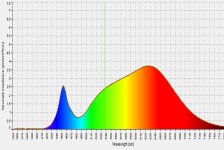
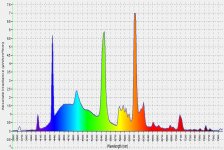
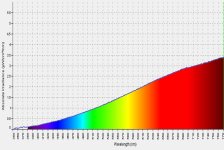
I was curious why daylight and tungsten was easier to deal with, especially for skin tones. Looking at the spectral distribution of light, tungsten and real daylight provide a continuous spectrum of light, while fluorescent/CFL produce highly spiked light- not continuous. The good news is that the latest LED lights come very close to tungsten/daylight for continuous spectral light. I've got some low-cost CFLs in 2x3 and 2x2 light rigs: I'm going to replace the CFLs with LED bulbs at around 5000K (probably Cree) to match the other ~5000K LED lights I use (currently Z96, YN300, YN600, and F&V R-300). An LED spot in a clamp-on work light will also be handy.
http://www.cs.cmu.edu/~zhuxj/astro/html/spectrometer.html
http://www.popularmechanics.com/tec...scent-vs-led-ultimate-light-bulb-test#slide-1 (see the spectral charts)
(CFL can work OK, but I had to use a tuned camera color profile and make sure WB was set carefully, otherwise trying to fix in post was time consuming).