
This is just a gimbal mount. The way it works is it has two sliding plates (one for fore and aft and another one for up and down) that allow you to physically move the camera so that the camera's center of gravity (CG) coincides with the tilt axis of the head. When this occurs, the camera's weight, which acts at the CG, cannot apply any torque to the head because there is no leverage (i.e. no "moment arm") on the tilt axis. Thus, it feels "weightless". Remote heads generally already have this feature to balance the camera on the tilt axis to reduce the load on the motors.
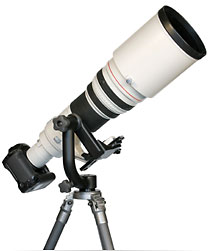
The gimbal mount has been around for centuries and is even used in photography for long lens (see the Wimberley mount below). I suppose Varizoom might be able to "patent" this for being the first to apply it to a manual video head but the basic idea is certainly not new.
The gimbal mount has been around for centuries and is even used in photography for long lens (see the Wimberley mount below). I suppose Varizoom might be able to "patent" this for being the first to apply it to a manual video head but the basic idea is certainly not new.


