NEW PBS Nature Documentary Shot on Varicam HDC27

Mike Krumlauf

Award Winning Filmmaker
Was watching online a PBS nature documentary about snow animals and realized in one shot, the host/cameraman is shooting with the Varicam 27F.. I say F because the varicam badge says "variable frame" and i believe the varicam badge switched over to just "varicam" on the H model which I own... Pretty neat to see a show like this being shot with the Tape based Varicam! Gives me hope I invested my money well :b

If anyone has any other info about the use of varicam or why they used it as opposed to newer cameras, i would love to know! :)
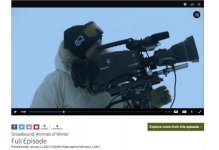
Screen Shot 2017-01-17 at 7.41.42 PM.jpg
 
It's possible that is not a recent image.

Regarding older cameras, if they produce awesome images newer tech doesn't negate the fact that older tech can still create awesome images. I used to produce a lot of music, and I noticed that certain vintage drum machines and samplers were highly soft after because they created a certain "sound." Much in the same way, the Varicam is a mature product and has a certain "look", which it seems you are happily discovering with your older version.

The tech industry is pushing new devices on us almost every quarter now, because they need new products to sell. But newness does not necessarily diminish the beauty of existing product lines. A good camera, especially one accepted and used for broadcast and/or cinema is still a good camera especially in the hands of a creative film maker.

I look forward to seeing more of your productions on the HDC27HP !!!

Cheers!
 
I guess that might be true. The episode premiered january 11th of this year, so unless its footage shot years ago and just being aired now (which i doubt) i don't know how else to explain it other then this wildlife videographer still believes in his varicam to use it on professional jobs like a PBS special. Alex - make sure you check out my latest video which i posted in the varicam thread here. Really proud of my efforts on that one and how well the varicam preformed with SD glass.
 
It's very likely an old film, they're not used in broadcast too much any more, although for a good 5 years or more they were the defacto wildlife camera - basically from Planet Earth onwards - almost entirely because they could do slow motion, unlike the Sony HDCam competition. So you got half the resolution but twice the frame rate. Difficulty with it though was that each tape had to go through Panasonic's Frame Rate Converter unit, which added considerable time and cost, and also led to productions pleading with operators to shoot off-speed material and regular stuff on separate tapes - meaning changing tapes all the time while action was happening!!!
Last BBC shoot I used them on was 2012 http://www.bbc.co.uk/programmes/b01l9z10

They required us to do that when we shot with the F900's for a series. I remember thinking even 'back then', "Really?". Funny enough, I never really shot any slo-mo with my tape Vari, it was pretty much either 24(23.98) or 60(59.94)(for "video", not with the intentions of being used for slo-mo). When I got my first P2 Vari, it was awesome, I could shoot and mix 'n match any frame rate I wanted on the same card. AND it played back off-speed material correctly with no special equipment or user intervention.

It's amazing how fast things change and how quickly we adapt and get used to something and it becomes 'the norm' and then you look back on something that was only 5-10 years ago and it feels like were looking back to black & white TV 50+ years ago.
 
i saw this episode of PBS Nature also (broadcast) and noticed the DVCPROHD badge on the camera, but didn't get any further than that.

Even though the host had, and was shooting, that camera, my assumption was that the majority of footage was shot by the camera the other shooter was using, and that it was newer (and with the beautiful slo mo, F55 perhaps?). Just an assumption, but that's what I thought.

I was actually more intrigued with how the host was able to talk on camera with a wolf or lynx less than 10 feet behind him?!?

Here's the show if anyone's curious:
http://www.pbs.org/wnet/nature/snow-bound-animals-winter-full-episode/14893/
 
Back
Top