
Hi all,
This is just a quick thanks to all the contributors here, and a heads up about a music video recently shot on a GH13. Pretty much everything I needed to know was answered on this forum, not to mention Vitaliy's work and the hack itself.
There are hundreds of products and workflows out there, and I had to read hundreds of posts in order to put it all together from scratch. I decided I'd share the conclusions I reached here – perhaps they will be useful to others in a similar position.
I wanted to shoot anamorphic 1:2.35, with some classic dolly moves, but I also knew we had to be ultra-portable and fast. I had a small budget set aside for camera. After checking out material from here and elsewhere, I decided the GH13 was the right way to go, and we put this kit together in about a week:
The camera was using the lpowel 40Mbps High Reliability Patch, but with native 24p checked (which destroys the "high reliability", I know!). We only had issues on two shots (wide angle, deep focus in a drug store and a park), and I didn't mind working around those to get native 24p material out of camera. Obviously, we could re-take shots if necessary – if I were filming one-off events, I wouldn't have taken that risk.
On set we backed up shot cards (labelled as reels) to two external drives, and then used FCP Log & Transfer to ingest the material to ProRes LT for checking. That material was used for the offline edit. Being anamorphic, it required an FCP aspect ratio change of 33.33.
Once we locked the edit, I produced an EDL of the cut, and then used spotlight and a text editor to help me pull the original MTS files from the backed-up cards. These I re-transcoded to regular ProRes422 with the latest beta of 5DtoRGB (batched with a simple Automator app and the newly added command line interface). It took about 12 hours for 70mins of material, but the quality is great (I just let it run overnight).
The edit was relinked to these new files, and sent to Color for grading. A few high ISO shots were treated with Neat Video for FCP, and I smoothed a couple of tracking bumps with CoreMelt Lock & Load X.
The minimal compositing work was mostly done elsewhere, but that and the actual shoot are another story!
All in all, I'm delighted with what we achieved with this amazing little camera. We shot in more than 20 locations over three days, with cast, crew and equipment fitting in a single vehicle. The camera and kit was so lightweight, we were almost invisible, which meant our locations could remain open while we shot, which greatly simplified scheduling.
All in all, I love the size, quality and workflow of the GH13. I can't say I won't be looking at the AF100 when it's available, but that too is for another day.
Thanks again to Vitaliy, all the testers of the hack and patch settings, and all on the forum.
Ben
This is just a quick thanks to all the contributors here, and a heads up about a music video recently shot on a GH13. Pretty much everything I needed to know was answered on this forum, not to mention Vitaliy's work and the hack itself.
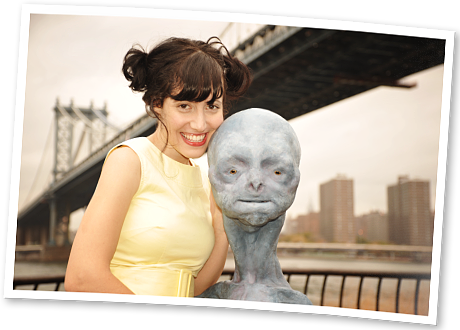
There are hundreds of products and workflows out there, and I had to read hundreds of posts in order to put it all together from scratch. I decided I'd share the conclusions I reached here – perhaps they will be useful to others in a similar position.
I wanted to shoot anamorphic 1:2.35, with some classic dolly moves, but I also knew we had to be ultra-portable and fast. I had a small budget set aside for camera. After checking out material from here and elsewhere, I decided the GH13 was the right way to go, and we put this kit together in about a week:
- GH1 (body only, late 2009 model found on eBay)
- Nikon AF-D primes (my existing set, 20mm/2.8, 24mm/2.8, 35mm/2, 50mm/1.4, 60mm/2.8micro, 85mm/1.8)
- Panasonic LA7200, also from eBay
- 77-72mm step down ring (permanently on LA7200). 52-77mm and 62-77mm step up rings to mount Nikons.
- Cheap Dolica 77mm ND set from Amazon
- Metabones Nikon F to M43 adapter (Notes: I haven't used the Voightlander, but I'm totally impressed with the Metabones quality. Purchased from eBay seller lasjashk who was really helpful, and shipped promptly.
- indiSYSTEMS indiFOCUSmini and indiRAILSpro DSLR 18" (Notes: The 12" rails would have been enough. Also, since I knew it was only the small Nikkors we were using, I had Tim send me just the 70mm SNAP! gears, with a few spare collars. We had to shim them with a little gaffer tape on the focus rings, but it worked well. Despite the chatter I had read elsewhere, I was able to get Tim on the phone a few times, and the order was overnighted successfully to NY.)
- Molly Manufacturing Smooth Pro Dolly with 10' of PVC pipe (Can't say enough good things about this. It's like one you could make yourself, if you could make it really, really well. Super smooth.)
- Couple of ultra-lightweight Manfrotto tripods with a basic 701RC2 head
- Fig Rig and wheelchair
- 2 x 8GB SanDisk Extreme SDHC (30MB/s) cards
The camera was using the lpowel 40Mbps High Reliability Patch, but with native 24p checked (which destroys the "high reliability", I know!). We only had issues on two shots (wide angle, deep focus in a drug store and a park), and I didn't mind working around those to get native 24p material out of camera. Obviously, we could re-take shots if necessary – if I were filming one-off events, I wouldn't have taken that risk.
On set we backed up shot cards (labelled as reels) to two external drives, and then used FCP Log & Transfer to ingest the material to ProRes LT for checking. That material was used for the offline edit. Being anamorphic, it required an FCP aspect ratio change of 33.33.
Once we locked the edit, I produced an EDL of the cut, and then used spotlight and a text editor to help me pull the original MTS files from the backed-up cards. These I re-transcoded to regular ProRes422 with the latest beta of 5DtoRGB (batched with a simple Automator app and the newly added command line interface). It took about 12 hours for 70mins of material, but the quality is great (I just let it run overnight).
The edit was relinked to these new files, and sent to Color for grading. A few high ISO shots were treated with Neat Video for FCP, and I smoothed a couple of tracking bumps with CoreMelt Lock & Load X.
The minimal compositing work was mostly done elsewhere, but that and the actual shoot are another story!
All in all, I'm delighted with what we achieved with this amazing little camera. We shot in more than 20 locations over three days, with cast, crew and equipment fitting in a single vehicle. The camera and kit was so lightweight, we were almost invisible, which meant our locations could remain open while we shot, which greatly simplified scheduling.
All in all, I love the size, quality and workflow of the GH13. I can't say I won't be looking at the AF100 when it's available, but that too is for another day.
Thanks again to Vitaliy, all the testers of the hack and patch settings, and all on the forum.
Ben
Last edited:


 And I can see that in here.