CharlesPapert
Director of Photography
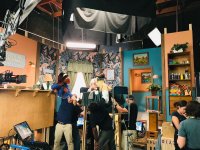
My day job since May has been on the reboot of the popular Comedy Central series "Crank Yankers", which premieres tonight (9/25). Prior to this I had done a couple of things with puppets here and there, including a day with the Muppets on Scrubs forever ago, but this was the real deal. All puppets, all the time...no human actors.
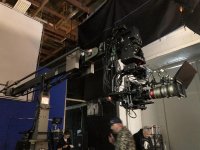
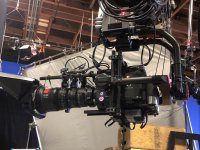
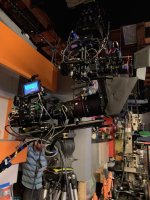
The original show aired in the early to mid 2000's in standard def of course, and was shot on 2/3" ped cameras in multicam broadcast style. The main note from our showrunner Jonathan Kimmel was to make it more cinematic, so obviously we had room to improve on the camera end. We opted for Varicam LT's with Cabrio 19-90's and an Angenieux 24-290.
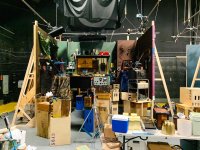
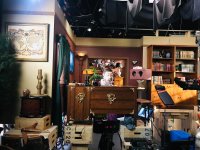
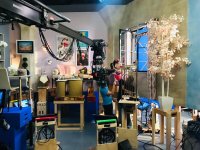
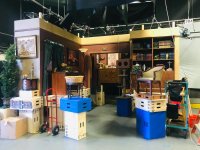
After I was hired I visited our new home, Stage 2 and 2A on the historic Sunset Las Palmas lot, a 100 yr old complex that was once owned by Howard Hughes (and where many iconic series and movies have been shot, from the Burns and Allen show, the Addams Family, Beverly Hillbillies to the first two seasons of I Love Lucy--that last one on our very stage). As much as I loved the history, these are notably small soundstages. The original plan was two use Technojibs to allow the camera free movement around our sets that are all raised approximately 4' off the floor to give the puppeteers room to walk around, but their footprint was simply too large. I spec'd Chapman Miniscope 7's, which are one of the smallest telescoping jibs out there. My key grip recommended stabilized heads on these from his experience, and the most cost effective would be a gimbal (we ended up with Movi Pro's) with the Klassen wheels. Varicam LT's fit the size and weight requirement and also the budget, compared to Arri Minis. In addition, I knew I could leverage the high ISO in various ways as described below.
In the previous incarnation, they shot four phone calls a day, which meant 8 sets (the caller side and the mark side). Apparently this led to a long and sometimes trying day. The decision had been made to split forces into two adjacent stages, with two calls on each stage, with separate directors and camera crews for each. The complication was that I was to oversee both stages simultaneously, with one grip and electric crew. I have had moments in the past where I've split A and B camera to different sets in a last minute rush to make a day, but never worked this way fulltime. It required some thinking outside the box! Where I ended up was positioning my cart in a central location so I could walk over to either set easily enough, while monitoring both. I had the sound department (no location audio is recorded, it's all playback of the pre-recorded calls) set up a "god mike" at each video village so I could hear what was happening on stage and be able to respond via walkie to my operators or in person. That audio is imbedded into the SDI feeds that arrive at my cart, where they are accessed by the ATEM TV Studio HD I use as a source switcher, with the audio-follows-video function activated. A small Comtek transmitter takes that switched audio feed and transmits it to a receiver on my belt. The result is that as I switch my monitor feed to a given camera, I will hear the audio from that stage including playback and notes being given. It has worked out remarkably well!
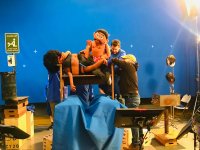
Building on my early experiences with the Varicam, we generally light the sets to a 2.8 1/3 at 2000 ISO (dialed down from the native 5000 ISO setting). This gives an image as clean as the native 800 but allows us to use less than half the light level required for 800. This helps with the size of our lighting package. There are a lot of visual jokes built into the sets via set dressing (usually signage) and often the directors will want to hold focus on these behind the characters, so we will either light those sets to a higher stop (determined at the beginning of the day) or I simply have the cameras cranked up to 4000 or 5000 ISO to pick up more stop. While the shallower depth of field of the S35 sensor helps a great deal with the cinematic vibe, it can be complicated as we also have a fair amount of blue and green screen work and we have to be careful to avoid soft backgrounds around those elements to help with compositing.
Our lighting is a mix of old and new. We have Skypanels, Quasar tubes, Litemats and Source 4 Lustres, but we have to supplement these with legacy tungsten instruments to fill things out. For a given week, we prelight 12 sets and while certain units are moved around on the floor as needed, anything flying from the grid needs to live there for the week or until de-rigged after a set is shot out.
One extra credit situation that I found myself in during prep was helping organize the dozen plus monitors dedicated for the puppeteers (any given setup requires 4-8 monitors to be placed around the set). They had specific requirements for us in terms of working height and portability and I had to work out a formula for these that would satisfy their needs but also help production with the costs. I started testing various 24" TV's and computer monitors and eventually settled on a 24" Vizio that was 1920x1080 (which is becoming more rare in that size), had very little latency and was affordable. We added Blackmagic SDI to HDI converters for each, built looms with power and SDI cable and mounted them via telescoping risers onto small rolling luggage stands I found on Amazon. A central rolling DA station provides power and video ports for each monitor. Coordinating and building out all of these monitors was a large part of my prep. It helps that I am a tinkerer!
As of now I've seen the first four episodes and can report that old fans of the show will likely not be disappointed, a lot of the returning voice actors and characters and certainly the same spirit. I hope that the increased production value will be appreciated!