Mixing colour temp with Black and White

jambredz

Veteran
If your shooting in black and white does mixing colour temps have any negative effect? I mean would it just be like shooting with the same colour temp. I may have to do this soon but i dont want to have to gel cuz that cuts down the output...so since its in B&W (in cameraq)...does it matter?
 
Black and white film, or at least the stocks I know, have different sensitivities to different color temps. For example, double X neg is 200EI under tungsten and 250EI under daylight. I'm not positive on the math, but I think that's a quarter of a stop difference between the two. Wouldn't mean much in that case, but on a stock where there's a greater difference (if they exist, I'm not sure), you might need to meter for different sensitivities when setting up your lights, depending on the color temp.
 
If your shooting in black and white does mixing colour temps have any negative effect? I mean would it just be like shooting with the same colour temp. I may have to do this soon but i dont want to have to gel cuz that cuts down the output...so since its in B&W (in cameraq)...does it matter?

Mixing color temps in B&W have no essential effects. There may be slight differences in how certain colors are rendered as monochrome, depending on the light, but for most people... and most situations, the basic problem of B&W for people who are use to 'color' is how various colors which have color contrast, are actually the same value when rendered B&W. So, in B&W design the idea is to have different values, not necessarily different or 'matched' color.(*)

There are basically two ways people get B&W (monochrome) from current digital cameras, which capture in RGB (or some other 3 color scheme...), one is to 'desaturate', leaving only the 'intensity', can be done in camera or in post. Or using channel mixing in post production.

The latter allows for changing the relative contribution of R, G, and B, in the final 'monochrome' mix, and can give some 'sense' of how 'real(tm)' B&W responds to different colors. Prior to Panchromatic film, the 'silver' halide dominant sensitivity was for UV/Blue end of the spectrum, and so 'reds', as in skin tones often were rendered 'greyer' than they appear in life... look at the lips of old photos, old movies (prior to the 30's), and either the actors/actresses, are wearing 'whitish' makeup, or their lips are rendered 'darker' than what one expects.

Panchromatic film allowed for more of the visible spectrum to be rendered on the film, but still the response is not 'flat' across the visible spectrum.

I personally prefer the channel mixing approach, rather than the 'desat' approach. I also include a 'curves' adjustment to give a more 'S' like curve to the intensities in the image. The result gives me a better 'sense' of B&W than just desat+contrast-boost.

*In the 'classic' mixed color temperature situation, sun through window, interiors with tungsten, you problem is essentially matching the 'intensities' of the light sources, so ND on the window would be required... just color temp will not be an issue.
 
If your shooting in black and white does mixing colour temps have any negative effect?

Yes, of course it has an effect. It will change how certain hue/saturations render as gray. It will almost certainly be fairly subtle, so it may not matter to you.

The big problem with shooting monochrome for people used to shooting color is that you have fewer tools to use to tell your story. With color, you have hue, saturation, and luminance. You can do a lot with just hue, and the contrasts that various hues can give you. I'm not convinced you can do a lot with variations in saturation, but it can certainly reinforce certain ideas. But luminance is what makes it all go as far as I'm concerned.

And with B&W, your only tool is luminance. All you have are shadows and highlights, and the tones in between. Used effectively, you can get a Casablanca. So it's certainly enough of a tool to make a blockbuster. But effectively telling your story using just luminance is not obvious and takes a (very) different way of seeing. And you'll probably develop a completely different way of lighting too (more hard lights, more distinct shadows). IOW, it takes practice and experience. But it's certainly doable -- witness all the masterpieces from the Golden Age.
 
Its dangerous to use colored light in digital b/W because saturating a color channel can lead to some funky artifacting, like pixelated edges in some parts of the image but not others. If you are going to try to use color to change the contrast rendering of the image, i suggest using a 10bit camera at least. The higher end AVCintra Panny's and the F3 w/ KIPRO are what i'd use.

On film, you can add a yellow soft fill light for a brightening effect on skin tones only, or bounce some light off a piece of ply wood, for a skintone enhancement that in B/W Film, boosts only the faces hands and exposed skin. It would look weird and yellow in color, but in B/W, awesome.....

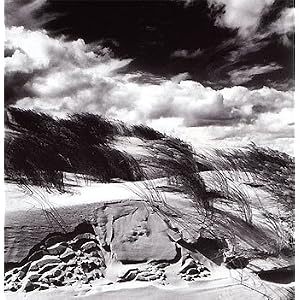
Also, a red filter makes the skies very dramatic and black.

like this shot with a 25a filter.

512SRQVJM2L._SL500_AA300_.jpg
 
Back
Top