Micro Gimbal for GH4, BMPCC, A7s - $699 USD

When I first had mine with my GH4 and 12-35 lens attached I was setting up PID settings and connected to laptop via bluetooth I noticed the pitch and roll motors got very hot, too hot to touch in fact and the heat had caused the surrounding metal to get really hot I turned it off quickly as something would definitely have burnt out otherwise. I think it was because in my impatience to use it I had not balanced it correctly so I started again took the time to ensure it was balanced as good as could be i.e. it would remain at each angle that I placed it I then set the PID settings and it worked perfectly and has not got hot again. So if you are a new user I would recommend watching some of the balancing videos available i.e. D Dugdale or others and ensure that you have near perfect balance before you turn it on. When they are sent out Its not a one size fits all for the PID settings as they have no idea what camera and lens you are going to use on it and as their instruction paper is lacking I would suggest you watch all the videos currently on line regarding setting up especially if you are using a camera and lens that approaches the upper weight limit that the unit can take. I love mine works beautifully and its a really good tool.

I think all prospective users need to know 1) the importance of having it balanced as perfectly as possible before ever turning it on (eliminating stress on the motors) and 2) the importance of not turning the handle in such a way as to twist and break the wires. Not having mine yet, I don't fully understand how that can happen when the unit is simply laid down on it's side, so if someone could clarify that would be helpful.
 
I think all prospective users need to know 1) the importance of having it balanced as perfectly as possible before ever turning it on (eliminating stress on the motors) and 2) the importance of not turning the handle in such a way as to twist and break the wires. Not having mine yet, I don't fully understand how that can happen when the unit is simply laid down on it's side, so if someone could clarify that would be helpful.

The brackets turning around when laying it down happens way too easily in my opinion, with the camera installed, the problem is with the yaw axis only, but with the camera off, the other two equally are a problem, so I will take steps to secure the axis during storage, right now on the yaw axis I am running a long twist tie through the opening in the bracket to keep it in place. A physical clamp would be better.
 
My Advice so far to those new to the Nebula:
(bear in mind, this is my experience. I'm no expert)

The Nebula is made up of an 8-bit gimbal card (a mini computer essentially, that sits horizontally on the gimbal sled), an IMU, a sensor (under the camera plate) that tells it how to orient the camera properly, 3 motors and a battery.

WARNINGS: 1. ) Twisted wires can short out the motors or battery. You may need to cut the plastic ties that hold them into place, or otherwise make sure they do not get crimped up, or twisted. NEVER ASSUME EVERYTHING IS OKAY WITH THE NEBULA 2.) Through mis-understanding, a user can instruct the gimbal's computer to send too much voltage to the motors and burn them out. 3.) If you wipe out the profiles the Nebula will not work, it will go haywire (can potentially crack your lens). You can reset some Nebulas through a button press. So only do a short button press (profile 1) or two-press (profile 2). Don't hold button down for a long press until you know, through the software (simple BGC), that it isn't assigned to wipe the profiles. If you wipe the profiles you will HAVE TO BECOME an expert to get the Nebula running properly :grin:

Unlike most electronics, the Nebula does NOT HAVE a factory default you can go back to through device itself.

The Nebula's computer has settings that can be changed either through bluetooth, and the BGC android app, or through a Java program you can download from Basecam or filmpower. The Nebula is NOT AN APPLIANCE, IMHO, because it must usually be calibrated by the user for each camera setup, and there are NO SAFEGUARDS preventing a user from "pressing the wrong button", so to speak.

If the wires are twisted, the motors can struggle to "stabilize" the camera and burn themselves out, or the wires short. Or, the wires can inhibit the camera from going to a certain position and freak-out the computer, so to speak. Unfortunately, there is no mechanism that stops the handle from spinning too much, and twisting the wires. Same for the pitch motor. So you have to be careful. If you turn anything and it feels tight, you are probably twisting a cable and should turn it back. You may need to open the battery compartment to check that the wires from the handle haven't become twisted.

PERIODICALLY FEEL THE MOTORS BY HAND. IF THEY ARE TOO HOT, SOMETHING NEEDS TO BE CHANGED!

The motors DO NOT hold the camera steady, if they try, they will burn out, or drain the batter pre-maturely. The camera must be balanced that it can maintain any position you move it to with the gimbal turned off.

As reported elsewhere, the construction of the gimbal makes balancing a camera difficult. Either the camera is too close to the pitch screws, and you can't get the wrench in, or it is far enough away and then you can't balance the roll. I recommend not screwing the camera in at first, but loosing the pitch screws and trying to balance it by hand (pitch only). In any case, recognize that learning to balance the camera is frustrating process.

Balancing the pitch is difficult because you must balance the camera both vertically (forward or backwards on the camera plate) and then horizontally, up or down from the pitch motor. When you remove a lens cap, or screw the camera all the way in, you will throw the pitch balance off. Because the pitch balancing is the hardest, I'd master that first, then the roll and yaw will be easier. Keep in mind, with pitch, you must balance BOTH vertical AND horizontal center of gravity for camera! Each effects the other so is confusing at first.

One procedure is to balance the camera on the plate so it is level (vertical center of gravity). Next, raise or lower the plate until the camera falls forward or back (horizontal center of gravity), then stop when it will keep a 45 degree position. You have to keep going back and forward, between adjusting the camera's vertical and horizontal center of gravity positions. Wish I could explain this better.

AGAIN, if the camera is not balanced standing still the motors will have to work to hold it in position magnetically and that will create heat and trouble. "Sort of balanced" is NEVER GOOD ENOUGH, unless you have a really light camera, but still. Expect and hour or two of frustration getting it balanced. After a while, you will get a feel for it.

Once you have the BGC software connected to the gimbal (this will mean downloading installing the right USB driver), first save all 3 profiles, so you can re-load them later if you forget where you are. You will NEED COURAGE to use the software. It is scary. But a necessary evil. After a while, it's actually very easy/powerful/fun to use!

Once you have your profiles saved, zero out all the axis PIDs, and build them up one by one, starting with low power for P and I, until the camera will balance on that axis, pitch, roll or yaw. When you have power to all of them it's hard to isolate what the motors are doing. I'm still learning on this. I wish there was better instruction out there. Definitely watch the long videos at SimpleBGC! VERY HELPFUL!
 
Last edited:
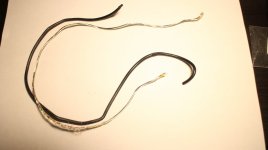
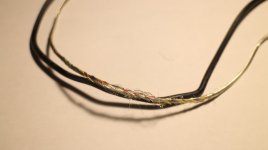
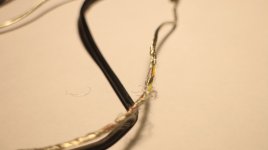
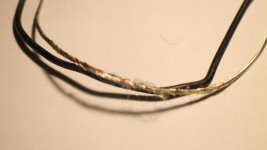
Hi all, I see Filmpower has responded to me on here, and on Facebook. They obviously want to publicly imply that error was on my part. From the word go I was very aware that the axis could not be rotated too much. I am quite sure that there was no excessive rotation except by accident that I was unaware of. Surely the amount of rotation that would create wires to fray like that would be multiple? I really don't feel like excessive rotation happened when it was in my hands...

The difficulty is, there's no way to know how many times it has been rotated since build. Even perhaps in the production line, up until the point where it was boxed. Who would know if one got accidentally rotated and then shipped out? But I'm aware this is just how Gimbals are and need to be handled with care. But, as said the very tight cable ties simply reduce the length of wire in which the twisting force will act.

Worth noting that since Filmpower has started responding on here and Facebook, my emails have not been replied to (I know it's the weekend). I really like the Nebula and would love to own one that I was confident in the reliability of!

They seem now to be encouraging me to take a refund and postage paid (they refused last time). Why don't they offer another replacement? Are they not confident in their product?

I want to make sure I'm not doing anything wrong. With my second model fault they have said
"circuit board broken,there are two reasons caused this kind of situation,one is the circuit board to bear too much voltage,another is against the power,and under a lot of voltage."
I don't know what this means and have asked them. If it's something I've done, I don't want to do it again on my third model.

Communications and customer service have picked up though since the beginning of the month, and I'm hopeful it can be resolved. Time difference makes it difficult though. I think there working day finished in my late morning so often long waits for email replies are to be expected.

Great product, I'm still hopeful. I've got some great footage from the previous two when working, and would be able to show some positive results I'm sure if I could just keep one alive!
 
I want to make sure I'm not doing anything wrong. With my second model fault they have said
"circuit board broken,there are two reasons caused this kind of situation,one is the circuit board to bear too much voltage,another is against the power,and under a lot of voltage."
I don't know what this means and have asked them. If it's something I've done, I don't want to do it again on my third model.


I think they are saying the board was damaged by over voltage caused by either unbalanced camera or camera/lens duo stressing the motors. What combination were you using?

In any case, you definitely have my sympathies, as it looks like you took every precaution and still had trouble. Just hoping the same doesn't happen to me.
 
Surely not Mainstreetprod. I've heard of burning the motors out, but wouldn't have thought the stress on the motors would interfere with voltage on the board. But I've no idea to be fair. Regardless - the combo was 800grams - A7s with Sony 16-50mm - correctly balanced! Motors were not under stress!
 
A successful product has to be designed to be idiot proof, or else it will fail on the market place.

Just looking at the unit, there is no way to tell how much the wires have gotten twisted while laying the unit down, so I cannot even judge how to turn the brackets in the opposite direction to counter any twisting. They have a video with someone pointing a finger at the wires coming out of the handle on the yaw axis, but I see no way that that visual allows me to judge wire twisting. The unit has turned 360 for sure due to normal handling, but the wires coming out of that hole have not changed in appearance so how am I to know what is actually doing on inside the unit.

As much as I like my unit, this company will become history if they don't make an idiot proof product, or one that cannot be properly maintained by the user.
 
Last edited:
I am hopefully in the process of canceling my order, although they have asked me for an order number , which I don't have since it is not listed on my Paypal receipt and that is the only information I have.
I'm not afraid of the software, I have owned two Alex Moss gimbals in the past. This wire twisting issue though seems like a real flaw. Odd that they don't include a CD with the default profiles just in case.
 
Please read through this thread. Everyone has experienced the same thing, but ultimately received it.
I have followed this thread from day 1 and have read every post. You are wrong in saying that EVERYONE has not received some kind of order confirmation email.
 
Also, they are selling direct, and realizing a handsome increased profit as a result, as opposed to selling through a distributor and passing a substantial part of the profit to the distributor.

Hence they have the cash on hand to correct problems being experienced by their customers, and should be paying for return shipping when units are failing quickly out of the box, for unknown reasons.
 
I took apart my Nebula 4000 over the weekend. To look at the circuit board and see if any wires were hitting the yaw motor, they were, and I also popped open the battery case. There was some type of funny adhesive that I was able to scrape off and remove and I was able to verify my wires were not twisted. Kraut69, taking those 4 screws off and gently removing the battery may tell you if your wires are twisting. Far from a perfect solution but might help those who are worrying about wires twisting.
 
Still don't have mine... but wondered if any of you owners can think of a solution to the wire twisting that can be rigged- "stops" to keep the parts from turning too far. Is that possible?
 
Just a comment, not aimed at anyone in particular nor am I trying to be critical.
Mostly what I’ve gotten from this, now 50 pages in, is:
People are jumping on the Nebula 4000, I’d guess, mostly due to the attractive price point.
Clearly there are folks that have gotten some nice results which are due to their patience, practice, and taking sufficient time to learn (some of the rest are likely “happy accidents”), <g>.

It’s not a (IMHO) great product, but more of one that needs a little refinement, but has great POTENTIAL.
Some of the needed changes should be relatively simple to implement, while others may require re-engineering.
If the manufacturer is listening to you (and I think they probably are), rectifying the deficiencies will result in a lot less frustration, and necessary contacts with support.
It would allow for a bunch of happy video folks (and newly minted “roving ambassadors”) to shoot a lot of great video and spread the word.

I was kinda hoping that one of the guys with a good handle on this might start a “suggested changes” thread . . .
 
Well I hope they fix the problem, I was almost about to buy mine but I will wait and see if they can fix this problem first. Thanks guys
 
I was kinda hoping that one of the guys with a good handle on this might start a “suggested changes” thread . . .[/QUOTE]

Unfortunately, for every person with criticisms there is another who will flame them for not knowing "how to use the Nubula". Since you asked, I will answer your questions best I can:

First, Filmpower is just a glorified DIYer. They took an off-the-shelf 8-bit card from AlexMos, best I can tell, some motors, had the metal parts fabricated, and then put their name all over it. The only real proprietary knowledge here is in the card, which they don't make. The reason more people don't make these things is you need very stiff steel (or carbon) to minimize vibrations which is CRUCIAL. China has those facilities, so it using them. GOOD FOR THEM!

1. Twisted wires: If the yaw is restricted from turning all the way around the motors can burn out because there is no shut-down sensor. Keep in mind this is an 8-bit board and can only take so many inputs before the clock can no longer keep up with the data (from sensor) and what it must send to motors. The solution is a complicated brusch-wire post (that is difficult to explain), where a brush keeps contact onto a spinning cylinder that then feeds into the board. In that way, it can twist around freely. However, the brush must stay in contact with the post, and it will wear out, from friction, etc. These very specialized parts are not easily obtained by DIYers or FilmPower.

Potential quick fix: Plastic battery cover where you can see if the wire has become twisted and can remove cover to untwist.

2. Arm adjustments. The camera often ends up too close to the roll screws, making it difficult to get the allen wrench in there. The arms should be mounted on rails (like from a drawer) so that ABOVE the motor, a screw can hold it into place. That is, the arm slides up and down on a rail attached to the motor where the rail can be locked into place from the outside (away from camera).

Potential quick fix: If everyone publishes their settings we may be able to make these settings good enough where some small added weights could get a quick, fast, balance every time.

3. Camera plate. Needs a screw assembly that can be adjusted freely on an X/Y axis. Again, this stuff is availble from industrial suppliers, but is very expensive.

Potential quick fix: marking paint on the plate people can use known camera/lens centers of gravity and put camera into right slot position.

That's all I have time for now...
 
When I get mine, I was already planning on marking best place for the camera (I'll be running an LX100 with fixed lens only, so should be one position only). And I think 1/4" cut off the allen wrench could help solve that problem. But the part about not being able to restrict the turning of the yaw due to possible motor burnout bothers me- was hoping that would be an acceptable DIY fix.
 
My Advice so far to those new to the Nebula:
(bear in mind, this is my experience. I'm no expert)

The Nebula is made up of an 8-bit gimbal card (a mini computer essentially, that sits horizontally on the gimbal sled), an IMU, a sensor (under the camera plate) that tells it how to orient the camera properly, 3 motors and a battery.

IMG_3652_s.JPG IMG_3654_s.JPG IMG_3655_s.JPG

Hi Everybody, I am the master of Filmpower in San Francisco,U.S.A.

Thanks the NEBULA ONYL COMPETITOR IN WORLD from CHINA write so long to be a expert to MISLEAD USERS.

Nothing can not be destory if your want !
This guys is the only make the wire broken of thousands of Nebula4000 already sell out. The reason is he ROTATE DELIBERATLY to make the wire die. General users don't worry about the wire twist, because it enough to common use and you are Nebula FRIENDS.
The second circuit broken clearly human make it die in special way. Because the circuit with protector itself. Heavy camera or wrong balanced will not make circuit die.
SimpleBGC is the acknowledged best project for gimbal in the world. It much better than the NEBULA ONLY COMPETITOR form CHINA.

Thousands of NEBLUA users happy to use the simple and reliable Gimbal. Filmpower is always make best products and service for professional users.

Thanks all Nebula Friends
 

Attachments

  • IMG_3653.jpg
    IMG_3653.jpg
    31.3 KB · Views: 0
Last edited:
OK, that looks like the same wire photos as were sent to me regarding my first returned Nebula I sent back. Windboyz, are you claiming I 'ROTATE DELIBERATLY'? Or have I misinterpreted what you are attempting to say??

I seriously hope I've got you wrong...
 
When I get mine, I was already planning on marking best place for the camera (I'll be running an LX100 with fixed lens only, so should be one position only). And I think 1/4" cut off the allen wrench could help solve that problem. But the part about not being able to restrict the turning of the yaw due to possible motor burnout bothers me- was hoping that would be an acceptable DIY fix.

The LX100 is light, so my guess is you won't have to push it near the roll arm/motor to balance it. You should be good there. That problem is bigger with heavier cameras like GH4 and A7.

I wouldn't worry about the yaw if you're careful, and are the only one using the gimbal. You can take off battery compartment easily to check. Also, you can look at wires going through handle and see if they're twisted.

One thing to keep in mind is that if the lens extends, or retracts a bit, even the lens cap, will throw off your pitch. In other words, after you learn to balance it with lens retracted, and lens cap on, you'll have to balance again with lens extended, cap off, etc. You'll see.

When the get the Nebula working, it is AMAZING! Will really make that camera come alive.
 
Back
Top