Metabones Speed Booster

Does anyone know what meatabones is talking about concerning the Leica R adapter statement number 2.
  1. Super telephotos such as the Telyt 560/5.6 may vignette at the corners.
  2. The following lenses require modification in order to fit on the Speed Booster.
Super-Elmar-R 15mm
Elmarit R 28/2.8
Elmarit R 35/2.8
Summicron R 50/2

Below are the lenses I have and both have the same mount. Is anyone using the speed boost with these
lenses and an FS100. Thanks in advance Gary
LEICA SUMMICRON R 50MM F2.O
LEICA SUMMICRON R 35MM F2.0 3-CAM
 
Got my speedbooster in the mail, today. I've been testing it with several Canon super-tele's. First thing I notice is a really weird bokeh. Check this attached file...
It was shot with a canon 50-200 f/2.8, USM IS zoom lens

View attachment 67277
Probably you mean "Canon 70-200 f/2.8, USM IS zoom lens" ? .. I never seen 50-200/2.8 .. :) ..But your post remind me something we use with tele-lenses: Teleconverters - most of X1.4 teleconverters made by Sigma, Tamron, Nikon, Kenko, Vivitar, Olypmus etc.. cost less than $300, only new Canon & Sony teleconverters cost more, but no of them cost $600 ... Metabones Speedbooster is the same thing,... contrariwise :) - decrease the focal length and increase aperture ratio by approx. 1 f/stop.... and the same way it's reduce image quality a little... I'm still not sure that I want to use it... a specially with Tele-lenses .. seems like use it with 24-105 lens is the best option for it
 
Speed Booster test


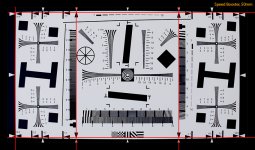
Barrel distortion

AnimaceSoudek.gif


Soudkovitost01.jpg Soudkovitost02.jpg

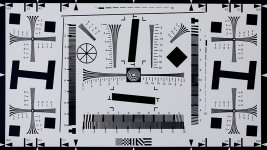
Corrected in postproduction
SoudkovitostSrovnano.jpg


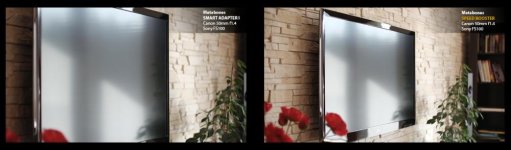
Field of view


SpeedBoosterView.jpg

SpeedBoosterView2.jpg


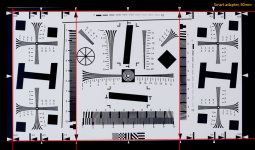
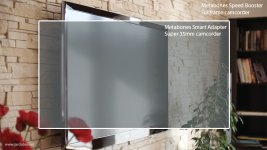
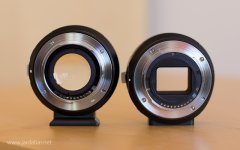
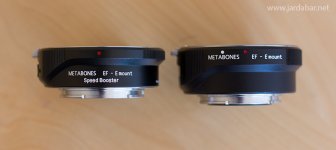
Smart adapter vs SpeedBooster

IMG_9035.jpg
IMG_9036.jpg


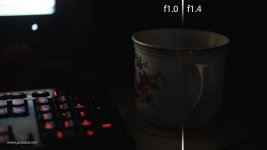
Low light performance

Svetelnost.jpg
 
Jardabar--

The barrel distortion of the Speed Booster looks very obvious in your chart comparison. In your opinion, how noticeable is the barrel distortion in "real-world" footage? Would you have to correct it in post-production every time?
 
When doing comparisons with the Speed Booster- best to say T1.0 vs T1.4, etc. as DOF hasn't changed (only light Transmission). Field of view is also slightly changed (1.09 crop vs. full frame).
 
What's the final word on this thing? Or has anyone drawn a conclusion? The bokeh thing is pretty scary, is that definitely the speed booster?
 
When doing comparisons with the Speed Booster- best to say T1.0 vs T1.4, etc. as DOF hasn't changed (only light Transmission). Field of view is also slightly changed (1.09 crop vs. full frame).

Really? The DOF doesn't change from 1.0 to 1.4? Seems like a full stop would make a noticeable change in DOF. Isn't that the point of the Speed Booster to get that shallow 5D3 like DOF?

2nd what Kholi says. What is the final word and yeah, that Bokeh looks pretty crazy but I seem to remember shooting into the sky with a shallow DOF on my 60D and getting something similar looking. Going to check my files later to confirm.
 
When doing comparisons with the Speed Booster- best to say T1.0 vs T1.4, etc. as DOF hasn't changed (only light Transmission). Field of view is also slightly changed (1.09 crop vs. full frame).

The DoF has to change since the crop changes. You are basically compressing the image vertically and horizontally so things that were not as sharp are going to be sharper since they will be covering less photo sites.
 
I've only used 2 lens on the speed booster and haven't noticed bohek like that. Of course, we could be shooting different conditions. In two weeks I am shooting again so I will bring it along and test it out. I've been wanting to use it with my 85mm F1.4 and this will be the perfect test.
 
http://www.dpreview.com/articles/2667195592/first-impressions-metabones-speed-booster

This article stated something that kind of concerns me about the Speed Booster. It says that the image goes darker when going from f1.4 to f1.0, which should be the opposite. Can anyone confirm this? One of the main reasons why I would want this adapter is for an extra stop at the widest aperture.

The articles States:

We did find, however, that shooting at the widest possible aperture (so F1.0 on a nominal F1.4 lens, for example) consistently resulted in a darker exposure. We found this to be true whether we allowed the Sony NEX-6 to meter the scene or set exposure manually. As you can see in the comparison below, maintaining an equivalent exposure between F1.4 and F1.0 actually results in a darker scene.

The most likely explanation is not due to any flaw of the Speed Booster. Rather, with the phenomena known as pixel vignetting, in which at very wide apertures, the light gathering ability of the sensor's photosites diminishes slightly. If you've never heard of this, it's because characteristics like these are often corrected automatically in-camera based on the information the camera has about the lens mounted on it. And of course, this chain of information is affected with the use of the adapter. We want to stress, however, that on all of the EF lenses we've used with the Speed Booster it is only at the maximum aperture (enabled by the Speed Booster) that we've seen this occur.
 
What's the final word on this thing? Or has anyone drawn a conclusion? The bokeh thing is pretty scary, is that definitely the speed booster?

I've shot about 3-4 hours of material with it so far and have been very pleased. Will be editing next weekend so am gonna have a very close look at the footage. But all has been great so far, definately one of the best things to come out past year.
 
I've just had the Contax to Emount Speedbooster delivered via FedEx (amazingly fast service actually). So i'm going to have a go with this version soon. No electronics, just simple optics. Certainly feels well made.

cheers
paul
 
"The most likely explanation is not due to any flaw of the Speed Booster. Rather, with the phenomena known as pixel vignetting, in which at very wide apertures, the light gathering ability of the sensor's photosites diminishes slightly. If you've never heard of this, it's because characteristics like these are often corrected automatically in-camera based on the information the camera has about the lens mounted on it. And of course, this chain of information is affected with the use of the adapter. We want to stress, however, that on all of the EF lenses we've used with the Speed Booster it is only at the maximum aperture (enabled by the Speed Booster) that we've seen this occur."

This is not really surprising at all. I wonder what he would have found doing the same test without the speed booster. In my experience it is common for the widest aperture to be the least accurate, especially in fast lenses. It could be because f-numbers are rounded off or adjusted as marketing tools or because of an optical design that has greater transmission loss wide open, and it is probably partly because of losses due to photosites missing some photons entering from oblique angles at very wide apertures like he says, but its hard to say if any of those are significantly influenced by the speed booster adapter.

Seems a bit odd to offer only one explanation without any further testing and no control to compare with.
 
I saw some tests that Philip Bloom and EOSHD did with the speed booster and the widest aperture was definitely brighter, so not sure why DPreview ran into the problem. They were using a NEX 5 instead of the FS, but not sure if that would make any difference
 
I saw some tests that Philip Bloom and EOSHD did with the speed booster and the widest aperture was definitely brighter, so not sure why DPreview ran into the problem. They were using a NEX 5 instead of the FS, but not sure if that would make any difference

Dpreview didnt say the widest aperture wasn't brighter, it just might not be a full f-stop brighter than stopped down one stop?
 
Dpreview didnt say the widest aperture wasn't brighter, it just might not be a full f-stop brighter than stopped down one stop?

DP Review stated: "We did find, however, that shooting at the widest possible aperture (so F1.0 on a nominal F1.4 lens, for example) consistently resulted in a darker exposure." than the aperture above it. So f1.0 was DARKER than f1.4, which is the opposite of what should be happening. In their review pictures, the same shot with f1.4 was brighter than the shot with f1.0, which is obviously not how it should be.
 
I think you are making an incorrect assumption about what he is saying it is darker than. He does not explicitly say it is darker at f1.0 than f1.4, and the images illustrating his test have captions showing that the test was comparing f1.4@1/500th to f1.0@1/1000th. All he found was that the difference in exposure between f1.0 and f1.4 is less than the difference between 1/500th and 1/1000th sec shutters (1 f-stop).

If his image got darker when opening up his aperture, there was a really serious problem, but I don't think that is the case.
 
http://www.luminous-landscape.com/essays/an_open_letter_to_the_major_camera_manufacturers.shtml

This could also definitely be at play, it describes the pixel vignetting issue and another camera manufacturer issue that could be a factor. FS700 and FS100 have much larger photosites than an NEX-6, which would lead to less light loss at the sensor at wide apertures. Additionally, its quite likely stills from the NEX-6 like from most cameras, are subject to the algorithms manufacturers use to boost gain to compensate for that loss. It's possible that the NEX-6 is boosting gain a bit at f1.4 since it is programmed to do so but doesn't know what to do with f1.0... many theories, but in any case, what matters is that you know most sensors lose more light at the sensor as you open your aperture, but less with larger photosites and better designs, and when taking stills many cameras boost gain without you knowing it at wide apertures, but that wouldn't apply to video cameras. I wonder what the same test would look like looking at video coming out of an NEX-6, or looking at video from an FS700. I suppose I could do one myself sometime, but I feel like I already have a pretty good idea of the results.
 
Last edited:
Jardabar--

The barrel distortion of the Speed Booster looks very obvious in your chart comparison. In your opinion, how noticeable is the barrel distortion in "real-world" footage? Would you have to correct it in post-production every time?

It depends on the scene. Architecture scenes needs to be repaired in postproduction, but for example dialog's, nature ... scenes are ok.

Speed Booster is really helpful when shooting in rooms, where you will get wider field of view with your favorite lens and you are not forced to be part of walls :).
 
Back
Top