FS7: Metabones EF Adapter Misalignment?

basspig

Veteran
I was testing a couple of Canon EF mount lenses recently on my FS7. One is a 16mm Canon prime and the other is a Tokina 12-28.

I noticed that both lenses exhibit strong chromatic aberration and some blur on the upper left to middle left areas of of the frame, while the upper right is not as bad.

Before I call the lenses in as defective, I want to make sure it isn't the Metabones adapter. Has anyone noticed this problem with their adapter?
 
Double check lenses are clean, hoods are on properly, and the camera's ND filter is not stuck between positions. Also test in 2k window mode and a closed aperture. Lastly make sure the sensor is clean.
 
esp the camera's ND filter is not stuck between positions & check on another camera. Sounds unlikely its the EF adapter but who knows.
 
I asked my friend who brought the Canon prime over, what focal length. It's not 16. It is 20mm.

I checked the mount, ND filters and that there was nothing impeding the sensor.

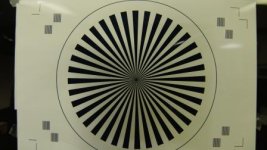
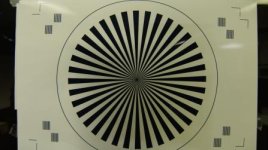
I shot this chart a few minutes ago. It doesn't look as bad on the chart, however, I did learn that the corners focus far, relative to the center. If I reshoot the chart and just nudge the focus to a shorter focal length, the corners come in, but the center goes out just a bit. It doesn't seem so lopsided when looking at the chart. For some reason, outdoor shots up at the trees reveal more focus problems on the left upper.
Here are the charts. Original 3840x2160:


12-2Test.00_00_01_21.Still001.jpg12-2Test.00_00_03_12.Still002.jpg
 
I asked my friend who brought the Canon prime over, what focal length. It's not 16. It is 20mm.

I checked the mount, ND filters and that there was nothing impeding the sensor.

I shot this chart a few minutes ago. It doesn't look as bad on the chart, however, I did learn that the corners focus far, relative to the center. If I reshoot the chart and just nudge the focus to a shorter focal length, the corners come in, but the center goes out just a bit. It doesn't seem so lopsided when looking at the chart. For some reason, outdoor shots up at the trees reveal more focus problems on the left upper.
Here are the charts. Original 3840x2160:


View attachment 113562View attachment 113563

It is called field curvature, most lenses have it to some degree. Additionally, specifically pronounced in this lens (from Ken Rockwell review) : "A little-known feature of the Canon 20 USM is "Intelligent Field Curvature (IFC)," meaning that the surface of best subject focus is not flat, and deliberately curved to fit real ultrawide subjects. The 20/2.8 USM curves its plane of best focus so that objects away from the center are brought into better focus if they are closer to the camera, exactly as subjects do in real life.
This means that this lens doesn't test that spectacularly on flat targets (which make boring photos), but in actual use, the 20/2.8's images are much sharper since the plane of best focus is adjusted to focus on objects closer to the lens at the sides, tops and bottoms of the frame. In other words, a sweeping desert floor below you, or objects to your sides, will be in better focus than with a flat-field lens.
Think about most of your ultrawide shots: far away is in the center, and things at the sides and bottom (like the ground or walls) are closer to you. Yes, the sky might be farther away at the top, but we don't worry about focus in the sky. By adding this slight field curvature, more things look sharper in real pictures. Of course stopping down expands the depth of field so that everything is in focus.
More precisely, the surface of best focus gets closer to the camera as we get away from the center, and goes back out at the very corners. For most of my shots, this is ideal. "​
 
Last edited:
It is called field curvature, most lenses have it to some degree.

However, if if perfect alignment with the sensor, these effects should radiate from the center of the frame, and appear evenly on top/bottom and left/right edges. When consistently occurring more on one side than another, suggests potential alignment issue.
 
That was my original concern and I've seen it with my Nikon D7000 and 18-200mm kit lens.

Given the EF mount adapter, I had to be sure. So I shot the charts.

These charts, BTW, were shot with my Tokina 12-28mm f/4 at 12mm. And the out of focus areas are where the lens focuses farther than at the center, opposite of what the Canon 20mm is claimed to do.

At least the charts are pretty consistent in all corners, unlike my Nikon camera/lens, which blurs everything on the right third of the frame unless I stop down to f/10 or smaller.

Just trying to make sure my Tokina lens isn't a bum lens. The box looked to have been opened and I thought maybe it had been returned by someone else to B&H, so that had me wondering when I noticed the outdoor shots seemed more blurred on the left half than the right.

And there is the fact that I shot these charts at 11" focal length, not 50' or greater, as in the other shots, so whatever asymmetry may be apparent at longer focal lengths and not visible at these very short, almost macro, focal lengths.

How frequent could a real life situation be where you'd need to film a perfectly flat object with an 12mm lens at 11" distance (given that you obviously have other focal lengths available)?
 
How frequent could a real life situation be where you'd need to film a perfectly flat object with an 12mm lens at 11" distance (given that you obviously have other focal lengths available)?


My chart is only 17". I would need a chart two stories high to provide a real life focal length. Obviously not practical. But shooting the chart does show that the focal length is longer near the edges, as I much dial in a closer focal length to bring them into focus. This effect may be worse at longer focal lengths.
 
This effect may be worse at longer focal lengths.

It may be worse at longer focal lengths but the point is that it is likely not as bad at greater distances. So the test was shot at 12mm and 11" to make a guess about what would happen at other focal lengths?
 
It may be worse at longer focal lengths but the point is that it is likely not as bad at greater distances. So the test was shot at 12mm and 11" to make a guess about what would happen at other focal lengths?


I shot the available size chart I have because the chart size limits the lens to chart distance if I want to fill the FoV. Had I had the side of a huge building to use, I could have tested longer focal lengths, but I did not.
 
Back
Top